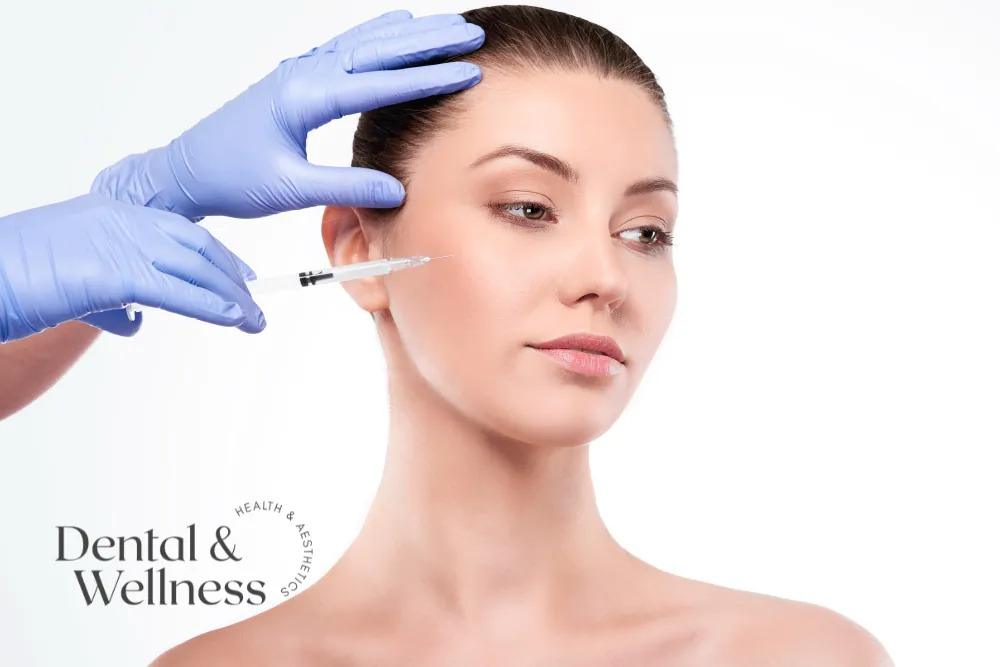
How long does anti-wrinkle treatment last? — clinical answer
Anti-wrinkle treatment (often called “Botox”) typically lasts 3-4 months for most patients across most treated areas. That's the clinical baseline the manufacturer's prescribing information cites and real-world practice confirms across the published literature. Some areas (masseter, axilla, palms, soles) reliably outlast the baseline, often reaching 4-6 months. A small number of patients metabolise the toxin faster and see 2-3 month durations. The 3-4 month figure is the median, not a guarantee.
Results begin to appear from around day 5, with the full effect visible by day 14. The wear-off is gradual — muscle activity returns over a 2-4 week window at the end of the cycle rather than ceasing suddenly.
Duration by treatment area
| Area | Typical duration | Notes |
|---|---|---|
| Forehead (frontalis) | 3-4 months | Most dose-sensitive area; over-treatment risks brow drop |
| Glabella (frown lines) | 3-4 months | Most commonly treated area |
| Crow's feet | 3-4 months | Around the eye orbicularis oculi |
| Masseter | 4-6 months | Larger muscle bulk requires higher dose and longer effect |
| Hyperhidrosis (axilla) | 4-6 months | Sweat gland suppression outlasts muscle effect |
| Hyperhidrosis (palms/soles) | 4-6 months | Sometimes longer |
| Bunny lines | 3-4 months | Small muscle, precision dose |
| Chin (mentalis) | 3-4 months | Cobblestone or strawberry chin |
| Brow lift | 2-3 months | Smaller effective dose |
The pattern: larger muscles and sweat gland indications outlast smaller muscle indications.
What affects how long anti-wrinkle treatment lasts? — 7 factors
1. Metabolic rate. Faster-metabolism patients (active, low body fat, younger) metabolise botulinum toxin faster than sedentary or older patients.
2. Dose. Higher doses generally last longer up to a clinical ceiling. Above it, higher dose just increases over-treatment risk, not duration.
3. Treated area. Larger muscles last longer than smaller ones; sweat gland indications often outlast muscle indications.
4. Treatment history. Repeat treatments every 3-4 months can extend duration as the muscle weakens from prolonged inactivity — muscle memory weakening, not drug tolerance. Patients maintaining treatment for 2-3 years often extend cycles to every 4-5 months.
5. Physical activity. High-intensity exercise modestly accelerates metabolic clearance — perhaps 1-2 weeks of duration, but real.
6. Age. Older patients with more atrophied muscle often see longer duration.
7. Genetics. Recognised biological variance in how individuals metabolise botulinum toxin — not a treatment failure.
First treatment vs repeat — does it last longer over time?
Often yes, modestly. A muscle chemically immobilised for 3-4 months at a time, repeatedly for two or three years, tends to atrophy slightly — the weaker muscle needs less force to keep relaxed, so the same dose achieves a longer-lasting effect. This is muscle memory weakening, not tolerance, which is rare and clinically distinct (relating to antibody formation, mostly at very high medical, non-aesthetic doses).
Most patients book consistent 3-4 month cycles for the first year, then naturally extend to 4-5 month cycles by year two or three.
When will you see results?
Day 1-2: No visible change, maybe a vague heaviness. Day 3-5: First subtle reduction in movement. Day 7-10: Significant effect visible. Day 14: Full effect — the day we book follow-up reviews. Days 15-90: Stable effect. Days 90-120: Wear-off begins, movement returns gradually. Day 120+: Booking window for next treatment.
If a patient says "Botox didn't work" after a week, the appropriate response is to wait the full two weeks — almost all sub-optimal results at week one resolve by week two.
When does anti-wrinkle treatment start to wear off?
Gradual, not sudden. Most patients feel a little movement returning around the 10-12 week mark, with progressive return over 3-4 weeks; by 16 weeks most are back to baseline. Book the next session when you first notice movement returning, not when the effect has fully gone — maintaining continuous suppression is what lets cycles eventually extend.
Tips to make anti-wrinkle treatment last longer — what actually works
What works (modestly): consistent treatment cycles every 3-4 months without long gaps; avoiding heavy exercise for 24 hours after treatment; avoiding the treated area being touched or pressed for 4 hours (manufacturer guidance to prevent diffusion); not lying down for 4 hours after treatment; maintaining consistent skincare, particularly retinoids and SPF.
What does NOT meaningfully extend duration despite being claimed: zinc supplements, specific diets or anti-inflammatory foods, "Botox boosters," avoiding caffeine or alcohol, specific facial massage techniques.
Should you have anti-wrinkle treatment more frequently?
3-4 months is the standard cycle. More frequent treatment increases the risk of antibody formation and tolerance, with no aesthetic benefit. "Baby Botox" or "preventative Botox" every 6 weeks at small doses has real clinical merit when delivered appropriately, but the risk is over-treatment — weakened muscle compensations elsewhere, distorted expression, or the frozen look patients try to avoid. At DWL we treat at 3-4 month cycles with dose-titrated planning at each appointment.
The cultural moment — why Gen Z is questioning “Botox”
Preventative anti-wrinkle treatment in your 20s is not the evidence-based necessity it's sometimes marketed as — the clinical case for treating expression lines in younger patients is weak compared with patients in their 40s-60s. Repeated cosmetic intervention in young faces sometimes produces the very appearance the patient sought to avoid.
The DWL clinical position: proportionate treatment for the patient in front of us, at the right age, for the right reason. For some younger patients, the answer is no treatment now and a conversation about skincare and lifestyle. The decision is clinical, not commercial.
Why DWL — the dentist-injector advantage
Aesthetic medicine at DWL is delivered by Dr Vishal Patel (BDS, MSc Aesthetic & Restorative Dentistry Manchester, GDC 103127). The dentist-injector model brings oral surgery experience — familiarity with the same nerves, muscle planes, and vascular anatomy that aesthetic injection works on. The principle: proportionate treatment rather than maximum-dose treatment. Anti-wrinkle treatment at our clinic starts from £169, including a two-week refresh.
FAQs
How long does forehead anti-wrinkle treatment last?
3-4 months typically — the most dose-sensitive area, with duration following the appropriate (not maximum) dose. See also our forehead dosage guide.
How long does masseter anti-wrinkle treatment last?
4-6 months typically — a larger muscle requiring higher dose, outlasting standard forehead work.
How long until I see results?
First subtle effect at day 3-5, significant effect by day 7-10, full result by day 14.
Why didn't my treatment last as long as before?
Common reasons: longer gap between treatments, recent change in physical activity, illness or medication change, or natural variance.
Can anti-wrinkle treatment be permanent?
No — the effect is reversible; nerve endings regrow over 3-6 months.
Should I get top-ups between treatments?
Generally not — the standard every-3-4-months cycle is what the evidence supports.
Does the brand affect how long it lasts?
Modest differences exist between the licensed botulinum toxin products, but aesthetic dose differences are small in practice. The product is chosen at consultation by Dr Vishal Patel.
How long does treatment for sweating last?
4-6 months for underarms, often 6+ months for palms and soles — sweat gland indications reliably outlast muscle indications.
Does exercise after anti-wrinkle treatment shorten its duration?
Heavy exercise within the first 24 hours can modestly accelerate clearance; after 24 hours normal exercise is fine.
Will my face look frozen?
Not if dosing is appropriate — proportionate treatment preserves natural expression; frozen-look is over-treatment, not the treatment itself.