Patients researching lip enhancement often find conflicting advice on whether to choose a lip flip or lip fillers — partly because clinic marketing tends to sell whichever treatment that clinic specialises in, partly because the two are genuinely confusable until you understand the underlying mechanisms.
This page is the decision framework. It explains what each treatment actually does, the patient concerns each one solves, the practical differences (cost, longevity, recovery, reversibility), the cases where they can be combined, and how a dentist-injector clinic with formal training in vital facial structures approaches the decision when a patient arrives uncertain.
For the full guide to lip flip itself, see our Lip Flip page. For the lip filler treatment guide, see Lip Fillers. For filler in other areas, see dermal fillers in Islington.
The fundamental difference — muscle vs volume
The simplest accurate framing of these two treatments: a lip flip relaxes one muscle; lip filler adds volume.
A lip flip uses a very small dose of botulinum toxin type A — a prescription-only medicine (POM) — injected into the orbicularis oris, the muscle that encircles the mouth and pulls the upper lip slightly inward when relaxed. By easing that muscle's activity, the upper lip "flips" subtly outward — appearing very slightly fuller at rest and tucking under less when smiling. The lip looks the same shape; the muscle that was pulling it inward is just less active.
Lip filler uses hyaluronic acid (HA) — a substance naturally present in skin tissue — injected into the lip itself to add discrete volume. The lip is physically larger after treatment because new material has been placed in the tissue. The shape can be modified during the placement (more in the lower lip than upper, more on one side than another, more central versus more lateral) based on what the patient wants.
These are different mechanisms producing different visible changes:
- Flip changes how the lip behaves (less inward muscle pull)
- Filler changes what the lip is (more volume in the tissue)
Both can produce results patients describe as "better-looking lips." The right one for any specific patient depends entirely on which mechanism actually addresses their concern.
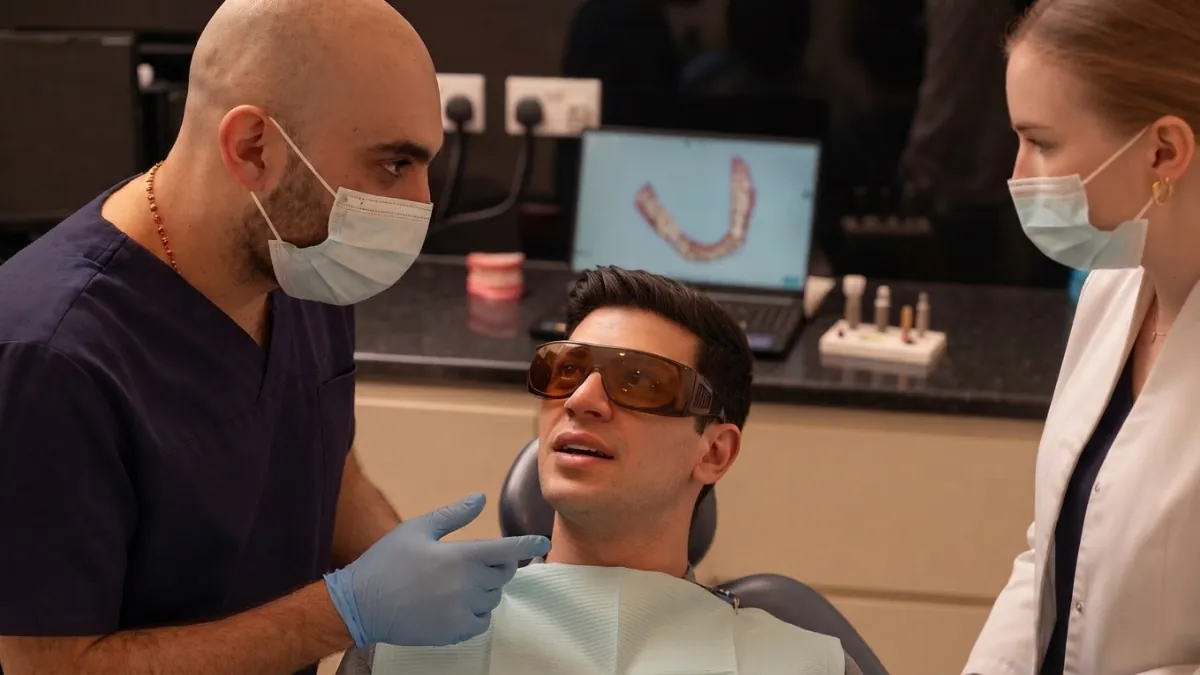
The decision framework — match concern to mechanism
The most useful tool patients can take into the consultation is the following framework. Read down the left column to find your specific concern; the right column points to the treatment that addresses that concern's underlying mechanism.
What's actually bothering youThe mechanism causing itThe treatment that addresses itLips look thin overall (at rest)Low natural lip volumeLip fillerLips look thin when smiling but normal at restOrbicularis oris muscle activity pulling lip inward during smileLip flipUpper lip "disappears" or rolls under when smilingMuscle activity (same as above)Lip flipWant plumper-looking lips visible at restVolume change neededLip fillerWant more upturned smile lineMuscle relaxation needed to ease inward pullLip flipWant gummy smile reducedMultiple muscle elevators contributingLip flip + lip elevator treatmentLower lip looks thinner than upperLower-lip volume specifically neededLip filler (lower lip only)Upper lip thinner than lower (when smiling)Smile-specific muscle behaviourLip flipAsymmetric lips at restVolume asymmetryLip filler (corrective)Asymmetric lips when smiling onlyAsymmetric muscle activityLip flip (corrective)Want both shaped fullness AND softened lip lineBoth mechanisms involvedCombination — see §"When to combine" belowFine vertical lines around upper lip ("smoker's lines")Mostly skin/elastin issue, partially muscle-drivenDifferent treatments — see closing section
The pattern most patients miss: their concern often has a specific mechanism behind it that determines which treatment will help. "I want better-looking lips" is too broad to choose between flip and filler. "I want my upper lip to stop disappearing when I smile" tells you to choose flip. "I want my lips to look fuller at rest" tells you to choose filler.
The proportionate treatment principle that runs through our consultations is exactly this — matching intervention to the specific concern rather than treating the concern as generic "lip enhancement" and applying whichever treatment the clinic prefers.
Practical differences — cost, longevity, recovery, reversibility
Beyond the mechanism question, the two treatments have meaningfully different practical profiles. Patients should know all of this before choosing.
Cost. Lip flip is meaningfully cheaper than lip filler because it uses a tiny dose of medicine (2-6 units of botulinum toxin) and takes 5-10 minutes once consultation is complete. Lip filler uses a syringe of hyaluronic acid product (0.5-1.0 ml typically) and takes 20-30 minutes. Both prices reflect the materials cost plus prescriber time; both are quoted as a costed plan in writing at consultation rather than per-product inline because of UK CMA pricing transparency and ASA Cap Code 12.7 requirements for POM treatment marketing.
Longevity. Lip filler lasts 6-12 months typically, depending on the product and the patient's metabolism. Lip flip lasts 6-10 weeks — meaningfully shorter, because the orbicularis oris muscle is small and frequently used (it metabolises the medicine faster than larger upper-face muscles do). Over a year, continuous lip-flip maintenance involves 5-8 treatments; continuous lip-filler maintenance involves 1-2 treatments. The cumulative annual cost can work out similar between the two, but the rhythm is very different.
Result onset. Lip filler shows visible change immediately — you leave the clinic with visible volume. Lip flip shows visible change over 7-14 days as the medicine takes effect. If you want fast result for a specific event, filler is the faster category; if you want gradual subtle change, flip suits.
Recovery. Lip filler typically produces moderate swelling for 24-72 hours (sometimes longer), with significant lip plumpness in the first day that settles to the actual result over 1-2 weeks. Bruising at injection points is common. Lip flip produces minimal swelling (small injection sites only) and minimal bruising. Recovery-wise, lip flip is the lighter treatment.
Reversibility. Hyaluronic acid lip filler is reversible — if the result isn't what you wanted, hyaluronidase enzyme can dissolve the filler. This is a meaningful safety advantage. Lip flip is not reversible once placed — the medicine has to wear off naturally (6-10 weeks). The shorter duration of lip flip somewhat offsets this disadvantage in practice; an unwanted lip-filler result requires intervention to reverse, while an unwanted lip-flip result requires patience.
Risk profile. Both treatments have strong safety profiles when delivered by trained prescribers with anatomical literacy. Lip filler's specific risks (vascular complications, lump or migration formation, sensitivity to the product) and lip flip's specific risks (muscle-effect spread, articulation effects) are different in nature. The probability of side effects from either is meaningfully reduced by clinician selection — the blood vessels, nerves, muscle function literacy that determines safe injection is the same anatomical foundation in both cases.
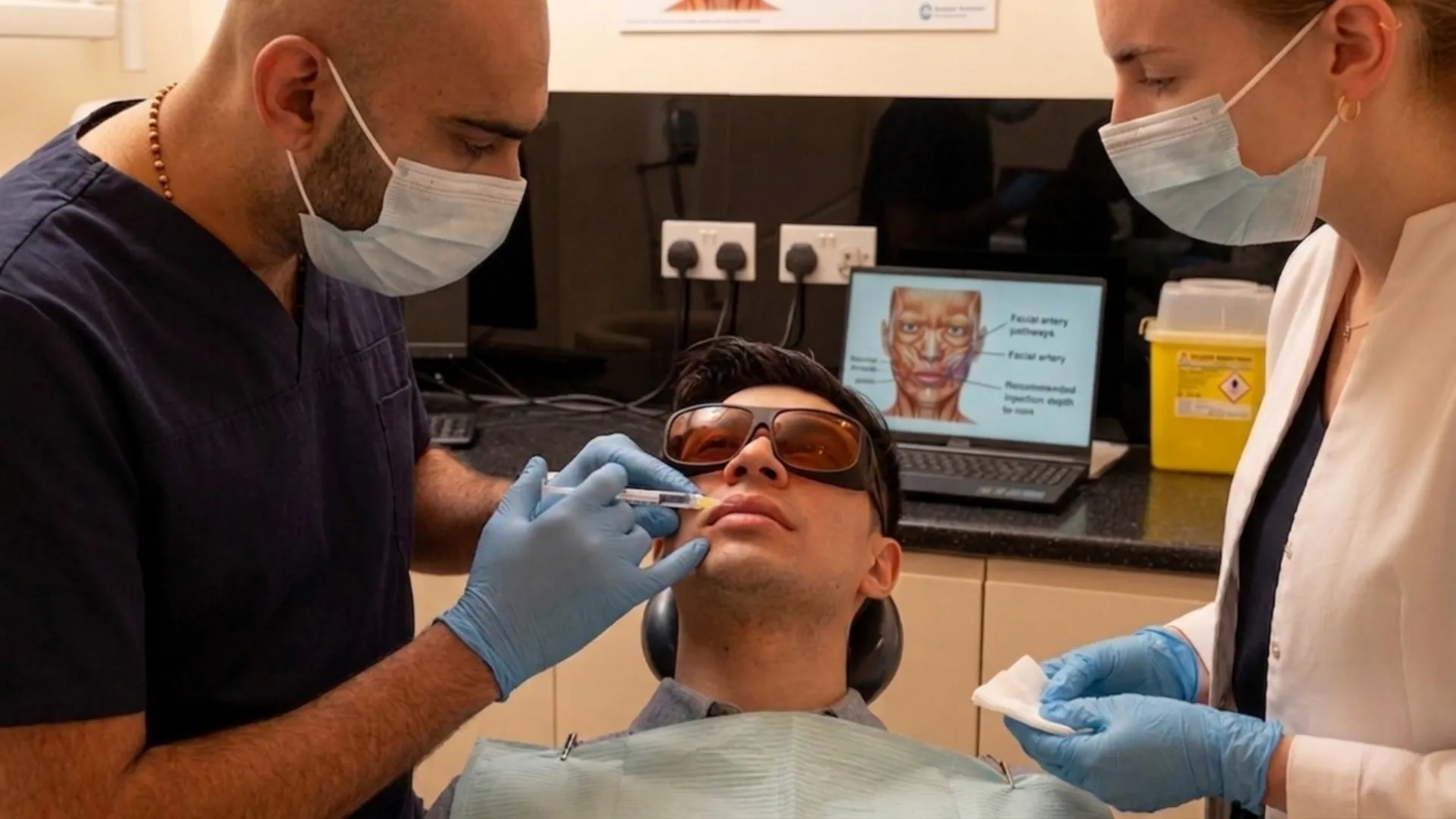
When to choose lip flip
Lip flip is the right choice when:
- The concern is specifically about smile dynamics — upper lip behaviour when smiling rather than appearance at rest
- The patient wants subtle change measured in millimetres of muscle activity rather than visible volume
- The patient is "trying out" muscle-relaxing aesthetic treatment for the first time — the small dose, short duration, and lower cost make it a low-commitment trial
- The concern includes gummy smile (where lip-elevator treatment combines naturally with the flip approach)
- The patient prefers shorter-duration commitment — the 6-10 week longevity means a result they don't love wears off naturally
- The dental-aesthetic intersection matters — gummy smile assessment, smile-line aesthetics with dental show, and lip-flip-with-orthodontic-planning all favour a dentist-injector-led approach
When to choose lip fillers
Lip filler is the right choice when:
- The concern is specifically about lip volume — lips that look thin or that you want visibly fuller
- The patient wants visible change immediately
- The patient prefers longer-duration commitment per treatment (6-12 months between treatments rather than every 2 months)
- Shape modification beyond volume is desired (correcting asymmetry, adjusting upper-versus-lower-lip ratio, defining lip border)
- The patient wants the reversibility safety net (HA filler can be dissolved if needed)
- The starting point is meaningful volume deficit rather than muscle behaviour
When to combine — and the right sequence
Many patients suit a combination. The most common combined approach is filler first to address volume, then lip flip 2 weeks later once the filler has settled. The sequence matters because:
- Volume change from filler can affect how the lip looks at rest and when smiling — better to assess flip dose with the new volume in place than to flip first and then add volume
- Filler swelling in the first 1-2 weeks can mask the lip flip effect if the two treatments are done together — staging them lets each be assessed in isolation
- Combined-day treatment increases recovery downtime — separating the appointments smooths the experience
Some patients don't combine. The framework: if both mechanisms (volume + muscle) are contributing to the concern, combination is reasonable. If only one mechanism is the issue, treating only that one is the proportionate treatment approach — adding the other for the sake of combining adds cost and risk without clinical benefit.
The high ethics operating standard at DWL means we recommend combination when it's clinically additive, and we recommend single-treatment when it isn't. Aesthetic-medicine marketing tends to upsell combinations across the board; clinical practice should match treatment to concern.
What neither treatment can do
Both treatments are useful for what they're designed to do; both have specific limits.
Lip flip cannot:
- Add visible volume to lips
- Address vertical perioral lines that are already etched into the skin
- Significantly change resting lip shape
- Produce dramatic visual change (it's intentionally subtle by mechanism)
- Be used by patients who need precise lip function (professional voice users, wind instrument players, certain occupations — case-by-case assessment)
Lip fillers cannot:
- Change how the lip behaves during smiling (the muscle activity remains the same)
- Address gummy smile (different muscles)
- Be expected to look natural with aggressive volume — the natural aesthetics outcome requires careful dosing and placement that respects the patient's overall facial symmetry and perfect balance
- Be expected to last forever — even "permanent" filler categories (which we don't use because of long-term complication risks) aren't truly permanent
For concerns neither treatment addresses well — significantly etched perioral lines, lower-face muscle laxity, skin quality issues around the mouth, or perioral ageing more broadly — different treatments serve better. Microneedling, polynucleotides, or surface-quality treatments may be relevant; the consultation discussion covers these alternatives when relevant.

How the consultation approaches the choice
The 45-minute consultation at DWL focuses on understanding what's actually bothering you about your lips before recommending which treatment (if any) would address it.
Examination. Lip position at rest, lip position during animated smile, dental show during smile, gum show during smile, facial symmetry, perioral skin quality, signs of muscle activity that's contributing to lip dynamics, and the relationship between upper lip appearance and the surrounding dental-aesthetic frame. The dental-aesthetic intersection means this assessment is more comprehensive than a single-discipline aesthetic clinic would conduct.
Discussion of what you actually want. What you've noticed. Photos you've looked at. What you want to look like. What you're worried about looking like (over-treated, frozen, "duck lips"). This conversation is where the right treatment for your concern becomes clear — and it's often not the treatment the patient arrived assuming.
Honest assessment. Whether lip flip, lip filler, combined treatment, no treatment, or a different category of treatment entirely is the right answer. The honest no is part of consultation discipline — we'll explain why if we recommend against treatment.
Costed plan in writing. If treatment is appropriate, you receive specifics in writing: which treatment, expected outcome, cost, timeline, post-treatment care, review schedule. You take it home and decide in your own time. We don't pressure decisions at the consultation table.
Prescribed by Dr Vishal Patel, BDS, MSc Aesthetic & Restorative Dentistry, GDC 103127. Both lip flip and lip filler treatment at DWL is prescribed and delivered by Dr Vee Patel — the dentist-injector approach to lip work draws on the oral surgery experience of working close to vital facial structures every clinical day.
Frequently asked questions
Lip flip vs lip filler — which gives more visible results? Lip filler produces meaningfully more visible change because it adds discrete volume. Lip flip produces subtle change measured in millimetres of muscle activity reduction. Whether more visible = better depends entirely on what you want. Patients seeking dramatic visible enhancement choose filler; patients seeking subtle refinement choose flip.
Lip flip vs lip filler — which is cheaper? Lip flip is meaningfully cheaper per treatment because it uses a tiny dose of medicine. Lip filler uses a full syringe of product. Over a year of continuous maintenance, the cumulative cost works out similar between the two because lip flip needs more frequent retreatment (every 6-10 weeks vs every 6-12 months for filler).
Can I have both lip flip and lip filler? Yes — combination is appropriate when both mechanisms (volume + muscle) are contributing to your concern. The standard sequence is filler first, lip flip 2 weeks later once the filler has settled. Combination on the same day isn't typically recommended; staging the treatments lets each be assessed in isolation.
Which should I do first — flip or filler? If you're combining, filler first then flip. If you're trying one before deciding on the other, lip flip is the lower-commitment trial — short duration, lower cost, no permanent change. Many patients start with flip to see how they like muscle-relaxing aesthetic work before deciding on more substantial filler treatment.
Is lip flip safer than lip filler? Different risk profiles rather than different safety levels. Both have strong safety profiles when delivered by trained prescribers. Lip filler's specific risks (vascular issues, lumps, sensitivity) and lip flip's specific risks (muscle-effect spread, articulation effects) are different in nature. Filler has the safety advantage of being reversible (dissolvable with hyaluronidase); flip has the safety advantage of being lower-dose and shorter-duration.
What about lip flip with anti-wrinkle treatment elsewhere on the face? Combining lip flip with upper-face muscle-relaxing treatment (forehead, glabella, crow's feet) on the same day is common and clinically reasonable. The lip flip dose is so small relative to upper-face dosing that it doesn't meaningfully change the planning. Both can be discussed in the same consultation.
Book a consultation to discuss lip enhancement options
If you're considering lip enhancement and not sure which treatment suits your specific concern, the 45-minute consultation with Dr Vee Patel discusses both lip flip and lip filler in the context of your individual case. We assess, discuss realistic outcomes, and write a costed plan in writing only when treatment is clinically appropriate.
Aesthetic consultation £65 (redeemable in full against treatment).
Call 020 8127 4567 or WhatsApp +44 7974 910222.
Appointments Monday-Friday, 8am-7pm by appointment. No walk-in service.
Dental & Wellness London · 222 Essex Road, Islington, London N1 3AP.
Reviewed by Dr Vishal Patel · BDS Liverpool · MSc Aesthetic & Restorative Dentistry (Manchester) · GDC 103127 · AACD Member. Last reviewed 2026-06-05.
Prescribed by Dr Vishal Patel, BDS, MSc Aesthetic & Restorative Dentistry, GDC 103127.