Gummy smile — causes, honest treatment options, and what a dentist-led approach changes
Reviewed By
Last Updated
October 1, 2026
Why "gummy smile" is five different problems wearing one name — and why the cause decides the fix
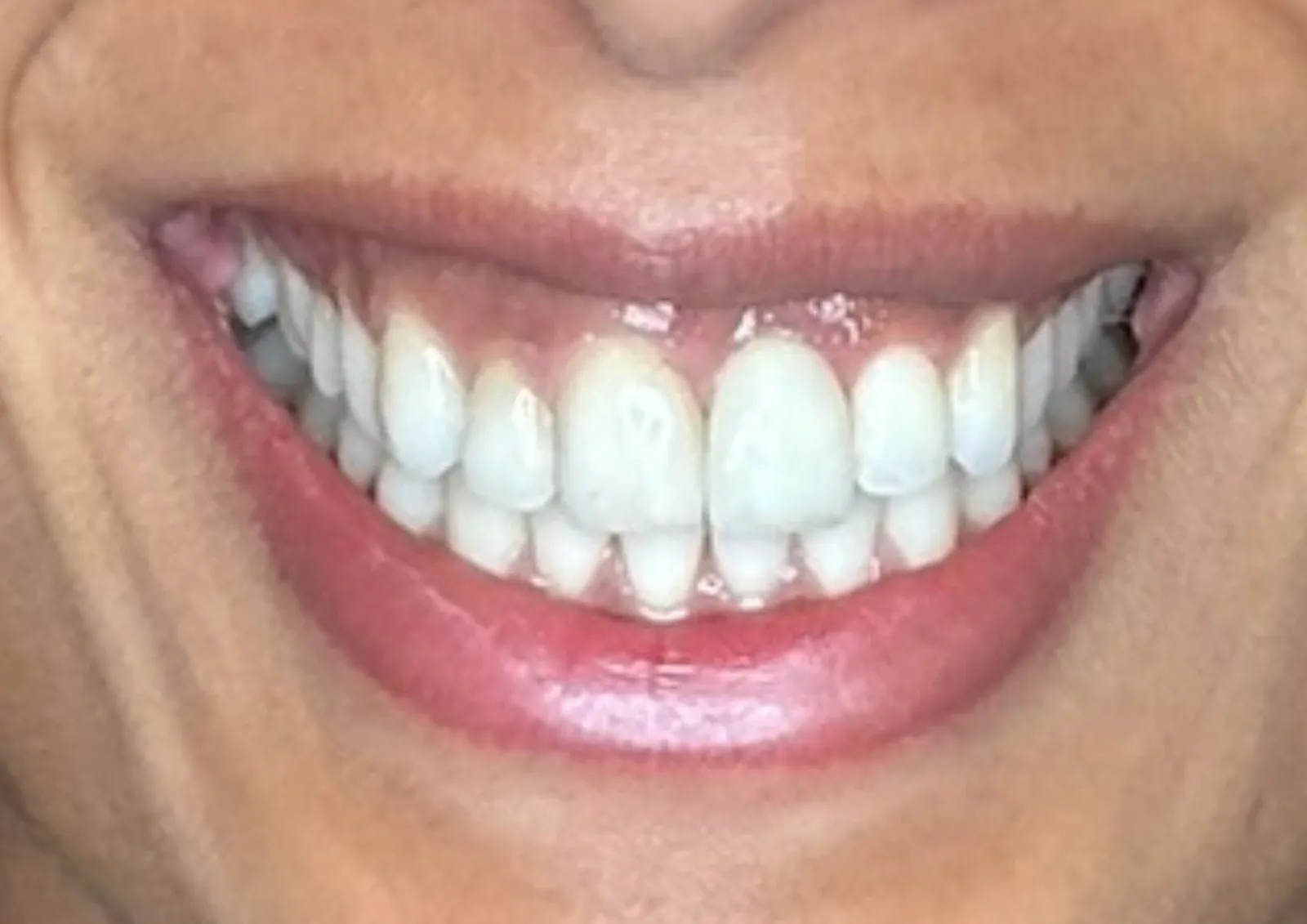
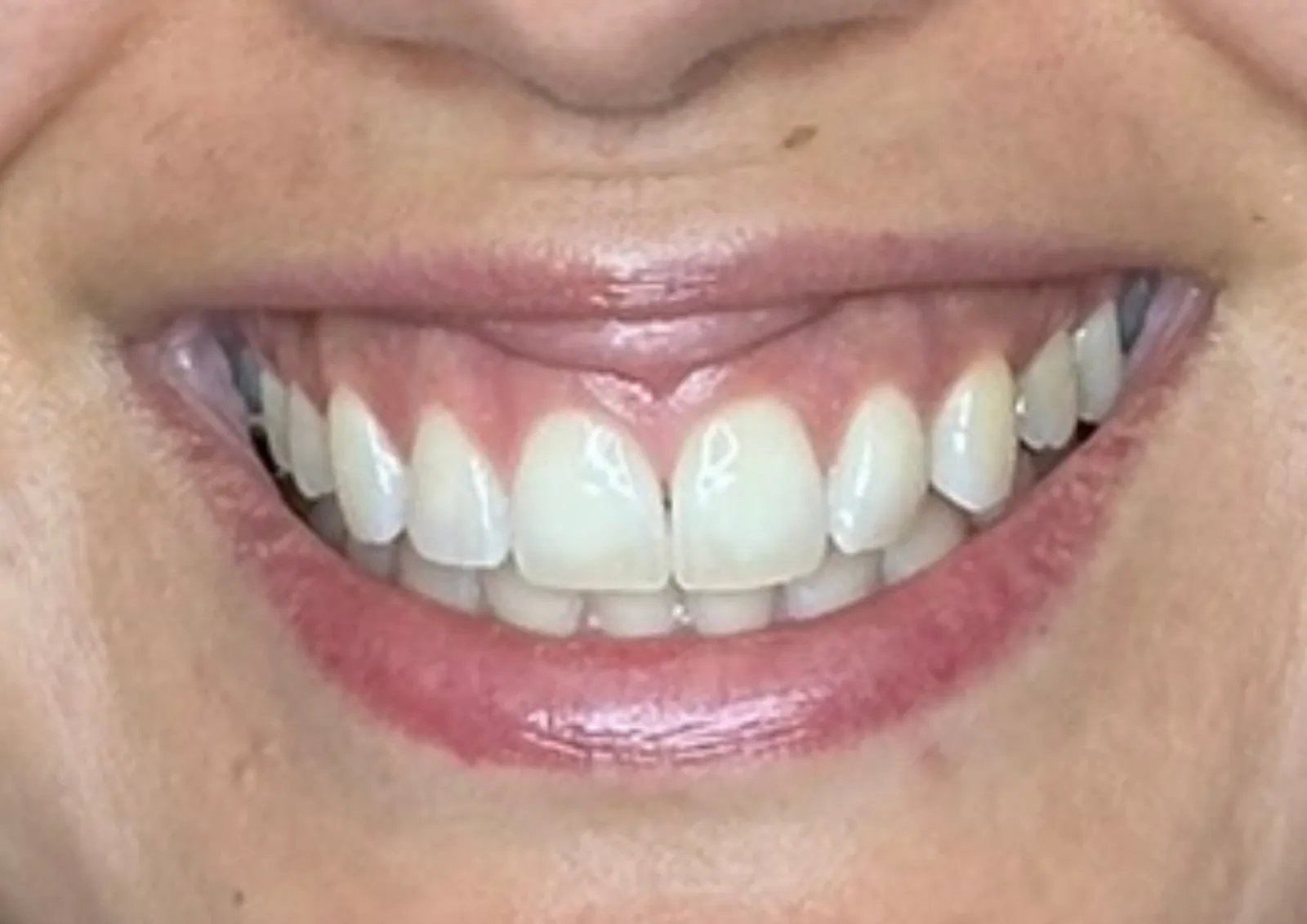
A gummy smile is when more than three to four millimetres of upper gum shows during a full, natural smile. It has several possible causes, including an over-active upper lip, a short lip, short clinical crowns, worn teeth or the position of the upper jaw. The cause decides what helps, so at our Islington clinic we assess it before recommending anything.
Visible Signs & Symptoms
In clinical terms, a gummy smile is when more than three to four millimetres of upper gum shows during a full, natural smile. A little gum show is ordinary anatomical variation, and many balanced smiles show some. Beyond that, the eye tends to be drawn towards the gum line and away from the teeth.
"Gummy smile" is a description rather than a diagnosis. Several quite different arrangements of lip, muscle, gum, tooth and bone can produce the same appearance, which is why we look closely at the cause before any treatment is discussed.
Signs people commonly notice
- A broad band of pink gum visible above the upper teeth when laughing or smiling fully.
- Teeth that look short, square or small in proportion to the gum around them.
- An uneven gum line, where some teeth appear longer than their neighbours.
- Gum show that is far more noticeable in a full smile than at rest, or present even with the lips relaxed.
- Upper lip that rises unusually high, or that looks short when the face is at rest.
- Avoiding smiling in photographs, or a habit of smiling with the lips closed.
What we look at
We observe the smile twice: at rest, and during a relaxed, natural smile rather than a forced grin, which exaggerates everything. We then consider lip position at rest, how far the lip lifts on smiling, the length and shape of the crowns of the teeth, the symmetry of the gum line, signs of tooth wear, and the overall proportions of the face and jaw.
A gummy smile is not a disease, and it is not harmful to health in itself. The concern is aesthetic and personal. That matters, because for some people the honest conclusion is that their smile sits within normal variation and does not need treatment at all. Where the gum itself looks swollen or bleeds, that is a different question, and we would look at gum health first.
Clinical Root Causes
There are five main causes. Most people have one dominant cause, sometimes with a second contributing.
One: over-active upper lip
The muscles that raise the upper lip lift it higher than average on smiling. The lip length and the teeth are normal; the muscle is simply doing more than it needs to. This is the cause most often associated with a quick fix, and it is the one most suited to muscle-relaxing treatment.
Two: short upper lip
The upper lip is shorter than average, so gum shows even with normal muscle activity. Muscle-relaxing treatment helps only a little here, and the more definitive options are surgical and outside what we provide.
Three: short clinical crowns
The gum covers more of each tooth than usual, so the teeth look short. This can happen when the gum does not fully recede to its usual adult position after the teeth come through. Lip and muscle are normal; the gum line sits low.
Four: upper jaw set low (vertical maxillary excess)
The upper jaw bone is positioned lower than average, carrying the whole gum line with it. This is a skeletal cause. No injection or gum procedure alone corrects it, and it is important to say so plainly.
Five: worn or short teeth
The teeth themselves have shortened, usually through grinding, acid erosion or age-related wear, so gum at a normal level looks proportionally too large. The gum is not the problem; the teeth have lost height. Ongoing teeth grinding is a common contributor.
Other contributing factors
- Tooth position and bite: front teeth that have over-erupted, or a deep bite, can bring more gum into view.
- Gum overgrowth: inflammation, and occasionally certain medicines, can enlarge the gum. Your GP or prescribing doctor should be involved before any change to medication.
- Combinations: a short lip with a slightly over-active muscle, or short crowns with some tooth wear. Recognising which factor leads decides the order of treatment.
A gummy smile does not usually threaten dental health, so there is no clinical urgency to treat it. The reasons people seek advice are mostly about confidence and how they feel when they smile, and those are legitimate reasons to ask.
The real risk lies in treating the wrong cause. Muscle-relaxing treatment for a skeletal cause, or gum reshaping when the teeth are worn, costs time and money and leaves the underlying cause unchanged. That is why we assess first.
When the cause needs attention in its own right
- Tooth wear: if worn teeth are behind the appearance, the wear may continue. Grinding or acid erosion is worth managing early, before more tooth structure is lost.
- Gum changes: gums that are swollen, bleed when brushing, or have grown over the teeth recently should be checked, as this suggests inflammation rather than a fixed anatomical feature.
- Bite problems: over-eruption or a deep bite can affect how teeth wear and how the jaw functions over time.
When to be seen
Book an assessment if your gum show bothers you, if your teeth appear to be getting shorter, or if you are considering treatment elsewhere and want an independent view of the cause. Arrange a prompt dental appointment if the gums are sore, swollen or bleeding, or if a gum has enlarged quickly. A mild gummy smile within normal variation does not need treatment, and we will tell you if that is our view.
Because the cause decides the fix, treatment is matched to the dominant cause, then any contributing factor, in a sensible order.
Over-active upper lip: anti-wrinkle treatment
A small, precisely placed dose of anti-wrinkle treatment can soften the lift of the upper-lip muscles; many people know the medicine as "Botox". This is sometimes described as a lip flip approach. It is reversible, the effect wears off over a period of months, and results vary. It is a prescription-only medicine, so it is only planned after a face-to-face consultation, and it is prescribed and administered by Dr Vishal Patel. It helps most where the muscle is the leading cause and much less otherwise. If lines across the nose also show when you smile, our page on bunny lines covers that.
Worn or short teeth: restoring tooth height
Where teeth have lost length, rebuilding them restores the tooth-to-gum proportion. Milder cases often suit composite bonding; more substantial wear may suit veneers. The design must respect the bite. Where grinding continues, a protective splint goes alongside so the work is not undone.
Tooth position and bite: orthodontics
Where over-eruption or a deep bite contributes, Invisalign can reposition teeth to reduce gum show. Dr Vishal Patel is an Invisalign Diamond II provider.
Short clinical crowns, short lip or skeletal causes: specialist referral
Crown lengthening (gum contouring), surgical lip repositioning and jaw surgery are not treatments we provide. Where these are the most appropriate route, we explain why and refer you to a suitable specialist, such as a periodontist or a maxillofacial team, and coordinate any dental work around it.
No treatment
Where gum show is within normal variation, or expectations go beyond what any treatment can achieve, we say so. Accepting a healthy, natural smile is sometimes the better outcome.
What happens at DWL
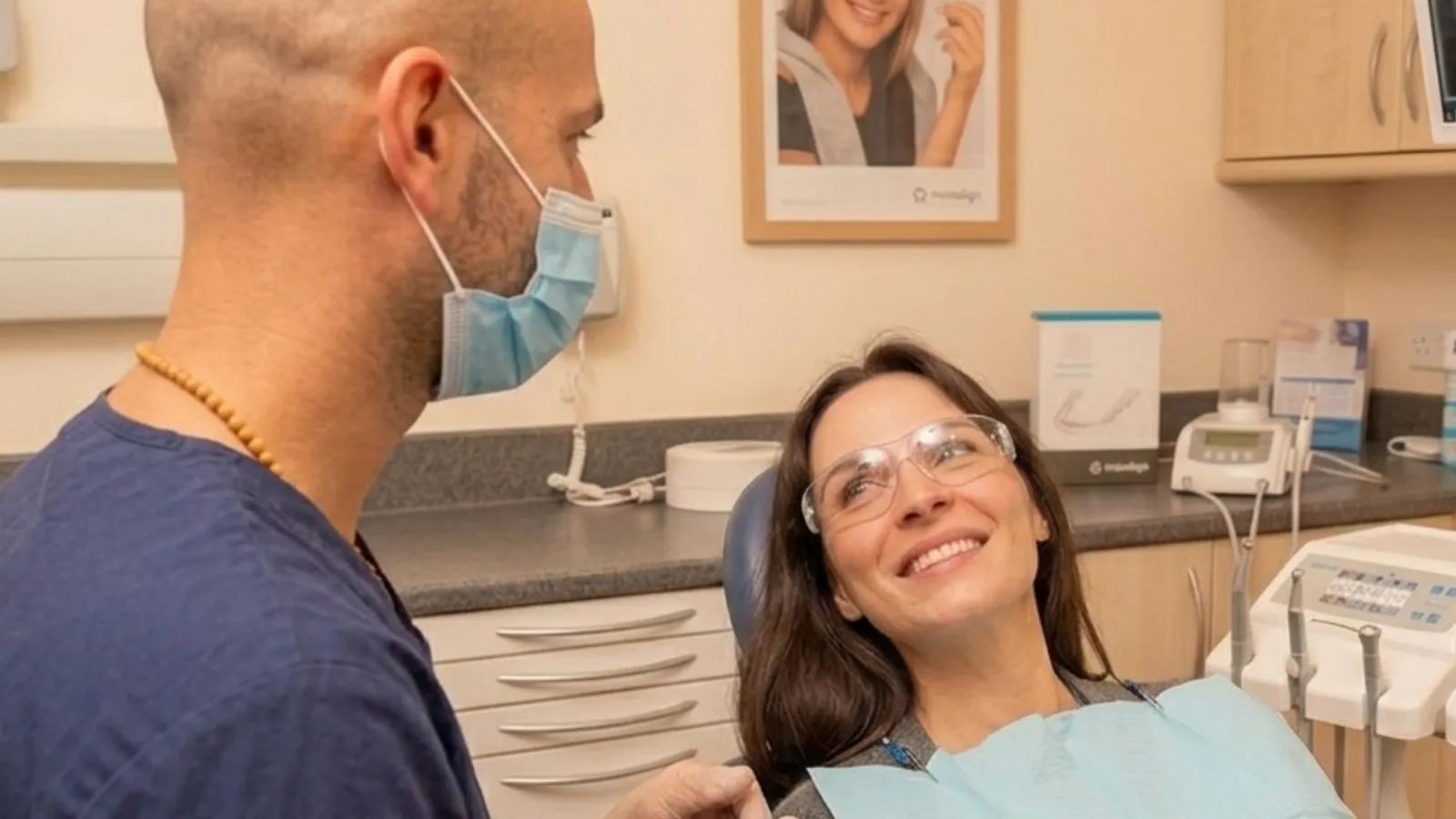
Your assessment is with Dr Vishal Patel, who holds an MSc in Aesthetic & Restorative Dentistry and is the clinic's sole aesthetic prescriber, so the dental and facial sides are considered in one conversation rather than across separate appointments. We examine the smile at rest and in motion, measure crown lengths and lip movement, check tooth wear and bite, and take photographs. For mixed cases we explain how much each factor contributes and which to address first. You receive a written plan with costs before any decision.
Cost
- Dental examination: £65
- Skin and aesthetic consultation: £65, redeemable in full against treatment
- Anti-wrinkle treatment: from £169, including a two-week refresh
- Composite bonding: £175 simple / £350 complex per tooth
- Composite veneers: £350–£500 per tooth; porcelain veneers: £750–£1,500 per tooth
- Invisalign: Express £2,200 · Moderate £3,400 · Unlimited £4,500–£4,900
- Davies splint: £495
Specialist procedures we refer for are priced by the treating specialist. 0% APR finance over 12 months is available on eligible treatment.
Getting here: we are at 222 Essex Road, Islington, N1, two minutes from Essex Road station on the Great Northern line. Buses 38, 56, 73, 341 and 476 stop on Essex Road, and many patients arrive by bike or Lime and Forest e-bike, with Dalston around ten minutes away. We are open Monday to Friday, 8am to 7pm, by appointment.
Further reading
Send three Photos - get an honest answer with in a day.
Free Smile ASssessmentFrequently asked questions
If your question isn't here, call reception on 020 8127 4567 or book a free discovery call.Text Link
View all FAQs →Will a lip flip cover my gummy smile?
For mild gummy smile (1–3mm of gum show) caused by hyperactive upper-lip muscle, yes — a precise lip flip can soften the muscle lift so more gum is covered during smiling. For significant gummy smile (4mm+) caused by skeletal vertical excess, lip flip helps marginally; the underlying cause needs orthodontic or surgical addressing. We assess in consultation.
What causes a gummy smile?
Four main causes: hyperactive upper lip muscle, short upper lip, short clinical crowns, or vertical maxillary excess. Identifying which cause applies determines which treatment is right — they're different presentations needing different interventions.