The cycle that creates the problem
Bite misalignment or stress triggers chronic muscle activation, the muscle grows, joint stress follows, pain triggers guarding, and guarding intensifies activation — a self-reinforcing cycle. Treating any single element leaves the rest running. Our TMJ and jaw pain page explains how we assess it.
Why the splint is the foundation
The Davies-technique splint positions the jaw in a muscle-balanced position and distributes biting forces evenly. Over 6-12 weeks, muscle hyperactivity and joint stress typically reduce; over 6-12 months, pain often resolves substantially. For about 60% of patients, the splint alone resolves enough that aesthetic medicine isn't needed.
When masseter aesthetic medicine adds value
For the remaining 40% — typically significant established hypertrophy — adding masseter treatment 3-6 months into splint therapy accelerates contour normalisation and faster symptomatic relief.
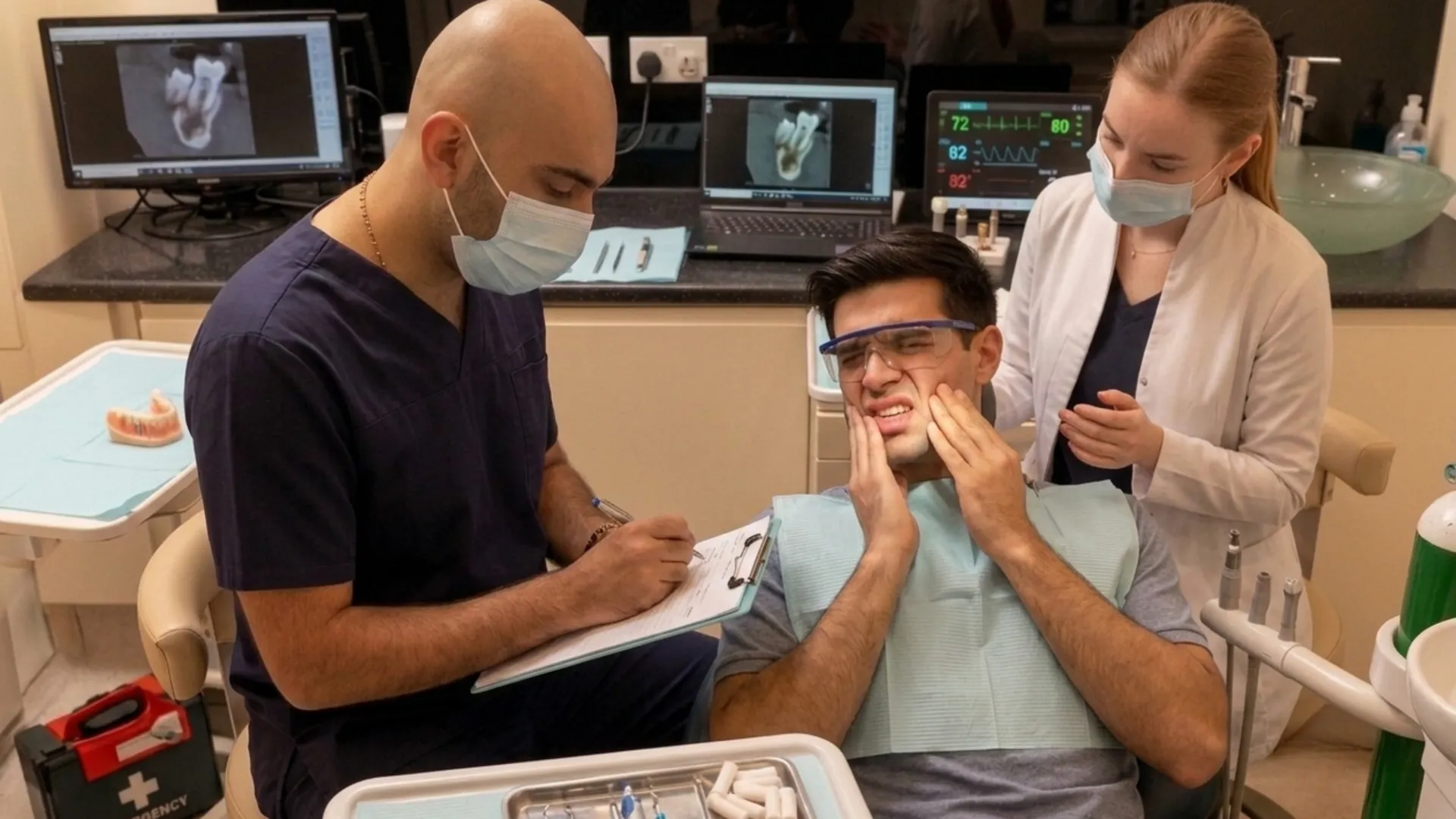
The TMJ pain question specifically
Muscular TMJ pain (morning tightness, headache, no clicking) responds well to splint plus possibly masseter — about 70% of cases. Joint structural pain (clicking, locking) may need imaging and specialist referral. Where grinding is part of the picture, see teeth grinding (bruxism).
The integrative dimension
Somatic coaching, sleep airway assessment, Ayurvedic consultation, or nutritional therapy address stress, sleep, or nervous-system contributors alongside the dental work.
By Dr Vishal Patel, BDS, MSc Aesthetic & Restorative Dentistry, GDC 103127. 20 years TMJ + bruxism experience. Last reviewed 2026-05-17.