Laser hair removal for PCOS
Reviewed By
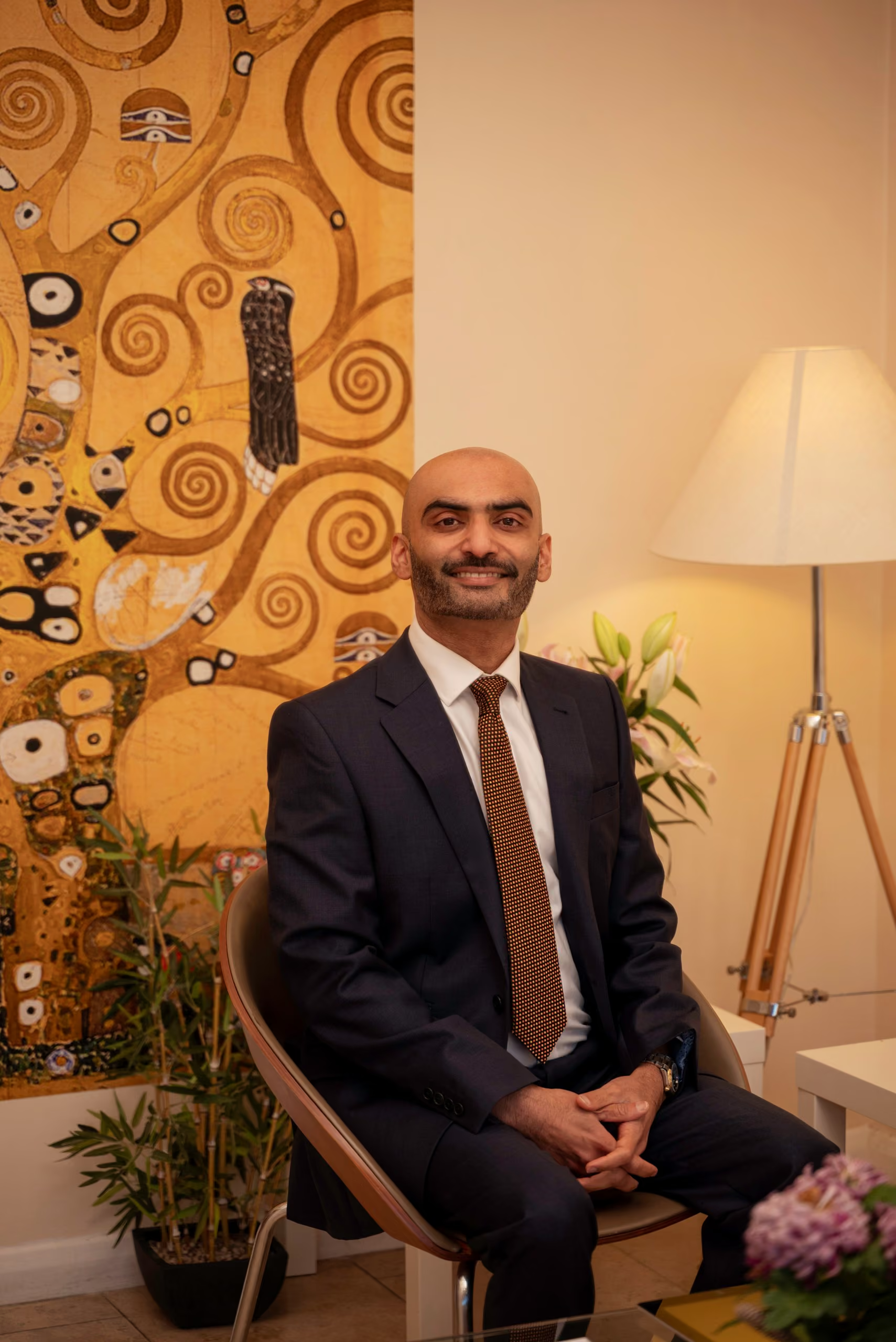
Dr Vishal Patel
BDS Liverpool · MSc Aesthetic & Restorative Dentistry Manchester · GDC 103127 · AACD Member · Invisalign Diamond II Provider · IFAAS (International Fellowship in Advanced Aesthetic Science) · Facial anatomy & cadaver course, Dr Ali Pirayesh, University of Amsterdam · Harley Academy foundation training in injectable aesthetics · IBSA-trained (Profhilo) · NeoStrata-trained (skin peels) · Lynton Lasers trained, incl. ONDA
Last Updated
October 1, 2026
Honest advice on laser hair removal for PCOS: more sessions, regular maintenance and care alongside your GP.
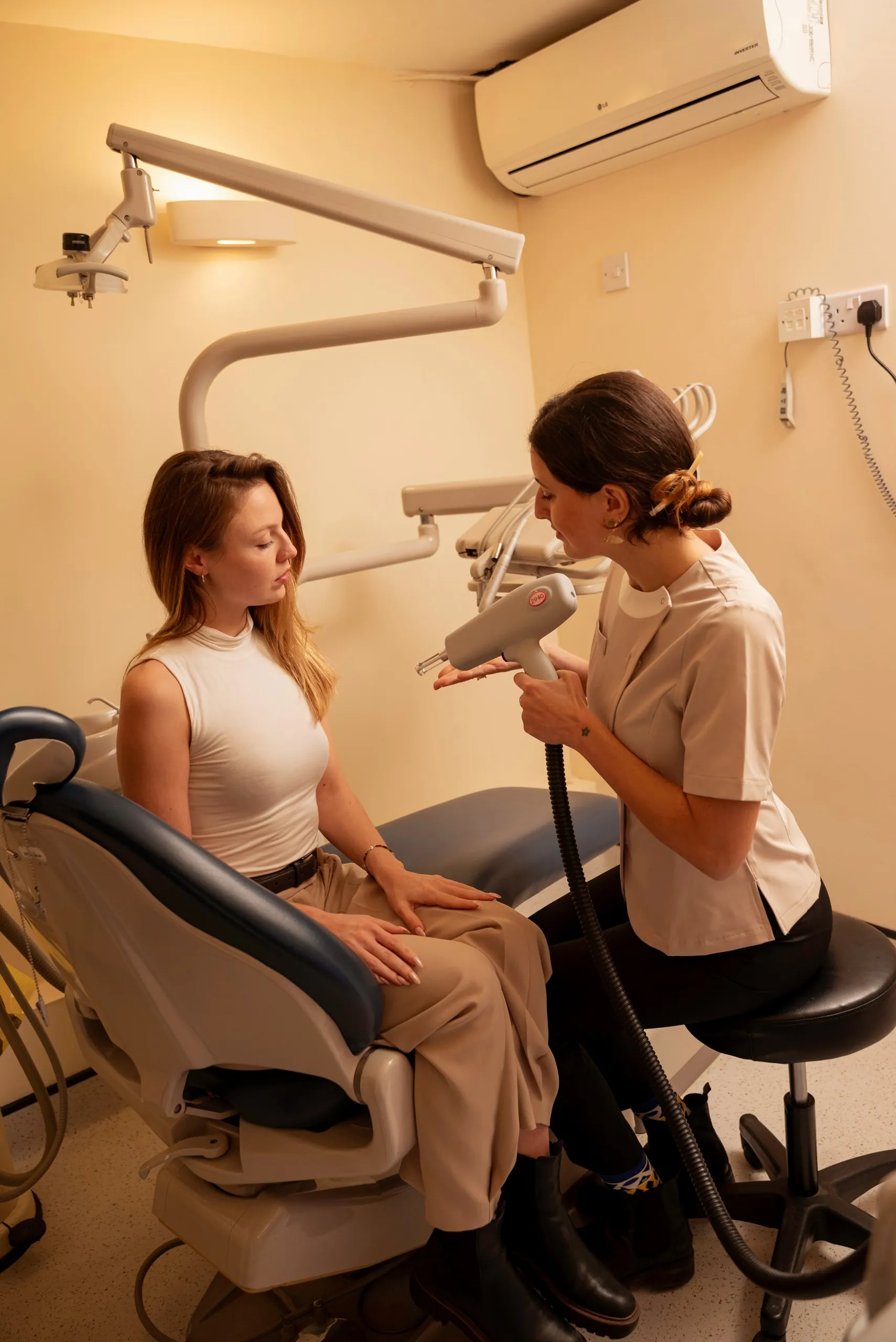
Laser hair removal works well for many people with PCOS, but because PCOS keeps stimulating new growth, it usually needs 8 to 12 sessions and regular maintenance. Results are better when PCOS is also managed medically. At Dental & Wellness London, Islington, we use Lynton IPL or the Lynton Nd:YAG laser, chosen for your skin type, with a free patch test. Small areas are £45 to £75 per session.
- Works well for many people with PCOS
- Usually 8 to 12 sessions, then maintenance
- Best for dark, coarse hair
- Lynton Nd:YAG laser or IPL, chosen for your skin
- Free patch test
- Small areas £45–£75 per session
Laser hair removal for PCOS in Islington
Does laser hair removal work for PCOS?
Yes, laser hair removal can work well for unwanted hair linked to polycystic ovary syndrome (PCOS), and many people find it makes a real difference to daily life. Because PCOS keeps stimulating new hair growth, it usually needs more sessions than standard treatment and regular maintenance afterwards. We are honest about that from the start.
It is important to be clear about what laser hair removal does and does not do. It reduces hair in the area treated. It does not treat PCOS, change hormone levels or address any other aspect of the condition. We treat the hair; your GP or specialist looks after the condition itself. At our Islington clinic we see many people who have been managing unwanted facial or body hair for years, and our aim is to give them a realistic plan, without overstating what treatment can achieve.
Why hormonally driven hair behaves differently
Hair follicles in some areas of the body are sensitive to hormones. When that sensitivity is high, follicles that would normally grow fine, light hair can be prompted to grow thicker, darker hair. With PCOS this is common on the chin, jawline, upper lip and neck, and can also affect the chest, abdomen and other areas.
Laser and light treatments work by targeting the pigment in the hair and heating the follicle, which reduces its ability to grow hair. That works on hormonally driven hair as it does on any other dark hair. The difference is that the hormonal stimulus continues, so follicles that were not fully treated may recover, and new follicles can begin producing coarser hair over time. That is why treatment for PCOS-related hair is best thought of as a longer course followed by ongoing maintenance, rather than a single course with a fixed end point.
See your GP first
We do not diagnose PCOS or any other hormonal condition. If you have not already been assessed, we recommend seeing your GP before starting a course, particularly if your hair growth is new, has increased quickly, or has come with other changes such as irregular periods. Your GP can arrange the right tests and advise on diagnosis and hormonal management. Unwanted hair can have causes other than PCOS, and it is worth knowing what is behind it before treating it.
If anything you tell us at consultation suggests a medical cause that has not yet been looked at, we will suggest you see your GP before we begin. That is not a barrier to treatment; it simply means the plan is built on the right foundation.
What to expect
- An initial course of about 8 to 12 sessions, rather than 6 to 8
- Maintenance sessions every few months for as long as you want to keep the result
- Dark, coarse hair responds best; fine, light or grey hair responds poorly
- Results are often better when PCOS is also being managed medically by your GP or specialist
Most people notice that regrowth becomes slower, sparser and finer as the course goes on. Treated hairs usually shed over one to three weeks after each session. Facial hair is typically treated every 4 to 6 weeks, and it often needs more sessions than other areas. We review your progress part-way through the course and adjust the plan to how your hair is responding. Results vary from person to person, and we will not promise a hair-free result.
Laser or IPL for PCOS?
We have both a Lynton Nd:YAG laser and Lynton IPL, and choose by your skin type and hair. The Nd:YAG laser (1064nm) is often the better choice for darker skin. A free patch test comes first. Our comparison of laser hair removal vs IPL explains the difference.
Darker skin contains more of the pigment that the light is aimed at in the hair, so it needs particular care with any light-based treatment. Choosing the right device and settings protects the skin from burns and pigment changes. On darker skin we use a gentler approach, which can add sessions, and we consider that a sensible trade for safety. For a wider comparison, see IPL vs laser.
The consultation and patch test
Every course starts with a skin consultation. It costs £65 and is redeemable in full against treatment. We talk through your history of hair growth, any diagnosis and the care you are receiving, the areas that concern you most, and how you currently manage the hair. We also ask about any medicines you take, because some can make the skin more sensitive to light, and about recent sun exposure or fake tan.
We then explain which device we recommend, how many sessions you are likely to need and what maintenance may look like afterwards. A free patch test follows, so that we can check how your skin responds at the settings we intend to use before the first full session. Treatment is carried out under the oversight of Dr Vishal Patel, who is trained by Lynton Lasers. You can read more on Dr Patel’s profile.
Looking after your skin between sessions
Many people with PCOS-related hair have spent years plucking, threading or waxing, and the skin can be irritated or prone to ingrown hairs. During a course, shaving is the right way to manage regrowth, because it leaves the root in place for the next session. Please stop waxing, plucking and threading for at least four weeks before treatment. Our guide to laser hair removal and sun exposure explains how to plan around the sun.
- Shave the area the day before, or on the day, of each session
- Avoid sun and fake tan on the area for two weeks before treatment
- Use a high-factor sunscreen on treated facial skin throughout the course
- Expect mild redness for a few hours to a day after each session; a cool compress and a gentle, unperfumed moisturiser help
- Avoid hot baths, saunas and perfumed products on the area for the following days
Shaving does not make hair grow back thicker or darker, although regrowth can feel coarser because of the blunt tip. For many people, moving from plucking to shaving during a course also means less irritation and fewer ingrown hairs.
Keeping expectations realistic
Laser hair removal gives a substantial, long-term reduction rather than removing every hair for ever, and with hormonally driven growth that distinction matters. Most people reach a point where the remaining hair is far less noticeable and much easier to manage, with a few finer hairs and occasional new ones. Maintenance sessions keep it there. If your hormones change, for example with a change in your medical treatment, the pattern of growth may change too, and we will adapt the plan with you.
Fine, light, grey or white hairs respond poorly to light-based treatment. If some of your hair falls into that group, we will say so plainly, so that you know what the course can and cannot address.
Working alongside your GP
PCOS is a medical condition, and laser treats the hair, not the cause. Your GP or specialist can advise on whether medical treatment is right for you and on managing the condition over the long term. At our clinic, nutritional therapist Nicoletta Peloni can also support you with nutrition and lifestyle, alongside your medical care. That support is in addition to, never instead of, the care you receive from your GP.
Why have treatment with us in Islington
Our clinic on Essex Road has cared for patients in Islington since 2009, and we are rated 4.7 stars from more than 300 Google reviews. Unwanted hair linked to PCOS can be a sensitive subject, and we treat it calmly and privately, with time at consultation to talk it through. Having both a laser and IPL means the device is chosen for your skin, and we will always tell you when a treatment is not the right answer.
Prices
Small areas such as the chin or upper lip are £45 to £75 per session, medium areas £95 to £165 and large areas £195 to £295. Because PCOS-related hair usually needs a longer course and ongoing maintenance, we give you a realistic estimate of the number of sessions at consultation, so you can plan the full cost from the start. See our laser hair removal prices. The clinic is at 222 Essex Road, Islington, London N1 3AP, two minutes from Essex Road station and a short ride from Angel, Highbury, Canonbury, Hackney and Stoke Newington. Many patients cycle or use a Lime or Forest e-bike.
Clinically reviewed by Dr Vishal Patel · BDS · MSc Aesthetic & Restorative Dentistry · GDC 103127. Last reviewed 1 October 2026.
Dr Vishal Patel
Clinical lead · Lynton Lasers trained, including ONDA
BDS Liverpool · MSc Aesthetic & Restorative Dentistry (Manchester) · GDC 103127 · Lynton Lasers trained, including ONDA · International Fellowship in Advanced Aesthetic Science (IFAAS) · 10 years in facial aesthetics
We will tell you when a treatment is not the right answer. That honesty is part of the treatment.
Read Dr Patel’s profile →For the full picture, including how this compares with the alternatives, see our guide to laser hair removal.
Further reading
Why PCOS needs different protocols
PCOS produces ongoing androgen-driven hair growth that doesn't follow normal patterns. Specifically:
- More active follicles at any time (less anagen/telogen ratio)
- Continued recruitment of new follicles into active growth over years
- Coarser, darker hair in androgen-sensitive areas (chin, neck, abdomen, chest, back)
- Hormonal drive continues regardless of laser treatment
This means: standard 6-8 session courses may not give the same lasting reduction; ongoing maintenance is usually needed.
Coordination with medical care
PCOS is a medical condition needing medical management. Laser hair removal is supportive cosmetic treatment, not primary care. We coordinate with:
- GP for general PCOS management
- Endocrinologist for hormonal management
- Gynaecologist where relevant
- Sometimes dermatologist for skin manifestations
Medical management (hormonal contraceptives, other prescribed medication, lifestyle modifications) often reduces the underlying hair growth drive. Combined with laser, outcomes are better than laser alone.
DWL integrative perspective
Nicoletta Peloni, our nutritional therapist, can offer nutrition and lifestyle support alongside your medical care. Combined with laser, integrated approach often produces better outcomes than fragmented care.
Honest commitment
PCOS patients should understand the long-term nature before committing:
- 8-12 initial sessions (£45-£295 per session by area)
- Maintenance every 4-6 months indefinitely
- Total annual cost ongoing
- Medical management alongside
For the right patients, the quality-of-life improvement from substantially reduced excessive hair growth justifies the ongoing commitment. We discuss honestly at consultation.
Our happy patients,
in their own words
Transparent pricing
Prices are set out below. Your written plan confirms the fee before any treatment begins.
Clear prices, by area.
Chin, upper lip
Underarms, bikini, neck
Legs, back, abdomen
Included
- Free patch test
- A written course plan
Quoted separately
- Maintenance sessions, priced per area
Questions
people ask
If your question isn't answered here, call reception on 020 8127 4567 or email reception.
Does laser hair removal work for PCOS?
Yes, for many people. Because PCOS keeps stimulating new growth, it usually needs more sessions than usual and regular maintenance.
How many laser sessions does PCOS-related hair need?
Usually 8 to 12 initial sessions, then maintenance every few months.
Can I get laser hair removal if I have PCOS?
Yes. We assess your skin and hair with a free patch test first, and choose the Lynton Nd:YAG laser or Lynton IPL to suit you.
Should I have medical treatment alongside laser?
It often helps. Your GP or specialist can advise on treatment that reduces new hair growth, which makes laser results last longer.
Which hair removal is best for PCOS?
For dark, coarse hair, laser or IPL usually gives the best long-term reduction. Darker skin is often better suited to laser. We advise after a patch test.