Perimenopause — whole-body support for the transition years
Reviewed By
Last Updated
October 1, 2026
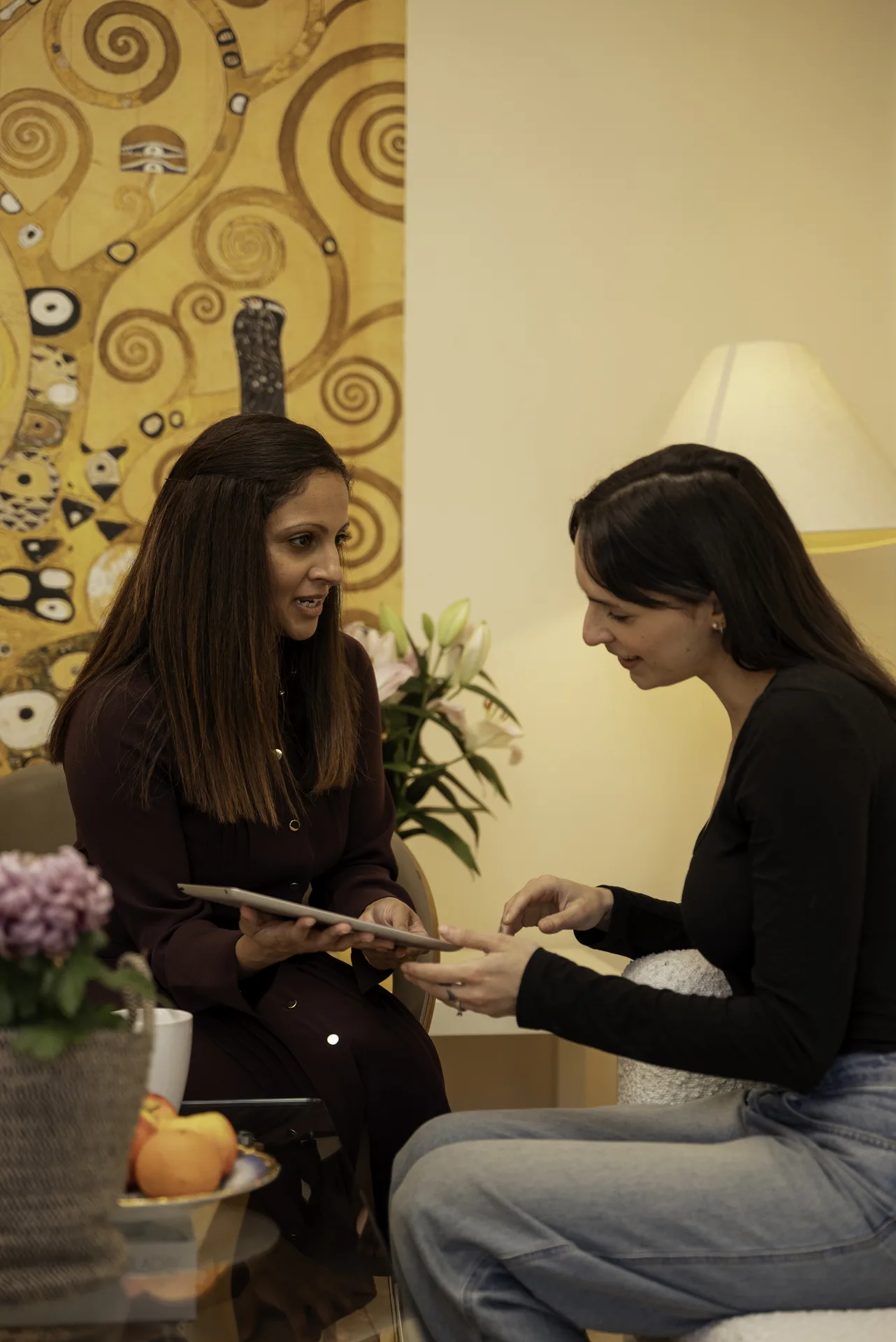
Perimenopause is a 4-10 year transition, not a single event.
Perimenopause is the transition before menopause, when oestrogen and progesterone fluctuate and cycles, sleep, mood, skin and even the mouth can change. Your GP leads care, including any discussion of HRT. At our Islington clinic, nutritional therapy, Ayurvedic consultations, somatic coaching and dental care can support you alongside that medical care, never in place of it.
Visible Signs & Symptoms
Perimenopause is the stage running up to menopause, which the NHS defines as the point when you have not had a period for 12 months. It usually begins in the forties, sometimes earlier, and can last several years. The defining feature is fluctuation rather than a simple fall in hormones: oestrogen can swing high and low from month to month while progesterone declines more steadily. That is why a settled month can follow a difficult one, and why a single blood test often looks normal.
Common signs
- Changes to your cycle: shorter, longer, heavier, lighter or less predictable periods
- Hot flushes and night sweats
- Disrupted sleep, often waking in the early hours
- Low mood, irritability or new anxiety
- Difficulty concentrating or remembering, often described as brain fog
- Joint and muscle aches, headaches, and changes in skin and hair
- Reduced libido and vaginal dryness
Changes in the mouth
Oestrogen affects gum tissue and salivary glands, so the transition can show up at the dentist as well as the GP. Some women notice a drier mouth, gums that bleed more easily, a burning or altered taste sensation with no obvious cause, or new jaw ache on waking from night-time clenching. These signs are common, but they deserve a proper look rather than being put down to hormones alone.
How it is recognised
Perimenopause is usually recognised from the pattern of symptoms and your age rather than a test. NICE guidance supports diagnosing perimenopause on symptoms alone in women over 45. Your GP makes that assessment and is the right first conversation if you are unsure what is happening.

Clinical Root Causes
Perimenopause is a natural stage of life, not an illness. As the ovaries gradually respond less predictably, the hormone signals that regulate the menstrual cycle become irregular. Oestrogen has effects well beyond the reproductive system, which is why the transition can touch temperature regulation, sleep, mood, bone, skin, joints and the mouth at the same time.
What shapes the experience
- Sleep. Night sweats and early waking fragment sleep, and poor sleep in turn makes mood, concentration and pain sensitivity harder to manage.
- Stress load. The forties often bring heavy work, caring and family demands. A more reactive stress response can amplify flushes, anxiety and night-time clenching.
- Blood sugar and eating patterns. Long gaps between meals, irregular eating and alcohol can make some women more aware of flushes, energy dips and disturbed sleep.
- Heavier periods. Heavier bleeding in the transition can affect iron levels and energy; this needs checking by your GP.
- Health history. Some medical treatments and surgery can bring on menopause earlier or more abruptly, and family history can influence timing.
Earlier menopause
If symptoms begin before 45, or your periods stop before 40, speak to your GP. Early or premature menopause has its own medical considerations and should always be assessed by a doctor.
Why the mouth is involved
Lower and fluctuating oestrogen can reduce saliva flow and change how gum tissue responds to plaque. Saliva protects teeth against decay and helps keep gums healthy, so a persistently dry mouth matters beyond comfort. Disturbed sleep and a more alert nervous system can also bring on clenching or grinding at night, which is why some women notice teeth grinding for the first time in this decade.
Perimenopause is not something you simply have to put up with. Symptoms that are left unacknowledged can wear down sleep, confidence, work and relationships, and many women go months or years without connecting them to the transition. A GP conversation opens up options, including HRT and other medical treatments, which are decisions for you and your doctor.
Women often describe feeling dismissed, or being told to wait until their periods stop. You do not need to wait. Keeping a simple symptom diary for a few weeks, noting cycles, sleep, flushes and mood, can make the GP appointment more productive.
Oestrogen also helps protect bone and heart health, which is one reason the years around menopause are a sensible time to review your overall health with your GP. In the mouth, untreated gum inflammation and a dry mouth can raise the risk of gum disease and decay, so bleeding gums should be assessed rather than written off as hormonal.
See your GP if
- Your periods have changed significantly or symptoms are affecting daily life
- You would like to discuss HRT or other treatment
- Symptoms started before 45
- Low mood or anxiety feels persistent or more than you can manage
Seek prompt medical advice for
- Bleeding between periods, after sex, or any bleeding after your periods have stopped: always investigated by your GP
- Very heavy bleeding, or feeling faint or breathless
- Chest pain, or feeling in immediate danger: call 999 or go to A&E
- Urgent health concerns out of hours: call NHS 111
If your mood is very low, you can refer yourself to NHS talking therapies, and Samaritans are available day and night on 116 123.
Medical care comes first. Your GP or a menopause specialist assesses your symptoms and discusses treatment, including whether HRT is right for you. We do not prescribe hormones or advise on HRT decisions. Many of the women we see are already on HRT or considering it, and the support below sits alongside that, not in competition with it.
Nutritional support
With Nicoletta Peloni (mGNC, mANP), nutritional therapy focuses on practical eating patterns: steady meals, protein, foods that support bone health, and the timing of alcohol and caffeine, which some women find affects flushes and sleep. Advice is tailored to you and coordinated with anything your GP is managing. Our page on naturopathy describes a related approach.
Daily routine and the Ayurvedic view
Dr Reena Sohal offers Ayurvedic consultations looking at routine, rest, food and the whole pattern of symptoms such as dryness and broken sleep. We present Ayurveda honestly as a traditional framework that many people find useful alongside conventional care, not as a medical treatment.
Stress, sleep and the nervous system
Laura-Maria Schober (MSc, EMCC) offers somatic coaching and mindfulness, working with body awareness, breathing and settling practices for early waking, tension and a wired-but-tired state. If sleep or mood problems are significant, your GP remains the route to medical assessment and NHS talking therapies. For the practical side of a demanding decade, Binta Patel (ICF ACC) offers life and relationship coaching.
The dental side
A dental examination with charting gives a baseline for gum health and dry-mouth effects. Where night-time clenching is wearing teeth or causing morning jaw ache, Dr Vishal Patel can assess whether a Davies hard splint is appropriate to protect them.
How we choose where to start
We match support to your main concern rather than offering a fixed programme. If energy, flushes or eating patterns are the focus, nutritional work is often the first step. If broken sleep, tension or feeling on edge dominate, somatic coaching and mindfulness may suit you better. If you prefer a whole-pattern view of routine and rest, an Ayurvedic consultation is a good starting point. Gum, dryness or jaw symptoms point to a dental examination first. One strand at a time is usually easier to sustain than several at once. If you would like a wider look at underlying patterns, functional medicine is a related route.
What happens at DWL
Most women start with a free 20-minute discovery call by phone. We listen to which symptoms trouble you most, confirm your GP is involved, and suggest one practitioner to begin with rather than everything at once. If your mouth or jaw is part of the picture, a dental examination comes first. We review how things are going and adjust as the transition changes. Our perimenopause care page explains the wider approach. Responses vary, and we make no promises about outcomes.
Cost
- Discovery call (20 minutes, phone): free
- Nutritionist session (90 minutes): £75
- Ayurvedic medicine: £75 · Ayurvedic review appointment: £50
- Mindfulness: £65
- Life coaching: £75
- Dental examination: £65
- Hygiene appointment: £85
- Davies hard splint: £495
0% APR finance over 12 months is available on dental treatment. GP care, HRT and prescriptions sit within your NHS or private medical pathway.
We are at 222 Essex Road, Islington, N1, two minutes from Essex Road station. Buses 38, 56, 73, 341 and 476 stop on Essex Road, and many patients cycle or arrive by Lime or Forest e-bike.
Perimenopause care — integrative support for the transition
Coordinated Ayurvedic, nutritional, somatic and coaching support for the perimenopause transition — complementary to your GP and HRT, never a replacement for medical care.
Nutritional therapy in London — clinical food-as-medicine practice
Clinical food-as-medicine practice with Nicoletta Peloni — registered nutritional therapist working alongside dental and integrative care under one roof.
If your question isn't here, call reception on 020 8127 4567 or book a free discovery call.Text Link
View all FAQs →How do I know if I'm in perimenopause?
Pattern over tests, usually. Cycle changes plus new symptoms in your forties is the classic picture. Single-day hormone blood tests are often normal because the defining feature is fluctuation.
Should I take HRT?
That's a decision for you and your GP or menopause specialist. What we'd say confidently: HRT and body-level support aren't competitors — most of the women we support are also on HRT.
Can diet really help with hot flushes?
For many women, meaningfully — blood-sugar instability amplifies flush intensity, and stabilising it is one of the better-evidenced nutritional levers. Alcohol and caffeine timing matter too.
Why does my mouth feel dry all the time now?
Falling oestrogen reduces salivary flow, a genuinely common perimenopausal symptom. It matters beyond comfort: saliva protects against decay and gum inflammation.
Is Ayurveda evidence-based for menopause?
Honestly: the traditional evidence is observational across millennia rather than trial-based, and modern trial evidence for specific protocols is limited but growing. We present it as what it is.
My gums have started bleeding in my forties — is that hormonal?
Quite possibly contributory — hormonal fluctuation changes gum tissue's inflammatory response. But bleeding gums always warrant proper periodontal assessment rather than being written off as hormonal.
Why has my jaw started aching in perimenopause?
Fragmented sleep and a more reactive nervous system often drive new-onset night-time clenching, causing morning jaw ache and tension headaches. We assess whether wear justifies a protective splint.
Can perimenopause cause more inflammation generally?
Declining oestrogen is associated with a shift toward a more inflammatory baseline, part of why gums, joints, and skin can all change at once. The nutritional and routine work that supports blood-sugar stability and sleep addresses several of the feeding levers.