Meditation classes in London — what to look for, and how meditation integrates with body-level wellness
Reviewed By
Dr Vishal Patel
BDS Liverpool · MSc Aesthetic & Restorative Dentistry Manchester · GDC 103127 · AACD Member · Invisalign provider since 2014 · Spark, 32Co, Six Month Smiles and Fastbraces provider · Myobrace certified · IFAAS (International Fellowship in Advanced Aesthetic Science) · Facial anatomy & cadaver course, Dr Ali Pirayesh, University of Amsterdam · Harley Academy foundation training in injectable aesthetics · IBSA-trained (Profhilo) · NeoStrata-trained (skin peels) · Lynton Lasers trained, incl. ONDA
Last Updated
September 12, 2026
What good meditation teaching looks like in London — and how meditation principles already sit inside our Ayurvedic and somatic consultations at Dental & Wellness London.
Meditation classes in London range from secular mindfulness (MBSR/MBCT clinical model) to traditional Buddhist, Hindu, and contemporary movement-based forms. Cost ranges £10-£25 per drop-in class to £200-£600 for structured 8-week courses. At Dental & Wellness London we refer to qualified meditation teachers for structured class instruction; meditation principles are integrated into our Ayurvedic and somatic consultations.
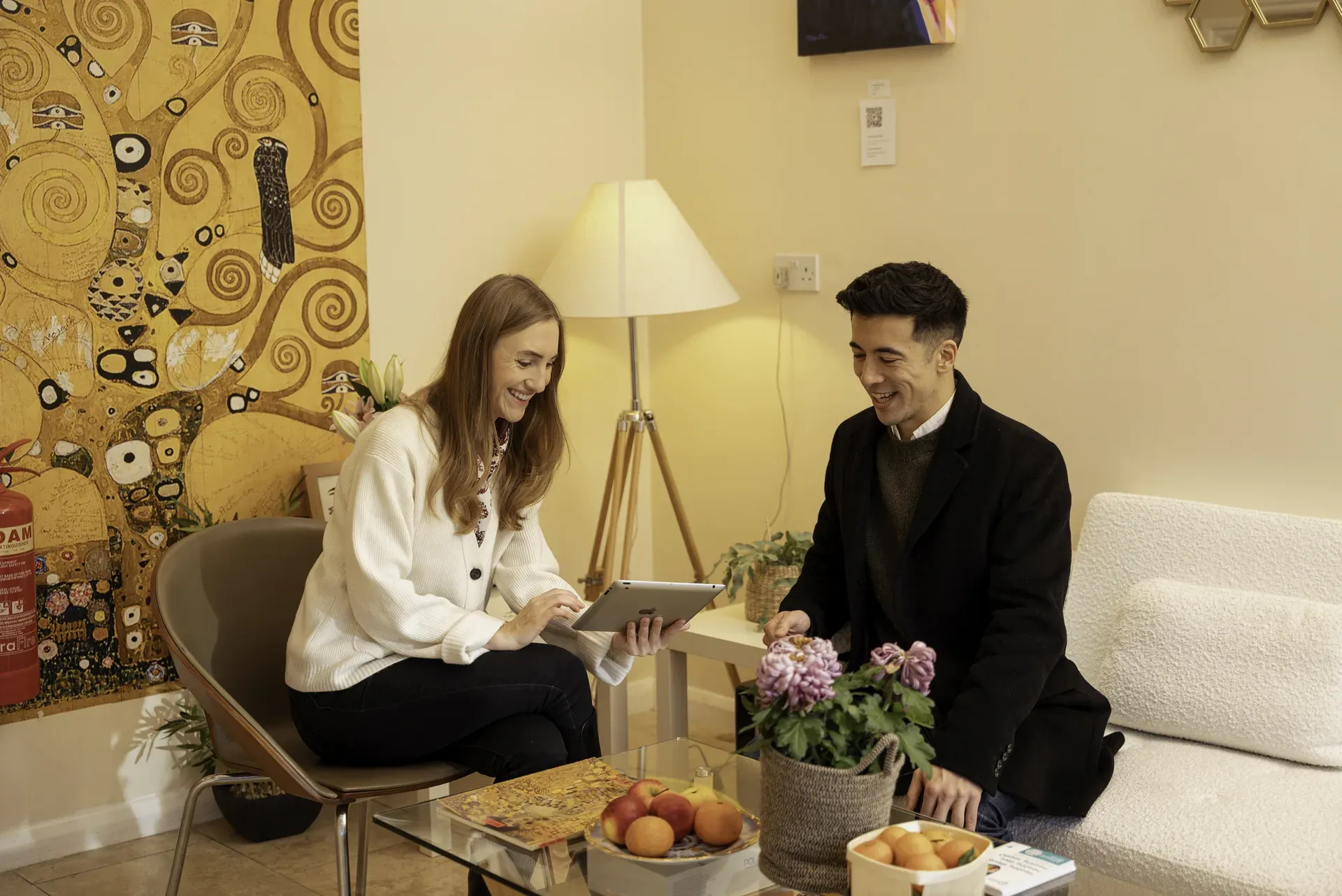
Meditation Classes London — How to Choose + Integrative Care | DWL
- Meditation classes range from drop-in (£10-£25) to 8-week structured courses (£200-£600)
- Major traditions: MBSR, MBCT, Buddhist insight (Vipassana), Transcendental Meditation, yoga-integrated meditation
- DWL does not offer standalone meditation classes — we refer to qualified teachers
- Meditation principles integrated into Ayurvedic consultations (Dr Reena Sohal) and somatic sessions (Laura-Maria Schober)
- Breath instruction provided across consultations for nervous-system regulation
Defining meditation in London 2026
Where DWL fits and doesn't
MBSR, MBCT, Vipassana, TM, Yoga
We do not run group meditation classes ourselves — the honest next step is a consultation with the right practitioner here, or a referral to a qualified external teacher. If seated stillness feels difficult, body psychotherapy offers a body-led alternative.
If you are still weighing up your options, our overview of psychotherapy brings them together in one place. Where stillness is hard because of past experience, trauma therapy may be the more suitable starting point.
Transparent pricing
Prices are set out below. Your written plan confirms the fee before any treatment begins.
0% APR finance over 12 months via Tabeo, subject to status.
Questions
people ask
If your question isn't answered here, call reception on 020 8127 4567 or email reception.
Can I learn meditation from an app?
For introduction and basic practice, yes — apps like Headspace, Calm, and Insight Timer can establish habit and basic technique. For deeper practice or when difficult material surfaces, an in-person teacher relationship typically becomes important.
Is meditation safe for everyone?
Generally yes, but not always. Patients with active trauma symptoms, dissociative tendencies, severe depression, or active psychosis can sometimes experience worsening with intensive meditation practice. A trauma-aware teacher can guide appropriate practice. We refer where needed.
How long until meditation helps?
For acute nervous-system regulation, minutes — slow-exhale breathing produces measurable autonomic shift within 90 seconds. For pattern change, sustained practice over 8-12 weeks shows reliable results. Meditation isn't a fast fix; it's a slow accumulation.
Should I meditate if I have panic attacks?
Cautiously, and ideally with guidance. Body-aware meditation, slow-exhale breathing, and movement-based practice tend to suit better than silent seated practice for panic. Working with somatic support first, then adding meditation later, is often the better sequence.
Will meditation help with sleep?
Often yes, modestly. Pre-sleep slow breathing and body-scan practice have good evidence for reducing sleep-onset latency and improving subjective sleep quality. It works less well for waking through the night, which often has different drivers.