A dry mouth is treated as a nuisance. It's actually a risk signal
Most people who mention a dry mouth do so almost as an afterthought — somewhere between the toothache and the broken filling, as though it barely counts. And occasionally it doesn't. But the reflex to dismiss it gets the priorities backwards. The dryness you notice is the least important part. The part that matters is invisible: every hour your mouth runs short of saliva, the natural system that protects your teeth from decay is switched off.
We see the consequence often enough to take it seriously. Someone with decades of sound teeth develops three or four cavities in a single year, in unusual places — around the gum line, on the roots, on smooth surfaces that are normally well protected. They are baffled, because nothing about their brushing has changed. What changed was a new medication, or the menopause, or a habit of breathing through the mouth at night — and with it, their saliva. So this guide treats dry mouth the way a dentist does: not as a comfort problem to be sipped away, but as a shift into a higher-risk category that is worth understanding and worth fixing at the source. Our hygienist appointments in Islington are built around exactly this kind of risk.
What saliva actually does — and why losing it matters
Saliva is not just water. It is a remarkable fluid that washes away food debris, neutralises the acids that erode enamel, carries minerals that repair early decay, holds antibacterial proteins that keep harmful microbes in check, lubricates speech and swallowing, and lets you taste your food. A healthy adult produces between half a litre and a litre and a half a day, mostly without noticing. When that flow drops, every one of those protective jobs weakens at once.
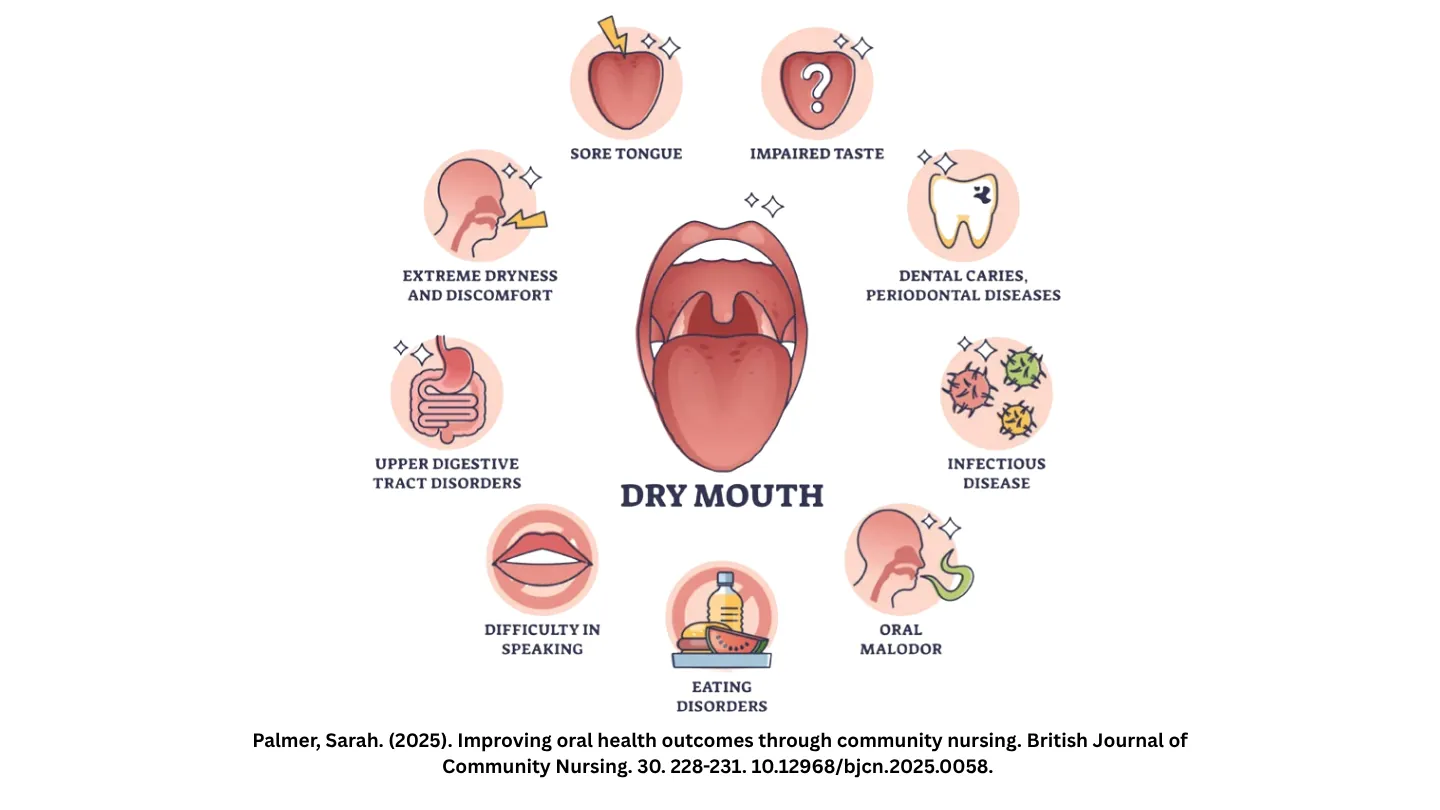
That is why dry mouth is not only uncomfortable. It quietly raises the risk of tooth decay, gum disease, mouth infections, bad breath, and difficulty eating and speaking. The experience varies: some people notice it mainly at night or on waking, with a sticky feeling and a need to sip water; others feel it all day, struggle to swallow dry foods like bread or crackers, find their tongue sore or their lips cracking, or notice their sense of taste has dulled. Denture wearers may suddenly find their dentures less comfortable. Recognising the pattern — when it happens, what makes it worse — is the first clue to the cause.
The causes — finding yours is what makes it treatable
Dry mouth is almost always a side effect of something else rather than a condition in its own right. Here is the hierarchy, most common first.
Medications — by far the leading cause. Over 400 medications list dry mouth as a side effect: antidepressants, antihistamines, blood pressure medicines, diuretics ("water tablets"), painkillers, overactive-bladder medicines, and many more. The effect stacks — someone on several at once often experiences far more dryness than any single one would cause. This is the first thing to review, and never something to stop on your own. It is a conversation with your GP or pharmacist, who can sometimes adjust a dose or switch to an alternative.
Menopause and hormonal change. Falling oestrogen affects the moisture of tissues throughout the body, the mouth included. Many women notice new dryness, a burning sensation, or altered taste through the perimenopausal years. It is common, real, and under-discussed.
Mouth breathing. If you breathe through your mouth — particularly at night — air constantly passes over the oral tissues and dries them. This is why so many people wake parched. The underlying reason might be nasal congestion, allergies, a deviated septum, or snoring, and treating the breathing often resolves the dryness at its source. Mouth breathing and snoring frequently travel together. Our approach to mouth breathing treatment looks at the usual underlying causes.
Dehydration. Simply not drinking enough, or losing fluid through illness, fever, exercise, or alcohol, reduces the raw material saliva is made from. The most easily reversible cause, and worth ruling out first.
Anxiety and stress. When the body shifts into a "fight or flight" state, saliva flow drops — the dry mouth before public speaking is the everyday version. Chronic stress can keep the system in that state and leave the mouth persistently dry. This is a genuine, physiological link, not imagination.
Caffeine, alcohol, and smoking. Caffeine and alcohol are mild diuretics and dry the mouth directly; alcohol-based mouthwashes do the same. Smoking and vaping reduce saliva flow and irritate the tissues.
Medical conditions. Sjögren's syndrome is an autoimmune condition that specifically attacks the moisture-producing glands and causes marked dry mouth and dry eyes. Poorly controlled diabetes is a common contributor; thyroid conditions, some neurological conditions, and HIV can play a part. Cancer treatment — radiotherapy to the head and neck — can damage the salivary glands, sometimes permanently, and chemotherapy can reduce saliva temporarily, which is why these patients need specific dental support.
For many people it is a combination — a new medication, plus a less freely breathing nose, plus too much coffee and not enough water. As so often in the mouth, the picture rarely fits one tidy box, and unpicking the contributing factors one at a time is what brings relief.
The mechanism that should worry you: the broken repair cycle
This is the section that explains why a dentist cares about something that sounds minor.
Saliva is the mouth's natural defence against decay, and it works as a constant cycle. Every time you eat, the bacteria in dental plaque produce acid, and that acid begins to dissolve the minerals in your enamel. In a healthy mouth, saliva quickly neutralises the acid and then redeposits calcium and phosphate back into the enamel — a continuous loop of damage and repair that, in balance, keeps teeth sound for decades.
Take saliva away and the loop breaks. The acid lingers, the enamel is not remineralised, and decay accelerates. This is why people with significant dry mouth develop cavities rapidly and in unusual places, and why it is not uncommon to see several cavities in a single year after a lifetime of healthy teeth. The same loss of protection raises the risk of gum disease, because saliva also keeps harmful bacteria in check, and of oral thrush and other infections. Bad breath becomes more likely too, as the cleansing flow that normally clears bacteria and debris is reduced — a connection explored further in our guide to the causes and treatment of bad breath.
The practical message: if you have ongoing dry mouth, you have moved into a higher-risk category for your teeth even if nothing hurts yet. That is exactly why it is worth raising with a dentist rather than living with it quietly.
At-home remedies that actually help
Many people get real relief from straightforward measures. None of these treat an underlying medical cause, but they ease the symptom and protect the teeth while the cause is addressed.
Sip water steadily through the day — small frequent sips do more than occasional large drinks. Keep water by the bed for night-time dryness. Chew sugar-free gum or suck sugar-free sweets; chewing is one of the strongest natural stimulants of saliva, and products containing xylitol are doubly useful because xylitol also reduces decay-causing bacteria (the "sugar-free" part is essential — sugary sweets in a dry mouth are a fast route to cavities). Use a saliva substitute — sprays, gels, lozenges, or rinses from the pharmacy mimic natural saliva and are especially helpful at night or before meals. Breathe through your nose: if mouth breathing is the cause, addressing nasal congestion or snoring often solves the dryness at its root. Cut back on the dryers — reduce caffeine and alcohol, especially in the evening, and switch to an alcohol-free mouthwash. Humidify the bedroom to ease morning dryness in heated rooms. And protect your teeth deliberately: use a fluoride toothpaste, consider a higher-fluoride one on a dentist's advice, and don't rinse with water after brushing — spit out the excess and let the fluoride keep working.
An Ayurvedic perspective. Traditional Ayurvedic practice has long viewed dryness as an imbalance to be soothed rather than only suppressed, and some of its gentle measures sit comfortably alongside modern advice — adequate warm water through the day, oil-based mouth care such as a brief swill of sesame or coconut oil, and reducing the drying, stimulating inputs of excess caffeine and alcohol. Dr Reena Sohal's training as an Ayurvedic therapist informs how we discuss these supportive habits with patients drawn to them — as a complement to evidence-based dental care, never a replacement for it.

When to see a dentist, and when to see a doctor
Occasional dry mouth from a salty meal, a nervous moment, or a hot day needs no attention. But see a dentist if dry mouth is persistent, if it disturbs your sleep or eating, or if you notice the early signs of its consequences — new sensitivity, rough patches on teeth, more frequent cavities, sore or cracked corners of the mouth, or a white coating that might be thrush. A dentist can assess your decay risk, apply protective treatments, and tailor how often you should be seen.
Speak to your GP or pharmacist if you suspect a medication is responsible, if the dryness began around the menopause and is affecting your quality of life, or if it comes alongside other symptoms — particularly dry eyes, joint pain, or marked fatigue, which together can point toward Sjögren's syndrome or another underlying condition. Dry mouth with no obvious cause, or that appears suddenly and severely, should always be checked.
We are transparent about scope: a dentist manages the oral consequences of dry mouth and helps identify likely causes, but adjusting medication, diagnosing menopause-related change, or investigating a possible autoimmune condition belongs with your doctor. The two work best together, and we say so plainly rather than treating something outside our remit.
Treatment: two fronts at once
Treating dry mouth means working on two fronts together — easing the symptom and protecting the teeth, while the underlying cause is addressed by the right person.
Reviewing the cause. If medication is the likely driver, your GP or pharmacist may adjust the dose, change the timing, or switch to an alternative with less drying effect. If a condition such as diabetes or Sjögren's is involved, treating it is the foundation everything else rests on. Stimulating saliva. Sugar-free gum and lozenges help most people; for more significant cases, doctors can prescribe medications that stimulate the glands directly, where glands can still produce saliva. Saliva substitutes. Modern sprays, gels, and rinses are far more effective than older formulations, particularly overnight and before meals.
Intensive decay prevention at the dentist is where dental care earns its place. For higher-risk mouths we provide prescription-strength fluoride toothpaste or varnish, tailored advice, and closer monitoring to catch decay early. Our hygiene appointments run 30 minutes at £85 (£135 for Diamond hygiene with air polish), with deep cleaning included, which gives time for proper assessment, thorough, comfortable cleaning, and genuine coaching on protecting a dry, vulnerable mouth. Spread across the year, that closer monitoring is far cheaper than the run of fillings an unmonitored dry mouth tends to produce — preventing decay is always less costly than restoring it. Managing related problems — treating thrush if it develops, refitting uncomfortable dentures, and addressing the gum disease and bad breath that often accompany dry mouth — completes the picture.
Dry mouth and the oral microbiome
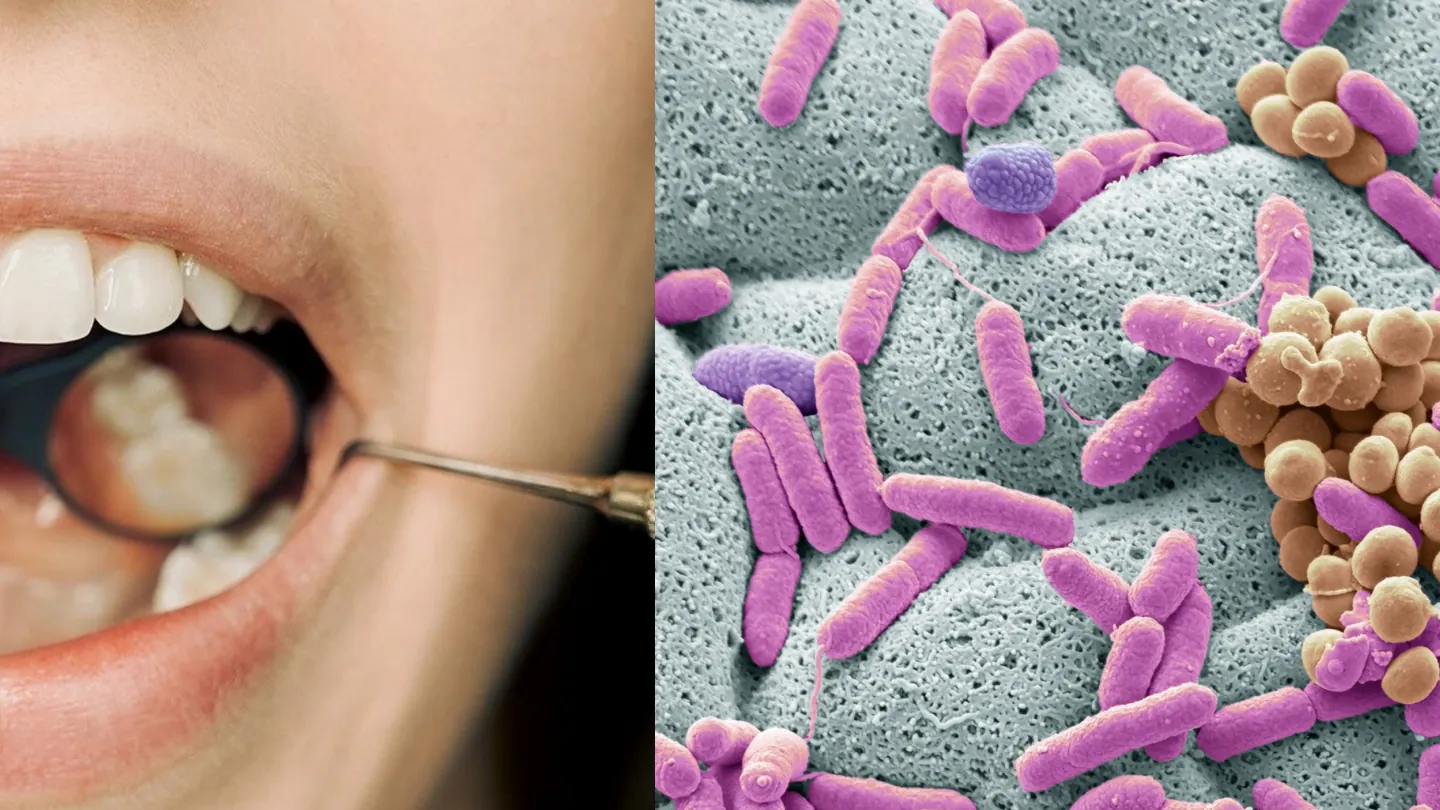
The mouth is home to a vast community of microbes — the oral microbiome — and in health it sits in a balance that protects the teeth and gums. Saliva is one of the main forces keeping that balance steady: it physically washes microbes through the mouth, controls the acidity they live in, and carries antibacterial proteins that hold the more harmful species in check.
When saliva falls, the balance tips. Acid lingers, so acid-loving, decay-causing bacteria are favoured and multiply, while gentler, protective species are crowded out. The result is a microbiome shifted toward the species that cause cavities, gum inflammation, and odour. This is the mechanism beneath the higher risk of a dry mouth — not simply "less spit," but a changed ecosystem. It also explains why a thoughtful approach does more than add moisture: xylitol gum both stimulates saliva and selectively discourages decay-causing bacteria, reducing dietary sugar starves those same species, and alcohol-free rather than alcohol-based mouthwash avoids stripping the balance further. The aim is not to sterilise the mouth but to restore conditions in which the helpful microbes hold their ground.
The whole-body connection
Dry mouth is a useful reminder that the mouth is not sealed off from the rest of the body — it is a window onto it. Very often, dryness is a sign of something happening more widely: medications for the heart or the mind, the hormonal shift of menopause, a nervous system stuck in a stressed, activated state, or an autoimmune condition affecting moisture-producing glands throughout the body.
This is why our approach looks beyond the symptom. An integrative, whole-person view asks not only "how do we keep these teeth safe from decay?" but "why is this mouth dry, and what is that telling us?" Where chronic stress and a dysregulated nervous system are part of the picture — and with dry mouth, they often are — calming the system through breathing, sleep, and nervous-system regulation can help saliva return alongside the practical dental measures. The links between the mouth and the rest of the body are explored further in our piece on the mouth–body connection. We say no often to over-treatment, and dry mouth is a good example: sometimes the honest answer is more water and less coffee, a conversation with your GP about a medication, and a closer eye on your teeth — not an elaborate intervention. The goal is a comfortable mouth and protected teeth, reached by the simplest route that works.
Frequently asked questions
Why is my mouth so dry at night? Night-time dryness is usually caused by mouth breathing during sleep — often because the nose is congested — or by snoring. Air passing over the oral tissues for hours dries them, so you wake parched. Medications taken in the evening, alcohol before bed, and a warm, dry bedroom all add to it. Keeping water by the bed, using a humidifier, treating nasal congestion, and trying a saliva gel before sleep usually help. If you also snore heavily or feel unrefreshed, it is worth looking at your breathing and sleep more closely.
Can dry mouth damage my teeth? Yes — this is the most important reason to take it seriously. Saliva neutralises acid and repairs early enamel damage, so when it drops, decay accelerates, often in unusual places like the gum line and tooth roots. People with long-standing dry mouth can develop several cavities in a year after decades of healthy teeth. Dry mouth also raises the risk of gum disease and mouth infections. If your mouth is persistently dry, your decay risk is higher even if nothing hurts, and your teeth should be monitored more closely.
Is dry mouth a sign of something serious? Usually it is a side effect of medication, dehydration, mouth breathing, or menopause rather than a serious condition. But persistent dry mouth can occasionally point to an underlying problem — most notably Sjögren's syndrome (an autoimmune condition causing dry mouth and dry eyes), or poorly controlled diabetes. Dry mouth that appears with dry eyes, joint pain, or marked fatigue, or that comes on suddenly and severely, should be checked by your GP. When in doubt, getting it assessed is the sensible course.
Does dry mouth go away on its own? It depends on the cause. Dry mouth from dehydration, a short illness, or a stressful period typically resolves once the cause passes. Dry mouth from an ongoing medication, the menopause, or a medical condition tends to persist until the cause is addressed, and won't simply fade on its own. The encouraging part is that most causes are treatable or manageable, so persistent dry mouth is worth investigating rather than enduring.
What can I drink or eat to help dry mouth? Water, sipped steadily through the day, is the foundation — small frequent sips work better than occasional large drinks. Sugar-free gum or xylitol lozenges strongly stimulate saliva. Crunchy, water-rich foods like cucumber, celery, and melon help, and moistening meals with sauces makes eating easier. Just as important is what to cut back on: caffeine and alcohol both dry the mouth, as do sugary drinks, which are doubly risky for vulnerable teeth.
Talk to us about a dry mouth
If your mouth is persistently dry, a proper dental examination (£65) protects your teeth while the cause is sorted out. We evaluate your decay risk, apply preventive treatments, give tailored advice for a dry mouth, and work alongside your GP where medication or a medical cause is involved.
Hygiene appointment (30 minutes) £85 · Call 020 8127 4567 or WhatsApp +44 7974 910222 (8am–7pm). Appointments Monday–Friday 8am–7pm by appointment (no Saturday, no walk-in) at 222 Essex Road, Islington, London N1 3AP. Rated 4.7★ across 300+ reviews.
Reviewed by Dr Vishal Patel · BDS Liverpool · MSc Aesthetic & Restorative Dentistry (Manchester) · GDC 103127 · AACD Member · and Dr Reena Sohal · BDS Liverpool · Diploma Advanced General Dental Practice (Birmingham) · Diploma Ayurvedic Therapist (Ayurveda Pura, London) · GDC 104355. This article is general information, not a diagnosis; persistent or unexplained dry mouth should be assessed by your dentist or GP. Last reviewed 2026-06-04.