Masseter muscle-relaxing treatment and jawline filler are not alternatives. One subtracts: it relaxes the masseter muscle so a wide, bulky jaw narrows over weeks. The other adds: dermal filler builds projection and a sharper border along a soft or recessed jawline. Choosing between them is not a price comparison — it is a question of whether your jaw is too wide or not defined enough.
Most articles that line these two treatments up side by side make the same quiet error. They treat the question as which is better — as if you pick the winner and book it. But the honest answer almost no comparison page gives is that they were never doing the same job. One narrows. One builds. The right question is not which treatment — it is what is the jaw actually doing, and that is a clinical assessment, not a menu choice.
The masseter is a muscle dentists work around every day — in bite analysis, in jaw-joint pain, in patients who grind. Dentists train on the complete head and neck: understanding vital facial structures and mapping blood vessels, nerves, muscle function is core curriculum rather than a weekend aesthetics add-on. That background changes how this comparison gets made. The aim is to read the jaw correctly and match it to the right tool — or say plainly that neither is the answer.
The category error: subtractive vs additive
Before any comparison, the single distinction that resolves most of the confusion.
Masseter muscle-relaxing treatment is subtractive. A small dose of botulinum toxin (a prescription-only medicine, named here for information only) is placed into the masseter — the thick chewing muscle at the back angle of the jaw. Over six to eight weeks the muscle uses its strength less, loses bulk, and the jaw line softens and narrows. It is the treatment for a jaw that looks too wide — usually because the masseter is overdeveloped, often in people who clench or grind.
Jawline filler is additive. A dermal filler — hyaluronic acid gel, which is not a prescription-only medicine — is placed along the jaw border and at the angle or chin to add projection, length, and a crisper edge. It is the treatment for a jaw that looks soft, recessed, or poorly defined — where the underlying bone does not give a clear line for the skin to drape over.
A wide, muscular jaw and a soft, undefined jaw are nearly opposite presentations. Bring a strong masseter to a clinic that sells filler, and volume gets added to a face that needed less. Bring a recessed jaw and relax a muscle that was barely there, and nothing changes for the money spent. The treatment is only as good as the reading that precedes it — which is where oral surgery experience and a habit of proportionate treatment matter more than which syringe is on the tray.
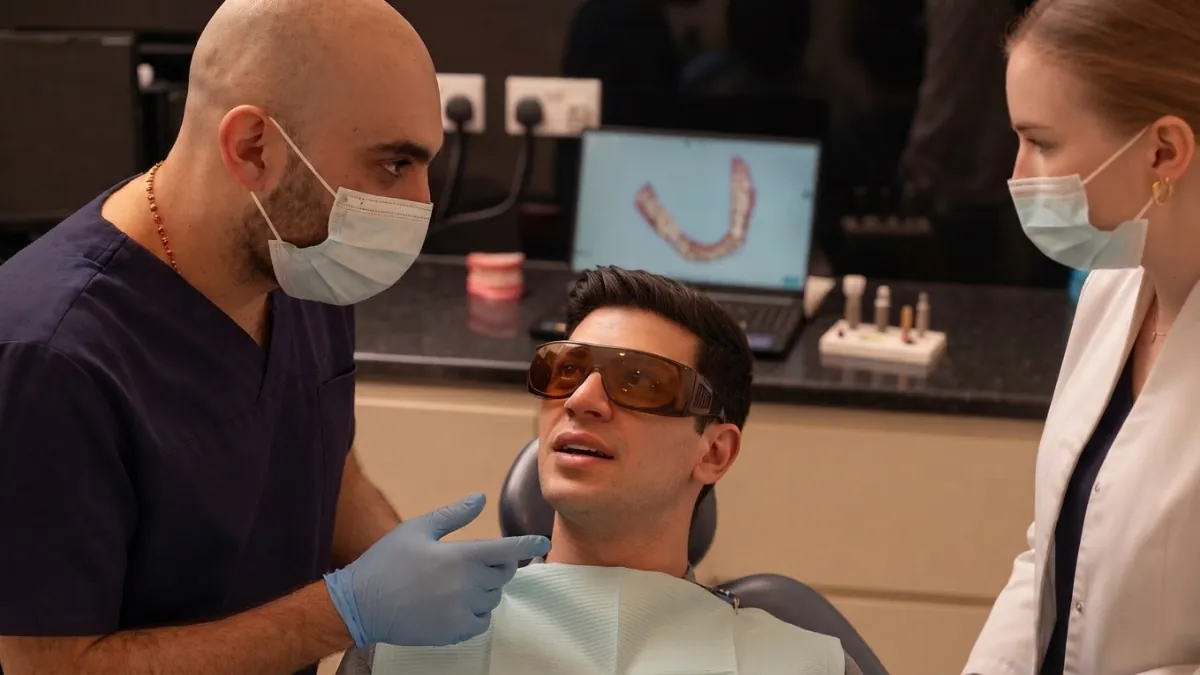
The three-question framework: what is the jaw actually showing
A consultation works through three questions in order. They decide everything.
Width
Is the jaw wide at the back angle, especially when clenching? A firm bulge above the jaw angle under a clench, with a square look from the front, points to the masseter doing the talking — a muscle concern. Filler will not fix it; relaxing the muscle will. This group is also more likely to grind, wake with a tight jaw, or carry tension headaches, which is why the bite and joint get assessed alongside the silhouette. Our guide to jaw slimming without surgery sets out the wider range of non-surgical options.
Definition
From the side: is there a clean, continuous border from chin to ear, or does the jaw blur into the neck with no clear edge? A jaw that is not too wide but not well defined is usually a bone-and-projection issue, not a muscle one. Filler can build that border and sharpen the angle. Relaxing a muscle that was never the problem would, if anything, make a soft jaw look softer.
Skin and time
Sometimes the concern is neither width nor projection but laxity — early jowling, a softening jaw with age, skin that has lost its grip on the structure beneath. Neither treatment is designed for that. Filler can sometimes restore a little support, but chasing skin laxity with volume is how faces end up heavy and over-filled. Where laxity is the real story, that gets said plainly, with skin-quality treatments — or doing nothing — as the honest alternative. High ethics here means a willingness to decline.
When the answer is both — and when it is neither
A minority of jaws genuinely show both patterns: a strong masseter widening the back of the jaw and a recessed chin or weak border leaving the front undefined. Sequence matters here — relax the muscle first, let the lower face settle over six to eight weeks as the shape changes, then assess whether filler is warranted and how little would do. Treating both on the same day means designing filler around a shape that is about to move. That is natural aesthetics as a process: building toward perfect balance and facial symmetry in stages.
And sometimes the answer is neither. A jaw that looks heavy in one phone photo under bad lighting is not a treatment candidate, nor is a request to match a celebrity jaw. Declining happens often — filler that would over-volumise, or muscle relaxation where the width is bone, not muscle, and the treatment simply will not work.
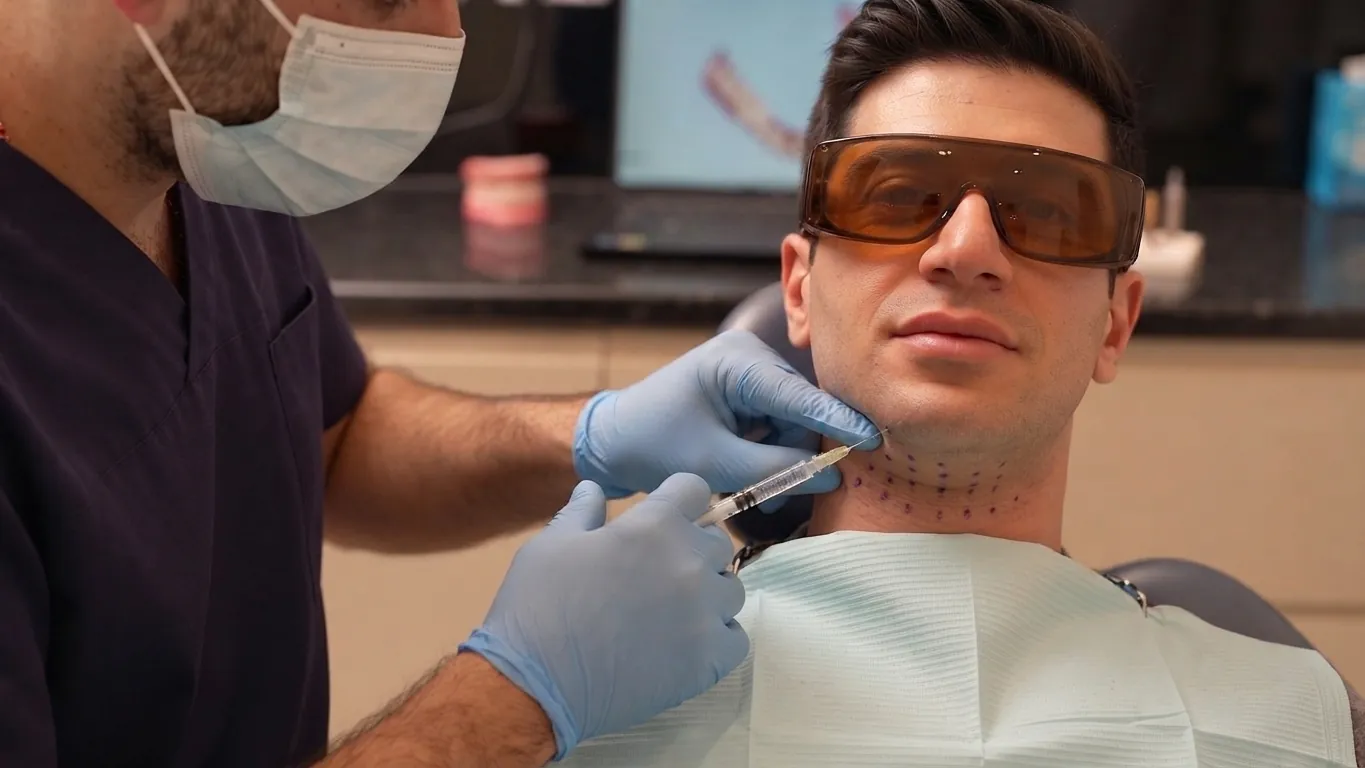
Why a cosmetic dentist for a jaw decision
A jaw is not just a surface to contour — it is a joint, a muscle group, and a bite working together. Training in Aesthetic & Restorative Dentistry sits on top of dental training in the masseter, the temporomandibular joint, and how the lower face moves. Jaw width is read against clenching and grinding, not just a photo. When a patient's "wide jaw" is really a clenching habit driving tooth wear and morning headaches, masseter treatment becomes part of a wider plan — sometimes alongside a protective splint — rather than a cosmetic one-off.
Any treatment involving botulinum toxin at Dental & Wellness London is prescribed by Dr Vishal Patel, BDS, MSc Aesthetic & Restorative Dentistry, GDC 103127, the clinic's sole aesthetic prescriber, after a face-to-face assessment. Dermal filler, not a prescription-only medicine, is delivered within the same proportionate, full-face framework.
What each costs — and why price is the wrong starting point
Because these treatments do different jobs, comparing prices tells you nothing about which to choose — but transparency matters.
Masseter treatment is from £300, with the final price confirmed at consultation. It is not permanent — the effect fades over three to six months, and gaps tend to lengthen over the first year as the muscle adapts.
Jawline filler is £300 for 1ml, with a contouring plan commonly using two to four syringes — so the plan, not the single syringe, is the number that matters. It's costed in writing at consultation before booking. Filler lasts longer in this region, typically twelve to eighteen months. For filler more broadly, see dermal fillers in Islington.
Choosing masseter treatment because it looks cheaper, when the jaw was never too wide, is the most expensive mistake of all — paying for a result that cannot be delivered.
Frequently asked questions
Can masseter treatment and jawline filler be done together? Sometimes, but not usually on the same day — the muscle is relaxed first and the lower face allowed to settle over six to eight weeks before filler is assessed.
Which one slims the face? Masseter treatment, and only where a bulky chewing muscle is making the lower face square. Filler adds volume, so it does not slim a wide jaw.
I just want a sharper jawline for photos — which is right? Depends why it lacks sharpness — a strong muscle needs relaxing; a soft border or recessed chin needs filler. The assessment decides, not a photo.
Is either treatment permanent? No. Masseter relaxation lasts three to six months early on; jawline filler lasts twelve to eighteen months. Both are adjustable over time.
What if the answer is neither? That gets said plainly, with an explanation — declining is part of the job.
A consultation, not a sales conversation
The most useful next step is not to pick one — it's a proper jaw assessment covering width, definition and skin quality, with an honest plan that includes the option that the answer is neither.
Dental & Wellness London · 222 Essex Road, Islington, London N1 3AP
Phone 020 8127 4567 · WhatsApp +44 7974 910222 (8am–7pm)
Open Monday to Friday, 8am–7pm, by appointment. Rated 4.7 from 300+ Google reviews.
Reviewed by Dr Vishal Patel · BDS, MSc Aesthetic & Restorative Dentistry · GDC 103127 · sole aesthetic prescriber. Botulinum toxin is a prescription-only medicine, referenced here for information only. Last reviewed 5 June 2026.