Polynucleotides are purified fragments of DNA, usually from salmon or trout, injected into skin to signal repair. The fragments are too small to interact with your own genes, but large enough to prompt fibroblasts to rebuild collagen and elastin. In the UK in 2026 they are prescription-only, used in aesthetic medicine since the early 2010s.
Why this guide exists
Polynucleotides are having a moment, and moments are when patients are most poorly served. Half of what is written about them online is breathless — "salmon DNA facials", "the fountain of youth" — and the other half is so technical it answers nothing. Neither tells you what the treatment actually is, what the evidence supports, and where the marketing has outrun the science.
I am a dentist with an MSc in Aesthetic & Restorative Dentistry, and this page is the explanation I give in consultation, written down. It is deliberately educational. If you want prices, suitability and booking, our main polynucleotides page covers them; this one is for understanding.
What polynucleotides are at a molecular level
DNA is a long chain built from units called nucleotides. A polynucleotide, literally, is many nucleotides joined together — a fragment of a DNA chain. The injectable product is made by taking natural DNA, purifying it rigorously, breaking it into fragments of a controlled length, and sterilising it.
Two properties of those fragments matter. They are too short to function as genes — they cannot insert themselves into your genome, carry no genetic instructions your cells can read, and are eventually broken down into the same building blocks your body recycles every day. And they are long enough to act as a signal — skin cells recognise fragmented DNA as a marker of tissue that needs repair, and respond accordingly.
That distinction — signal, not instruction — is the single most useful idea on this page. Polynucleotides do not reprogram anything. They knock on a door your biology already knows how to answer.
Why salmon DNA — the biological rationale
The DNA is sourced from the reproductive tissue of cold-water fish, usually salmon, sometimes trout, because it offers an unusual combination: it is abundant, it is highly pure, and — the part that surprises people — its structure is remarkably compatible with human DNA. That compatibility means the purified fragments provoke very little immune reaction. The protein components that cause fish allergy are removed during purification, which is why the finished product is tolerated even by most people who cannot eat salmon — though a known fish allergy is still screened and treated cautiously at consultation.
It is worth saying plainly: there is nothing mystical about the salmon. It is a sourcing decision driven by purity and compatibility, not a marketing flourish — however much the phrase "salmon DNA facial" suggests otherwise.
How polynucleotides work in skin — the regeneration cascade
Once injected into the dermis, polynucleotides do three things, in a rough sequence I describe to patients as the regeneration cascade.
First, they hydrate. The DNA fragments are highly water-binding, so the earliest visible change — within a week or two — is better-hydrated, slightly plumper-looking skin. This is the least interesting effect and the one most marketing leans on.
Second, they calm. There is reasonable evidence for an antioxidant and anti-inflammatory effect — the fragments scavenge free radicals and reduce the low-grade inflammation that accelerates skin ageing.
Third, they signal repair. This is the effect that distinguishes the category. Fibroblasts — the cells that manufacture collagen and elastin — respond to the fragments by increasing production. The result builds slowly: measurable improvement in skin thickness, elasticity and texture emerging over four to twelve weeks, well after the injection appointments themselves.
The honest corollary: anyone promising a dramatic next-day result from polynucleotides is describing the hydration, not the regeneration, and charging you for the wrong one.
What polynucleotides treat — and what they do not
Where the evidence is strongest: thin, crepey, tired skin, particularly under the eyes; early fine lines; skin quality after sun damage; and as groundwork before or alongside other treatments. Emerging areas — discussed honestly as emerging — include the scalp in early hair thinning, the neck, and acne scarring.
What they do not do is equally important. They do not fill. A deep nasolabial fold or a hollow tear trough is a volume problem, and polynucleotides add no volume. They do not lift — significant laxity is structural. And they do not stop muscle movement, so expression lines that only exist when you move are the territory of a different conversation entirely. A clinic that recommends polynucleotides for everything has stopped diagnosing.
Treatment areas
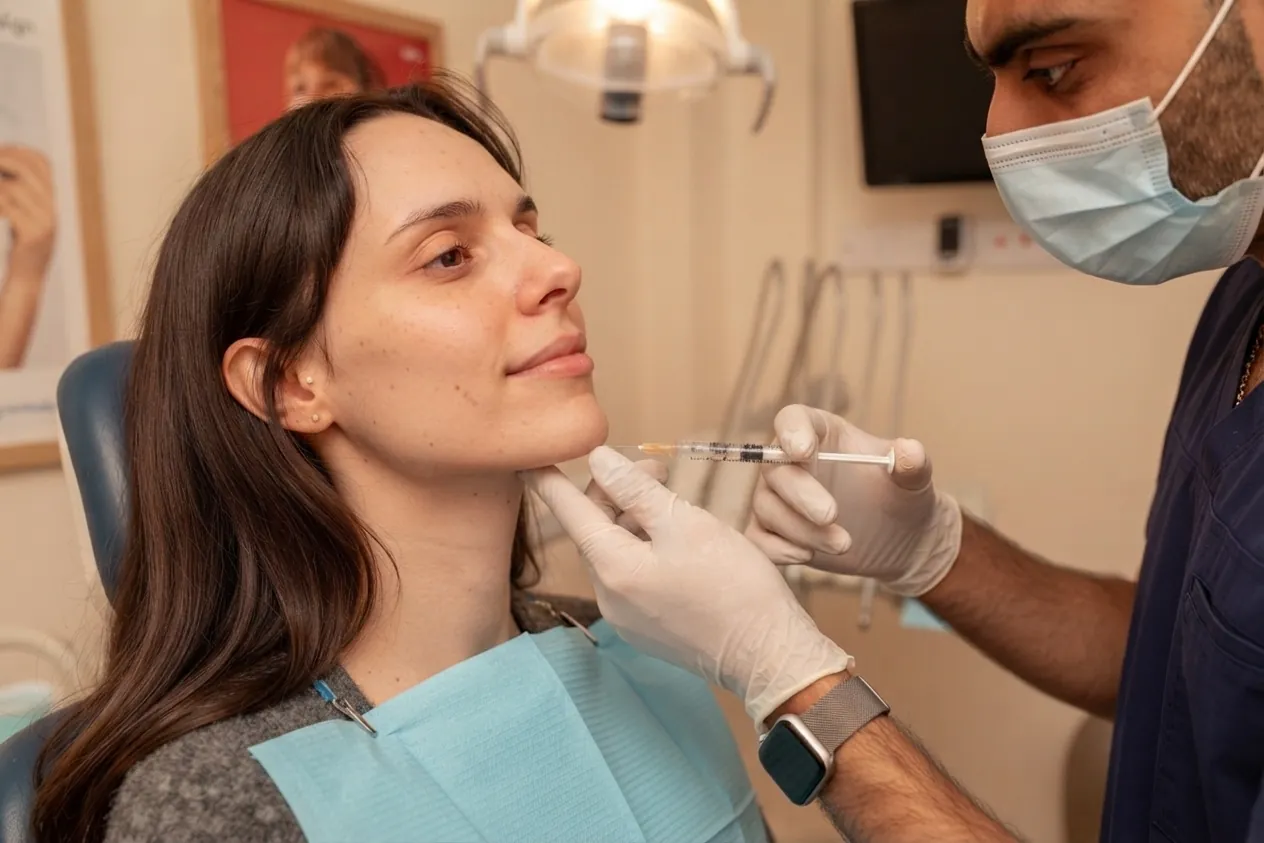
The under-eye is the signature area, because it is where thin, fragile skin meets the least forgiving anatomy — and where adding volume most often goes wrong. Beyond that: the full face for general skin quality, the neck and décolletage, the backs of the hands, and the scalp in the hair-loss protocol. Each area has its own dosing and course length, which is a clinical decision rather than a menu choice.
Safety profile — what a decade of use tells us
Polynucleotides have been used in European aesthetic and wound-care medicine since the early 2010s, with a consistently reassuring safety record. The common effects are those of any skin injection: small bumps that settle within hours, occasional bruising, mild swelling. Allergy is rare because of the purification process described above. There is no volume placed, so the migration and overfill problems associated with filler do not apply, and the serious vascular events linked to volumising injections are a different risk category altogether.
The honest qualifiers: "well tolerated" is not "risk-free" — any injection carries infection and bruising risk, and the under-eye demands an injector who genuinely understands vital facial structures and the blood vessels, nerves, muscle function beneath them. And the long-term evidence base, while growing and positive, is younger and thinner than that for hyaluronic acid. We say both things in consultation because high ethics is not a slogan; it is the habit of including the caveats.
UK regulation in 2026 — why this is prescription-only
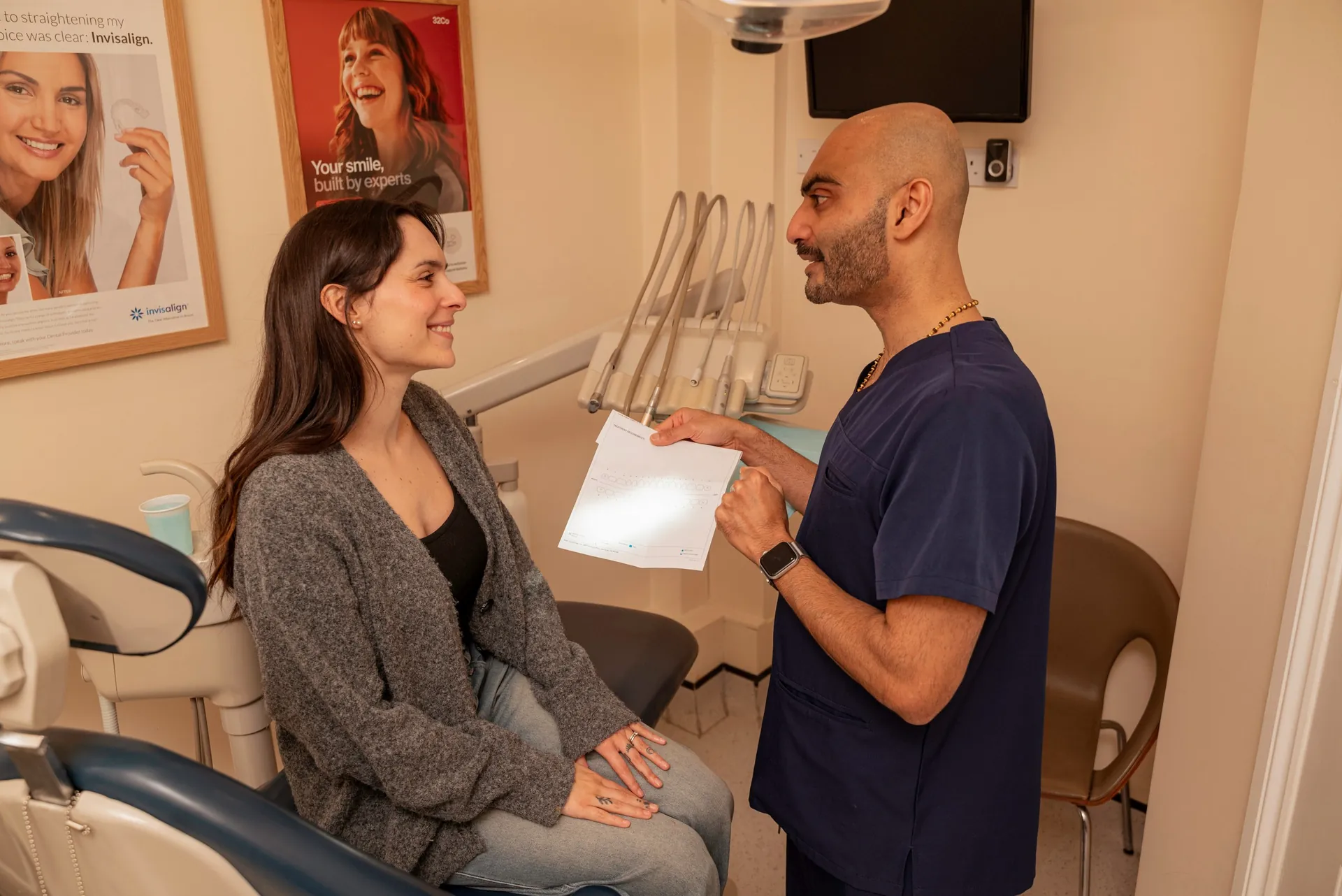
In the UK, injectable polynucleotide products are regulated as prescription-only medicines. That means a legitimate clinic cannot simply sell you a session: treatment requires a prescription issued by a qualified prescriber after a face-to-face assessment.
This is worth understanding as a patient because it is a quality filter. At Dental & Wellness London every polynucleotide treatment is prescribed and administered by Dr Vishal Patel, BDS, MSc Aesthetic & Restorative Dentistry, GDC 103127, our sole aesthetic prescriber. If a provider offers you polynucleotides with no prescriber, no assessment and no named clinician, the price is not the thing to scrutinise.
Brand differences — Plinest, Ameela, Nucleofill
Several branded products dominate the UK market — Plinest, Ameela and Nucleofill among them — and they differ in DNA concentration, fragment profile and gel consistency, which makes each slightly better suited to particular areas and skin types. Those differences are real but secondary: the choice of brand matters far less than the choice of diagnosis and injector. We select the product per patient and per area, not as a default — the same proportionate treatment logic that governs everything we inject. Brand-by-brand detail lives on our dedicated pages rather than here, because this guide is about the category.
Polynucleotides in 2026 — where the research is heading
The current research frontier includes scalp and hair applications, peri-orbital protocols, combination work alongside skin boosters and microneedling, and standardisation of dosing. The direction of travel is encouraging; the discipline is to describe it as direction, not destination. Where a use is emerging rather than established, we say so — patients deserve the distinction between "evidence shows" and "early studies suggest", and clinics earn trust by respecting it. The goal of any of it, properly used, is natural aesthetics — skin that behaves like better skin, in perfect balance with the face it belongs to, not a new face.
Frequently asked questions
Are polynucleotides FDA-approved in the UK?
The FDA is the American regulator and has no jurisdiction in the UK. Here, injectable polynucleotides are regulated as prescription-only medicines, which means assessment and prescription by a qualified prescriber are legal requirements — a stronger consumer protection than most patients realise.
Can I be allergic to salmon DNA?
True allergy to the purified product is rare, because the proteins that cause fish allergy are removed during purification. A known fish allergy is still something we screen for and treat with caution, and we will discuss it openly at assessment rather than dismiss it.
Why aren't polynucleotides talked about more?
They are newer to the UK mainstream than filler or skin boosters, they resist before-and-after drama because the change is gradual, and they are prescription-only — which limits who can legitimately offer them. Quiet treatments with slow results rarely trend; it says nothing about their merit.
Will polynucleotides replace fillers?
No — they answer a different question. Fillers restore volume; polynucleotides improve the quality of the skin itself. Many patients benefit from both, correctly sequenced; our polynucleotides versus Profhilo comparison shows how they differ. The treatments are colleagues, not competitors, and any clinic framing one as the replacement for the other is selling, not diagnosing.
Are they ethical?
The DNA is sourced from by-products of the food fishing industry — material that would otherwise be discarded — rather than from fish caught for the purpose. Patients with specific ethical or dietary concerns raise this with us regularly, and we would rather you ask than wonder.
How do I know if they are right for me?
You do not need to self-diagnose. The question a consultation answers is whether your concern is skin quality (the polynucleotide territory), volume, pigment or movement — and the treatment follows the diagnosis, not the trend.