Why dentists do not usually ask about stress
The reason is structural: tight appointment windows don't fit the conversation, and referral pathways usually involve a separate practitioner the patient has to seek out independently. At Dental Wellness London the 30-minute consultation slot is long enough, and the integrative team is in-house.
What chronic stress does to the dental system
Bruxism — chronic activation drives motor patterns the body discharges during sleep. Periodontal inflammation — cortisol amplifies local tissue inflammation, including in the gums. Immune modulation — chronic stress shifts immune resilience against periodontal pathogens and slows healing. Mouth-breathing — chronic activation correlates with shallow breathing patterns. Avoidant dental behaviour — many patients postpone treatment under broader life stress, presenting late with conditions that would have been simpler caught earlier. Our piece on jaw clenching and stress looks at the first of these in depth.
How recognising stress changes the treatment plan
For bruxism, a stress-aware clinician offers a splint AND a referral pathway for the underlying pattern — combined approach typically produces meaningful change in three to four months, where splint alone often does not. For recurring gum inflammation, hygiene continues alongside a look for systemic contributors. For dental anxiety, longer slots and explicit consent at each step make treatment possible for patients who'd otherwise avoid the chair.
What we ask at the first consultation
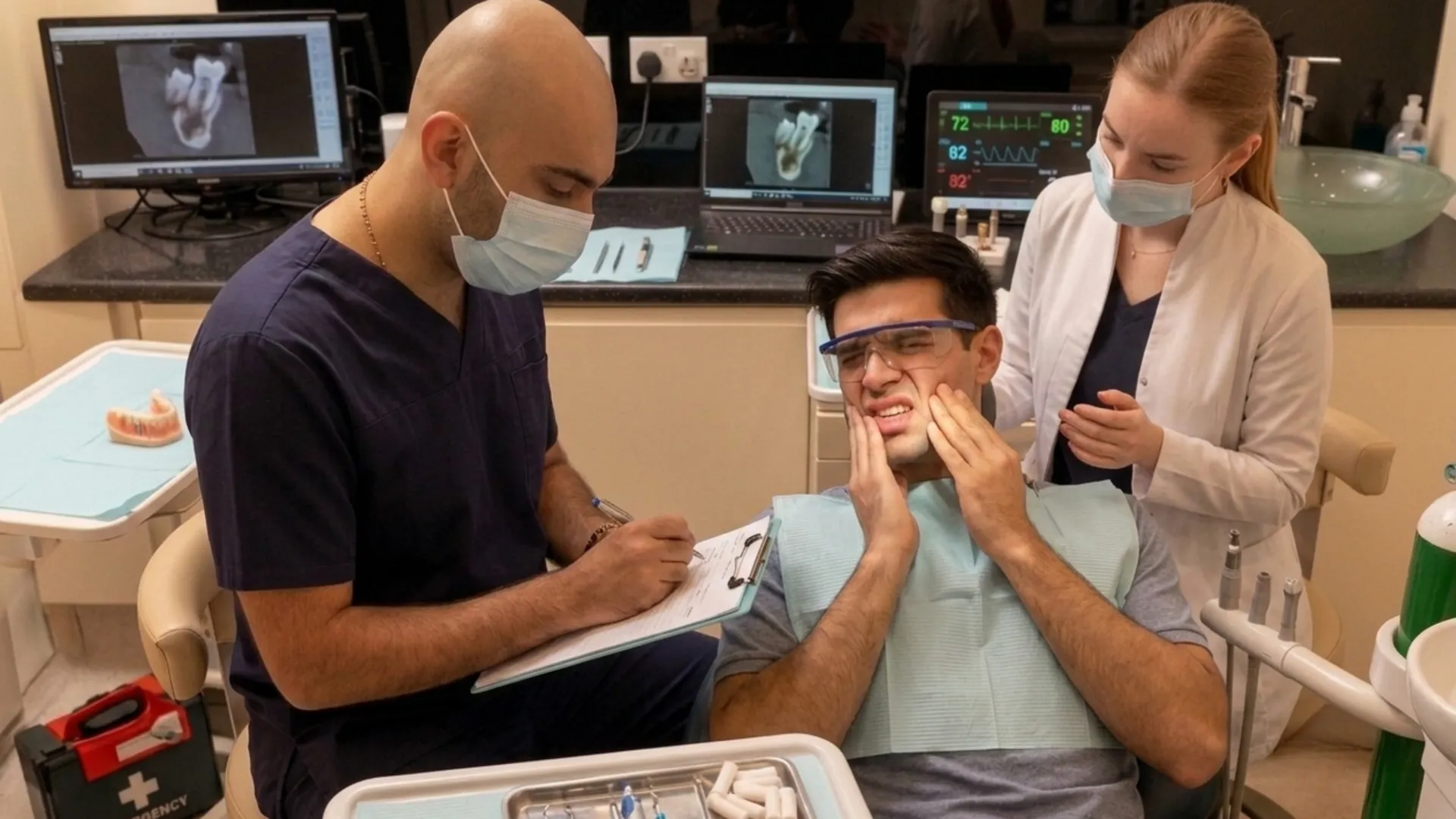
Simple, clinical-context questions: current stress level, episodic or chronic, main contributors, where it lands in the body, how you discharge it, whether your dental presentation has correlated with stressful periods. These are not therapy questions — patients who don't want to answer simply say so. Our guide to nervous system dysregulation explains the wider picture.
What we can offer — and what we cannot
Dentistry does not treat anxiety, depression or trauma — that's a psychotherapist or psychiatrist's territory. What we offer is in-house referral to integrative practitioners whose work addresses the patterns we see: somatic coaching, nutritional therapy, Ayurvedic consultation, life coaching. Our page on chronic stress and burnout sets out that support.
If you recognise yourself
A discovery conversation might be worth twenty minutes. Book the discovery call or call reception on 020 8127 4567. 222 Essex Road, Islington. Founded 2009.
Written by Dr Vishal Patel — Principal Dentist & Clinical Director, BDS, MSc Aesthetic & Restorative Dentistry (Manchester), GDC 103127. Last reviewed: 11 May 2026.