What is a holistic dentist? — the honest answer
A holistic dentist is, first and most importantly, a dentist — registered with the General Dental Council (GDC), trained in the same dental schools, bound by the same professional standards as any other UK dentist. "Holistic" describes an approach, not a separate qualification. It signals a clinician who considers the mouth in the context of the whole person — sleep, stress, breathing, diet, posture, general health — rather than treating teeth as isolated objects.
At Dental & Wellness London we describe what we do as integrative dentistry rather than "holistic" — partly because "holistic" is used so loosely it has lost precision, and partly because integrative is the more accurate word: mainstream, evidence-based dentistry, integrated with credentialled wellness practitioners under one roof. The principle: treat the system, not just the symptom — considered, conservative, never rushed.
What does a holistic dentist actually do?
Day-to-day, a holistic or integrative dentist does everything a conventional dentist does — examinations, fillings, crowns, root canals, hygiene, orthodontics, implants — with a wider set of questions attached. The clinical work is the same; the frame around it is broader.
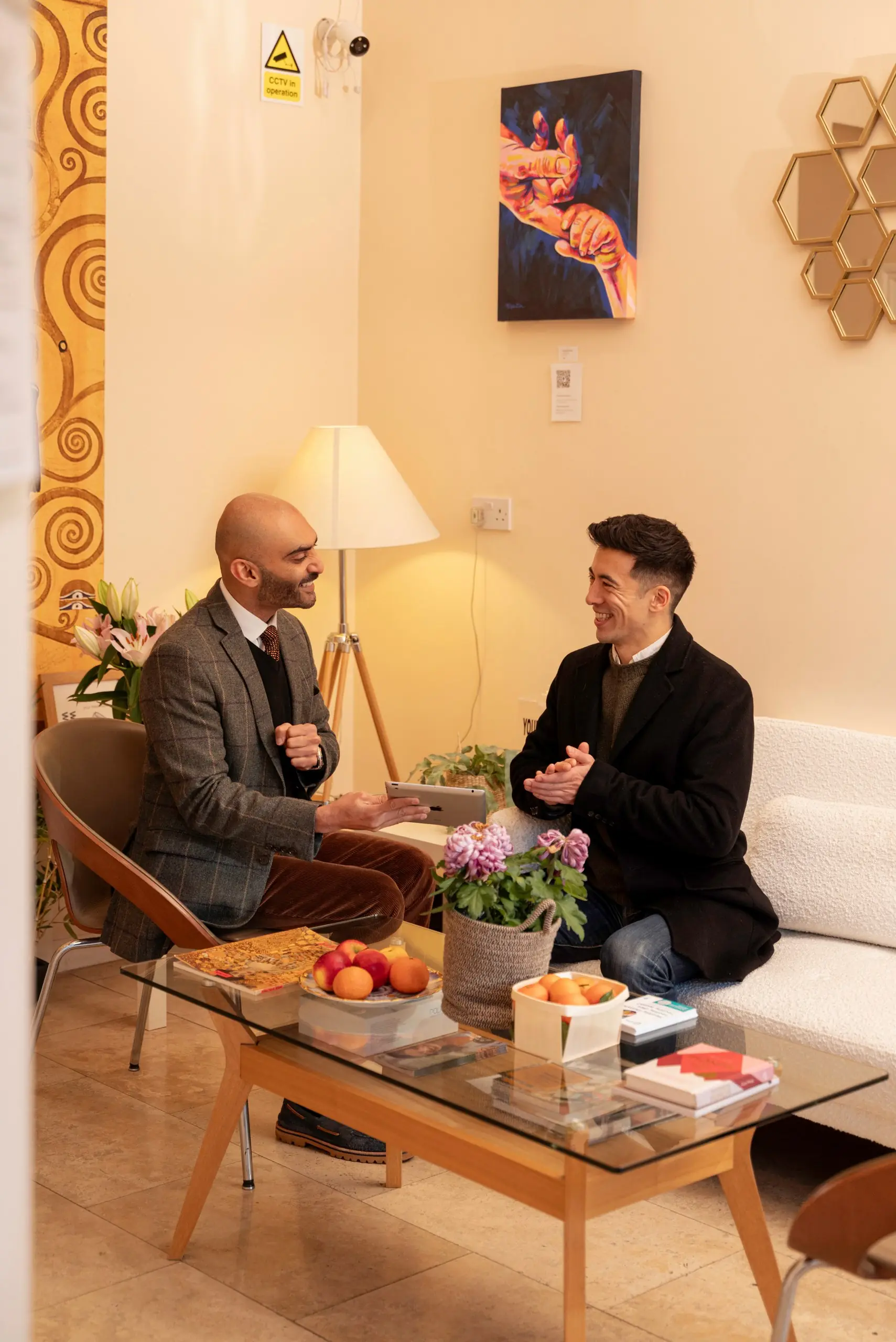
A longer, more questioning consultation. How you sleep, whether you snore or clench, how stressed you feel, your diet, whether you breathe through nose or mouth — each connects to a documented dental pattern.
Attention to the mouth–body connections with real evidence. The link between gum disease and several systemic conditions is one of the most studied relationships in modern dentistry.
A preference for minimally invasive, conservative care. Removing as little healthy tooth as possible, intervening early, choosing the least aggressive option that works.
Thoughtful material choices (biocompatibility). Reasonable clinical care — it becomes a problem only when it tips into unproven claims.
Coordination with other practitioners. A genuinely integrative clinic brings in nutritional therapy, airway assessment, or somatic support where the picture warrants it.
Holistic, integrative, biological — what's the difference?
Holistic dentistry is the broadest term — whole-person care with no single regulatory definition, which is why it can mean anything from a thoughtful dentist to a clinic making unsupported claims.
Integrative dentistry is what we call our own approach — evidence-based dentistry integrated with credentialled complementary practitioners, keeping mainstream clinical standards at the centre. The integrative part is additive; it never replaces the dentistry.
Biological dentistry overlaps heavily but tends to emphasise materials and "biocompatibility" most strongly, particularly around amalgam fillings. Some claims are reasonable; others stray beyond the evidence.
These are approaches and emphases, not protected titles. What matters far more is whether the clinician is GDC-registered, works within the evidence, and is honest about the limits of dentistry. Our comparison of holistic and biological dentistry goes into the detail.
The mouth–body connection — what the evidence shows
Periodontitis and cardiovascular disease. A substantial body of research, including consensus work from the European Federation of Periodontology and the World Heart Federation, documents an association with chronic inflammation as the proposed mechanism — a well-supported association, not a claim that treating gums prevents a heart attack.
Periodontitis and diabetes. The relationship is bidirectional and well-evidenced: poorly controlled diabetes worsens gum disease, and severe gum disease can make blood-sugar control harder.
Periodontitis and pregnancy outcomes. Research has associated periodontal disease with adverse outcomes such as low birth weight and pre-term birth.
What unites these: the mouth is not separate from the body, and chronic oral inflammation does not stay politely in the mouth. That is the legitimate scientific core of holistic dentistry.
What the evidence does not support: that dental treatment cures systemic disease, that a root-filled tooth causes cancer, that removing amalgam fillings resolves chronic illness, or that fluoride is a toxin to avoid. A credible holistic dentist will tell you so. Holistic dentistry done well is complementary to medicine, not a replacement for it.
Are holistic dentists qualified? — yes, and here's how to check
In the UK, anyone practising dentistry must be registered with the General Dental Council — a legal requirement. "Holistic dentist" is not a separate or lesser qualification. You can verify any dentist's registration on the free GDC online register. Dr Vishal Patel's GDC number is 103127; Dr Reena Sohal's is 104355.
A genuinely credentialled integrative clinic is transparent about three things: GDC registration of every dentist, the professional accreditation of complementary practitioners, and the boundary between dentistry and wellness support. If a clinic blurs those lines, that's a red flag regardless of the label.
How integrative dentistry works at Dental & Wellness London
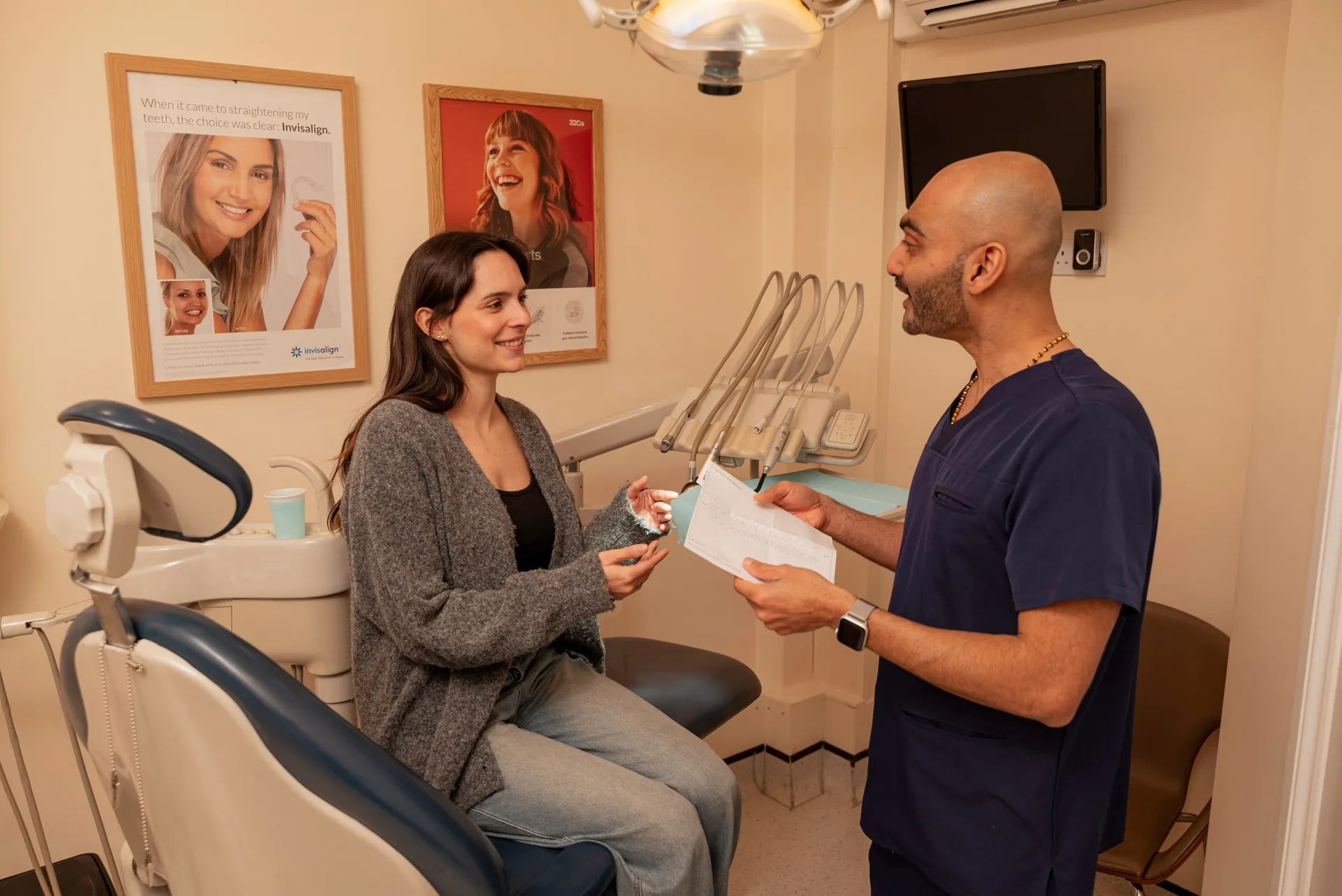
At DWL, integrative dentistry is how the building is organised. Alongside mainstream dental care we have credentialled practitioners on-site: an Ayurvedic practitioner (who is also GDC-registered), a nutritional therapist, and coaching and somatic-support practitioners. Dr Reena Sohal is one of very few UK clinicians who is both a GDC-registered dentist (GDC 104355, BDS Liverpool 2006) and a trained Ayurvedic practitioner.
In practice, an integrative appointment looks like a normal dental examination with a wider lens — asking about sleep and breathing, stress and clenching, diet. Where the picture warrants it, we bring in the right practitioner rather than treating the tooth and ignoring the person attached to it.
How to choose a holistic dentist well
Check GDC registration first via the GDC online register. No registration, no dentistry.
Look for honesty about limits. A trustworthy integrative dentist tells you what dentistry can and cannot do, and refers to medical care when needed.
Be wary of disease-cure claims. Removing fillings, avoiding fluoride, or extracting root-filled teeth curing systemic illness is a warning sign, not a selling point.
Ask about the team and their credentials. Genuine integrative care means credentialled complementary practitioners working alongside dentistry, transparently. Our first-visit checklist lists what to ask.
Notice the consultation. A whole-person dentist asks whole-person questions. A fast upsell rather than a careful conversation means the label is decoration.
Book an integrative dental consultation in Islington
A free 20-minute discovery call is available for new-patient enquiries, or you can book a dental examination at £65 (30 minutes, full risk assessment). 222 Essex Road, Islington, London N1 3AP, Mon-Fri 8am-7pm by appointment.
Call 020 8127 4567 · WhatsApp +44 7974 910222. 4.7★ from 300+ Google reviews.
FAQs
Is a holistic dentist a real dentist?
Yes. Every UK dentist — holistic, biological, integrative or conventional — must be registered with the GDC. "Holistic" describes an approach, not a lesser qualification.
What's the difference from a regular dentist?
The clinical work is the same, held to the same standards. The difference is the frame: whole-body context alongside conservative, minimally invasive treatment. It's an addition to mainstream dentistry, not a replacement.
Are holistic dentists qualified and safe?
A GDC-registered holistic dentist is as qualified and regulated as any other UK dentist. It becomes a concern only if a practitioner makes unproven disease-cure claims or positions dentistry as an alternative to seeing a doctor.
Do holistic dentists use fluoride?
Practice varies; a credible holistic dentist discusses it rather than imposing dogma. The weight of evidence supports fluoride's role in preventing decay — be cautious of any clinic framing it as a toxin.
Is holistic the same as biological dentistry?
They overlap heavily. "Biological" tends to emphasise materials and biocompatibility, particularly amalgam. Neither is a protected title.
Can a holistic dentist treat my medical condition?
No, and a trustworthy one says so. Holistic dentistry is complementary, not alternative — it never replaces medical care.
Why does DWL say "integrative" rather than "holistic"?
Because "holistic" is used so loosely it has lost precision; "integrative" is more accurate — evidence-based dentistry integrated with credentialled wellness practitioners, with mainstream clinical standards kept firmly at the centre.