Why the questions matter more than the label
"Holistic" is not a protected title in the UK. Anyone can put the word on a website. What tells you a great deal is how a clinic answers a handful of straightforward questions. The aim of a first visit is not to be impressed; it is to find out whether the whole-person approach you want sits on top of solid, registered, evidence-based dentistry. Our holistic dentistry at DWL is built on that foundation.
The principle behind all of them: holistic dentistry done well is complementary to medicine, not a replacement for it. A clinic that understands that will answer these questions easily; one that doesn't will tend to deflect. See our guides on what a holistic dentist actually is and the difference between holistic and biological dentistry for the wider context.
1. "Are you registered with the General Dental Council?"
Ask this first, always. In the UK, anyone practising dentistry must be GDC-registered, holistic and integrative dentists included. Registration is public and free to check on the GDC online register. A credible clinic gives you the registration number without hesitation; ours is GDC 103127 for Dr Vishal Patel and GDC 104355 for Dr Reena Sohal.
2. "Do you work alongside my GP, or instead of them?"
This single question separates credible integrative care from pseudoscience faster than any other. The right answer is unambiguous: alongside. Good oral health may support better general health, but dentistry does not diagnose or treat medical conditions. If a clinic suggests it can resolve systemic illness or replace your doctor, treat that as a warning sign.
3. "What does your first consultation actually involve?"
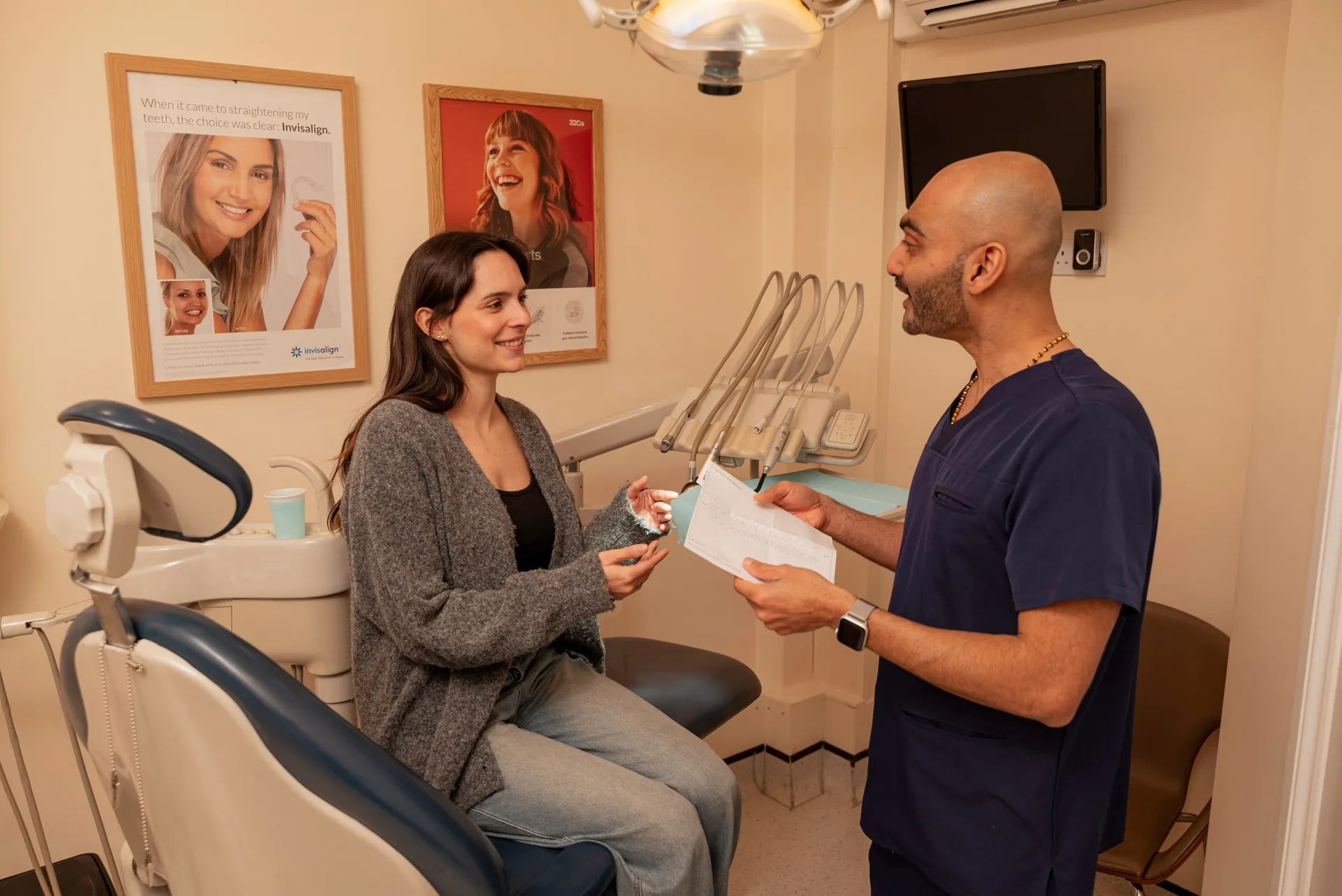
A whole-person consultation should feel different — longer, more questioning, genuinely curious about sleep, breathing, stress, diet, posture and general health, not just the tooth bothering you (see the whole-health assessment). Treating the system, not just the symptom, considered, conservative, never rushed. If the "holistic" first visit is a fast appointment that arrives quickly at an expensive treatment plan, the label and the practice don't match.
4. "Which materials do you use, and how do you choose them?"
Material choice is reasonable to ask about, particularly with known allergies. A good answer is practical and evidence-led: modern dentistry increasingly uses tooth-coloured composite anyway, amalgam is being phased down largely for environmental reasons, and biocompatible material selection for documented sensitivities is sensible. The WHO and FDI regard amalgam as safe for the general population, and removing sound, intact fillings for general-health reasons is not recommended — the only routine medical reason is a diagnosed allergy. Where replacement is clinically justified, our safe amalgam removal protocol applies. A clinic pressuring you to replace healthy fillings to "detox" has crossed into unsupported claims.
5. "Where do you stand on fluoride?"
You're not looking for a particular answer so much as a reasonable one. The weight of scientific evidence supports fluoride's role in preventing decay, and a credible dentist discusses it openly rather than imposing dogma. Be cautious of any clinic framing fluoride as a toxin.
6. "Who else is on your team, and what are they qualified to do?"
Genuine integrative care means credentialled complementary practitioners working alongside dentistry, transparent about their training. At DWL, Dr Reena Sohal is GDC-registered (GDC 104355) and a trained Ayurvedic practitioner, offering Ayurvedic consultations. Alongside dentistry we have on-site nutritional therapy and coaching and somatic support. The test: are complementary practitioners properly credentialled, and is their work additive rather than a replacement for medical care?
7. "How do you decide when not to treat?"
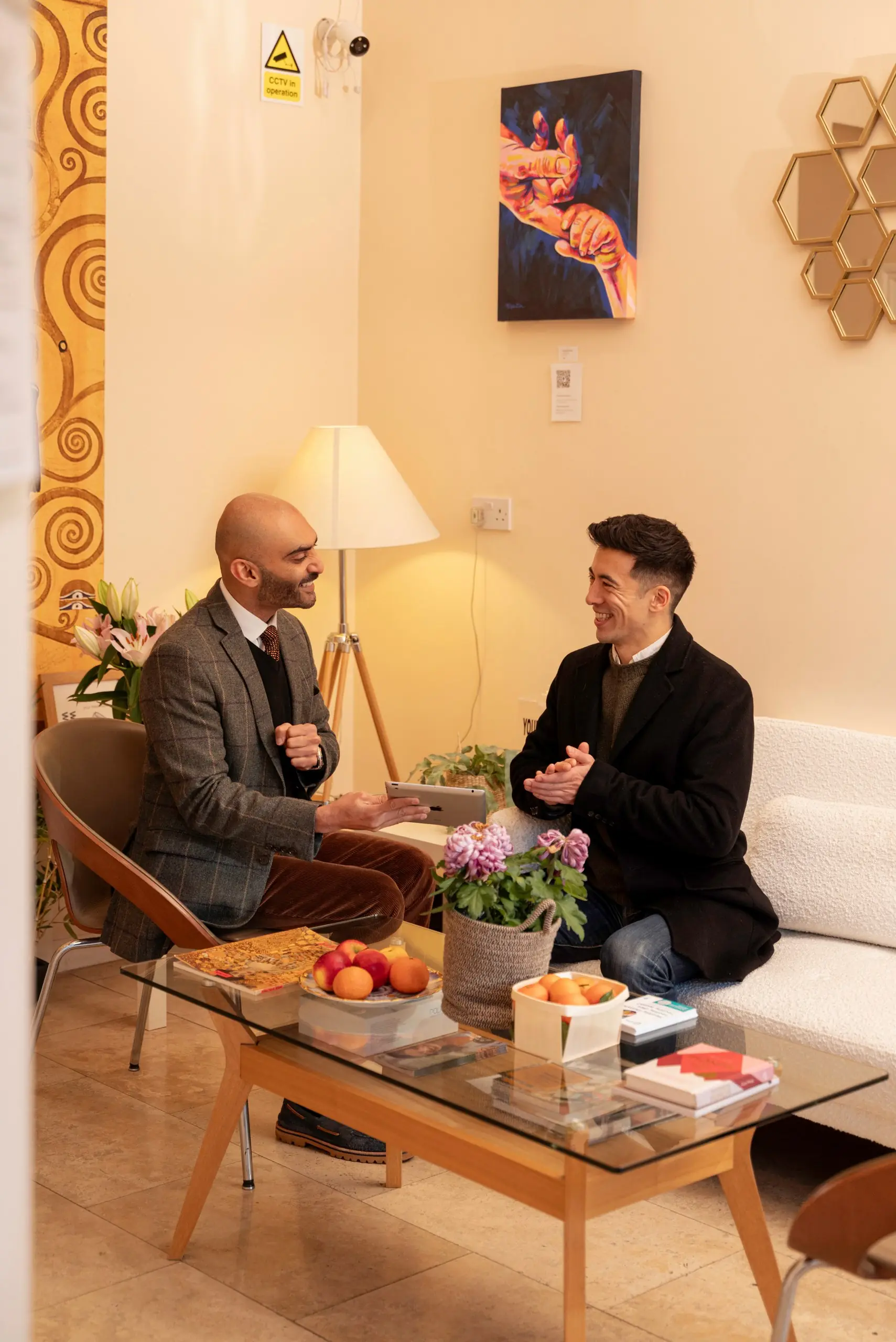
This quiet question tells you the most. A dentist comfortable saying "this doesn't need treating yet" or "this is a question for your doctor" is honest about the limits of dentistry. Minimally invasive, conservative care — watching rather than drilling where that's the right call — is good dentistry by any standard. Restraint is a sign of confidence, not a lack of it.
A short list of red flags
Claims that removing fillings, avoiding fluoride, or extracting root-filled teeth will cure systemic illness; positioning the clinic as an alternative to medical care; reluctance to share a GDC number; and a first visit that moves quickly to a large, expensive plan. None of these belong in credible integrative dentistry.
Book an integrative dental consultation in Islington
Free 20-minute discovery call by phone, or a full dental examination at £65 (30 minutes). 222 Essex Road, Islington, London N1 3AP, Mon-Fri 8am-7pm by appointment.
Call 020 8127 4567 · WhatsApp +44 7974 910222. 4.7★ from 300+ Google reviews.
FAQs
What's the single most important question to ask?
Whether they are GDC-registered — verify yourself on the GDC online register. Then ask whether they work alongside your doctor rather than instead of them.
How do I know if a holistic dentist is credible?
GDC registration, honesty about limits, balanced answers on materials and fluoride, credentialled team members, and a careful first consultation rather than a fast upsell.
Is it rude to ask about qualifications?
Not at all — a good clinician welcomes it. Any trustworthy dentist shares their GDC number without hesitation.
Should a holistic dentist ask about my general health?
Yes — that breadth is the legitimate point. They should not, however, claim to diagnose or treat medical conditions.
What are the warning signs?
Disease-cure claims, positioning dentistry as a medical-care replacement, reluctance to share a GDC number, and a rushed expensive first-visit plan.
Do holistic dentists do normal dental treatment?
Yes — everything a conventional dentist does, with a wider set of questions attached. The clinical work is the same; the frame is broader.