Why dental anxiety deserves a whole-person response
Dental anxiety is common, real, and nothing to be embarrassed about. Surveys consistently find a large share of UK adults feel some anxiety about dental visits, and a smaller group live with dental phobia severe enough that they avoid care for years — the cost of that avoidance is not only dental, it's the worry itself, and the way a small problem becomes a larger one while left untreated.
A conventional appointment often treats anxiety as friction to be pushed through. A whole-person approach does the opposite: it treats the fear as part of the clinical picture, because it is. The nervous system that tightens your jaw and quickens your breath in the waiting room is the same system we work alongside in the chair. Taking it seriously makes the dentistry itself go better — treat the system, not just the symptom. See also why your dentist should know about your stress.
Good whole-person dental care may help you feel calmer and more in control, and for many anxious patients that is genuinely significant for their willingness to attend. But dentistry does not diagnose or treat anxiety disorders, and a trustworthy clinic says so. Holistic dental care is complementary, not alternative — it sits alongside your GP and any mental-health support, never in place of them.
What a calmer, holistic dental appointment actually looks like
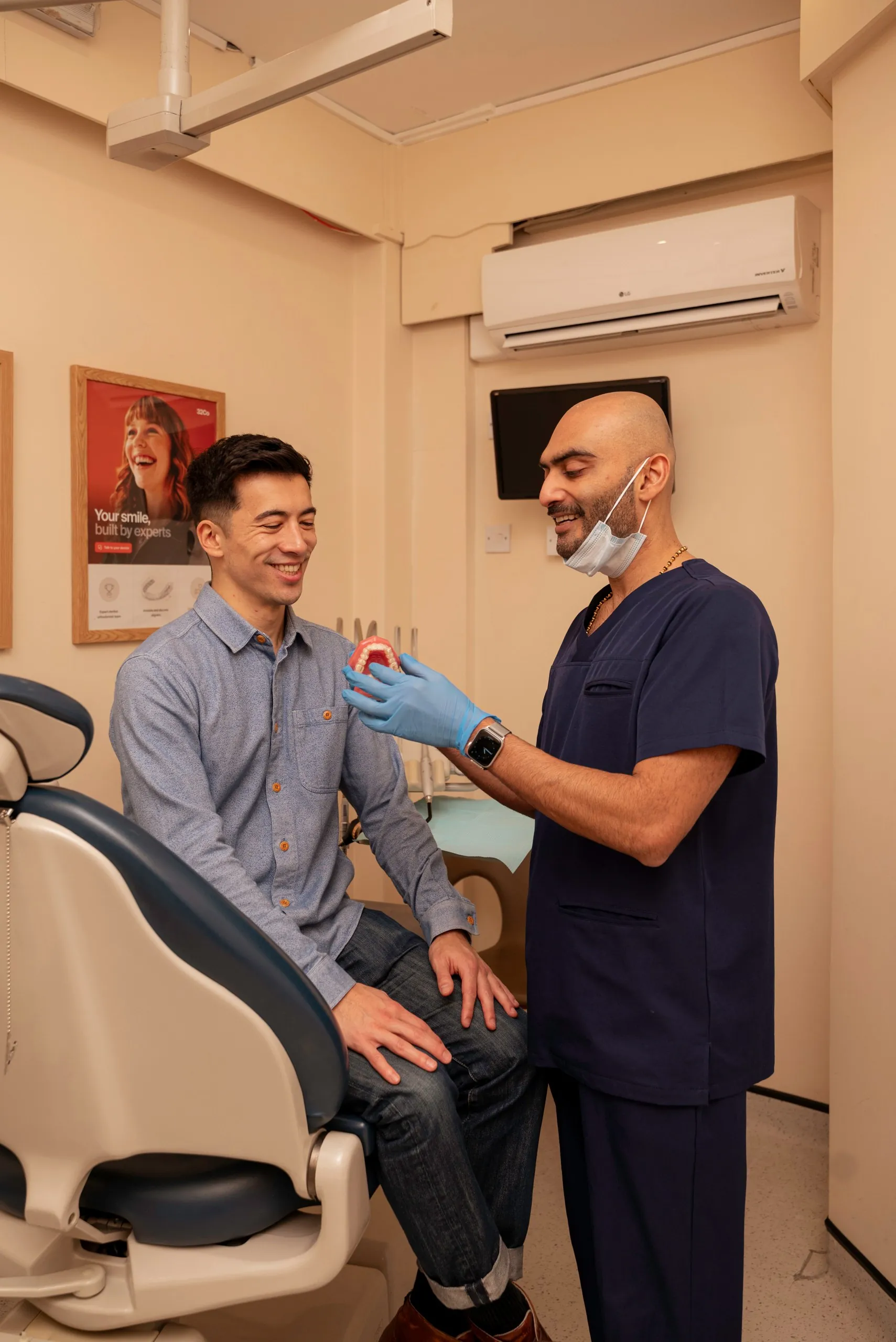
A longer, unrushed first visit. We start anxious patients with a conversation, not a drill — time to talk through what has happened before, what you dread most, and what would help, often with no treatment at all at that first visit. An honest consultation, not a sales conversation, considered, conservative, never rushed.
Clear control and stop signals. Feeling out of control is one of the biggest drivers of dental fear. Agreeing a simple signal that means pause — and honouring it every time — hands control back to you.
Honest, step-by-step explanation — tell, then do. Surprise is the enemy of a calm appointment. Explaining each step before it happens, in plain language, removes most of what the imagination fills in.
Gentle pacing and comfort. Shorter steps, breaks when you need them, careful numbing so comfort is established before anything begins, and a willingness to stop and rebook rather than push on. Sedation can be arranged where appropriate; see sleep dentistry.
A preference for minimally invasive care. Catching problems early and choosing the least aggressive option means fewer, smaller, calmer interventions over time — conservative dentistry is kind dentistry.
If your anxiety is severe enough that even a conversation feels impossible, say so when you contact us — we would rather know in advance so the first visit can be built around it.

Where the wellness side genuinely helps — and where it doesn't
Body-based techniques have a reasonable evidence base for reducing acute anxiety in the moment. Slow, extended-exhale breathing measurably shifts the nervous system towards calm, and simple grounding methods can take the edge off the fight-or-flight response dental fear triggers. We can teach and use these as part of preparing for an appointment. At DWL we also have credentialled wellness practitioners on-site — including a somatic (body-based) therapist and coaching support — so for patients whose dental fear sits inside a broader pattern of stress or nervous-system overload, there's a route to deeper support alongside the dentistry. Dr Reena Sohal is one of very few UK clinicians who is both a GDC-registered dentist (GDC 104355) and a trained Ayurvedic practitioner, letting us hold a whole-system conversation without ever leaving the ground of registered dental care. Her consultations are Ayurvedic; she does not see dental patients.
What these techniques do not do is treat an anxiety disorder. Breathing exercises and somatic work may help you manage the moment; they are not a substitute for therapy, medication, or assessment by your GP or a mental-health professional where that is needed. Daily habits help too: see how to regulate your nervous system. If your anxiety is significantly affecting your life beyond the dentist, the right next step is your GP — we are happy to work alongside that care, not instead of it.
How to choose a dentist if you are an anxious patient
Check GDC registration first. Anyone practising dentistry in the UK must be registered with the GDC. The GDC online register is public and free — ours are GDC 103127 (Dr Vishal Patel) and GDC 104355 (Dr Reena Sohal).
Ask how they handle nervous patients before you book. A practice genuinely good with anxiety describes exactly what they do — longer appointments, stop signals, step-by-step explanation — rather than just promising to be "gentle."
Watch for honesty about limits. A trustworthy clinic is clear it supports your anxiety but does not treat an anxiety disorder, and refers you onward when needed.
Be wary of disease-cure claims. Whole-person dentistry done well never claims dental treatment cures systemic or psychological illness.
Book a gentle, no-pressure first visit in Islington
Free 20-minute initial consultation — a chance to meet us with no treatment and no pressure — or a dental examination at £65 (30 minutes, full risk assessment). 222 Essex Road, Islington, London N1 3AP, Mon-Fri 8am-7pm by appointment.
Call 020 8127 4567 · WhatsApp +44 7974 910222. 4.7★ from 300+ Google reviews. Tell us when you contact us that you are nervous — it helps us build the first visit around you.
FAQs
What is holistic dental care for anxious patients?
Dental care that treats your anxiety as part of the clinical picture — longer, calmer appointments, clear stop signals, honest step-by-step explanation, gentle pacing — with optional body-based support alongside the dentistry. It complements, never replaces, your GP or mental-health team.
Can a holistic dentist cure my dental anxiety?
No — and a trustworthy one says so. Whole-person care may help you feel calmer, but dentistry does not treat an anxiety disorder. If anxiety significantly affects your life, your GP or a mental-health professional is the right support.
Do breathing and relaxation techniques actually help at the dentist?
For acute, in-the-moment anxiety, yes — slow, extended-exhale breathing and grounding methods can measurably take the edge off the fight-or-flight response. They help you manage the appointment; they are not a treatment for an underlying anxiety condition.
I haven't been to a dentist in years because of fear. Where do I start?
With a conversation, not a drill. We offer a free 20-minute initial consultation where no treatment happens — just a chance to meet us and agree how to make it manageable.
Are holistic dentists qualified to treat anxious patients safely?
A GDC-registered holistic or integrative dentist is as qualified and regulated as any other UK dentist. Whole-person care is safe when it stays within the evidence and complements medical care.
What if my anxiety is too severe even for a gentle appointment?
Tell us in advance, so the first visit can be built around it and we can talk honestly about whether additional GP or mental-health support should come first. We will never push you through an appointment you're not ready for.