Laser hair removal vs IPL
Reviewed By
Dr Vishal Patel
BDS Liverpool · MSc Aesthetic & Restorative Dentistry Manchester · GDC 103127 · AACD Member · Invisalign Diamond II Provider · IFAAS (International Fellowship in Advanced Aesthetic Science) · Facial anatomy & cadaver course, Dr Ali Pirayesh, University of Amsterdam · Harley Academy foundation training in injectable aesthetics · IBSA-trained (Profhilo) · NeoStrata-trained (skin peels) · Lynton Lasers trained, incl. ONDA
Last Updated
October 1, 2026
How laser and IPL differ, which suits your skin and hair, and how clinic treatment compares with home devices.
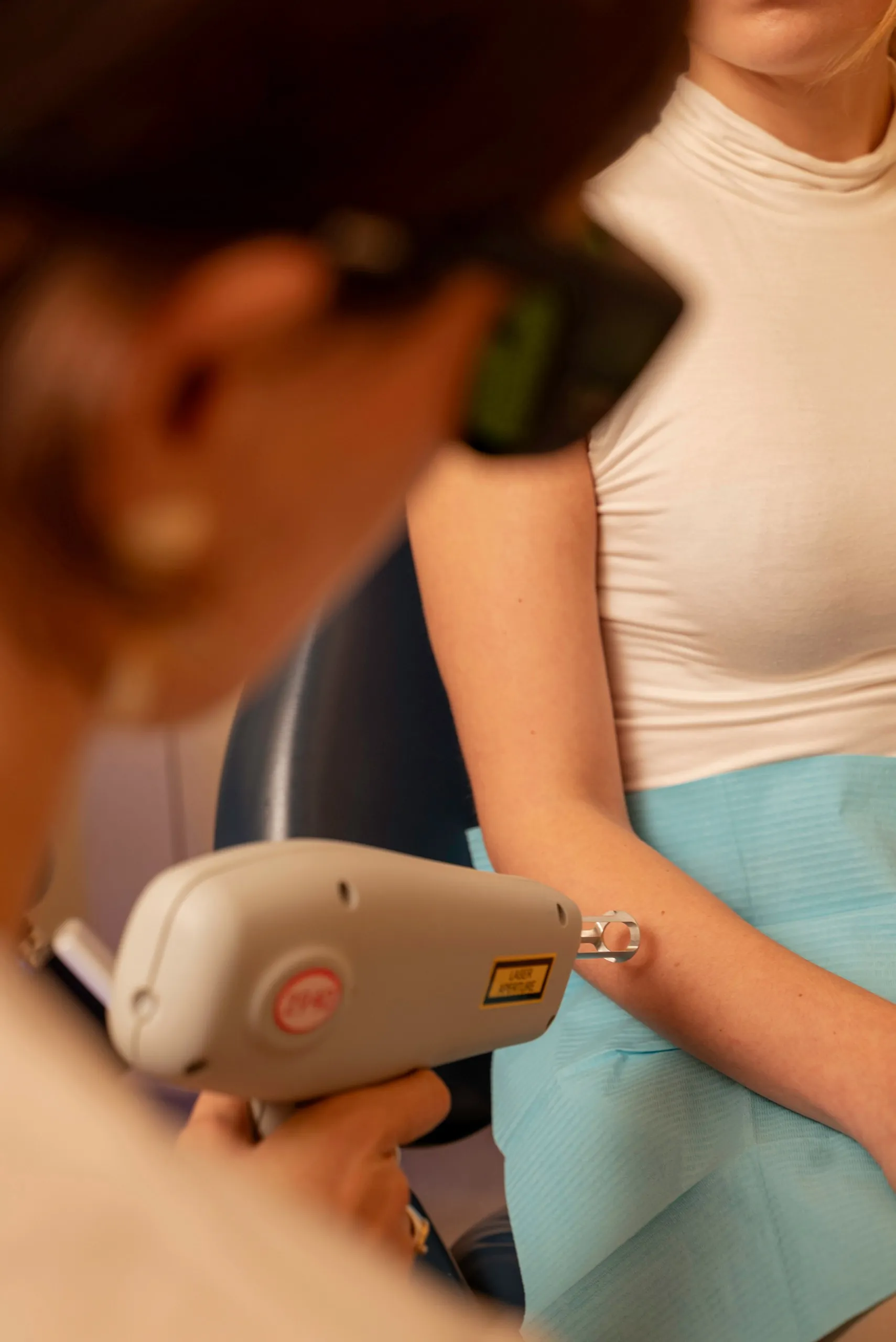
Laser hair removal uses a single focused wavelength; IPL uses filtered broad-spectrum light. Both target hair pigment and can give long-term reduction in trained hands, usually over 6 to 8 sessions. Neither works well on grey, white, red or very fair hair, and darker skin needs careful device choice. Clinic systems are far more powerful than home IPL. At Dental & Wellness London, Islington, we have both a Lynton Nd:YAG laser and Lynton IPL, and choose between them by skin type, with a free patch test.
- Laser: single focused wavelength
- IPL: filtered broad-spectrum light
- Both need about 6 to 8 sessions for dark hair
- Neither works on grey, white, red or very fair hair
- Clinic systems are far stronger than home IPL
- Lynton Nd:YAG laser and Lynton IPL, chosen by skin type · free patch test
Laser vs IPL for hair removal
Laser and IPL: what is the difference?
Laser hair removal uses a single, focused wavelength of light that is absorbed by the pigment in the hair and heats the follicle. IPL, intense pulsed light, uses a broad spectrum of light, filtered to target the hair. Both work on the same principle, and both can give long-term hair reduction when used by trained practitioners with good equipment and settings matched to your skin and hair.
People often use the two terms interchangeably, and IPL treatment is often described as laser hair removal. The distinction matters less than most comparisons suggest. For IPL used on skin concerns rather than hair, see IPL vs BBL. What matters more is whether the device suits your skin and hair, and whether the person setting it understands both. At our Islington clinic we have both a Lynton Nd:YAG laser and Lynton IPL, so we can choose the one that fits you rather than fitting you to the only machine available.
How both treatments work
Both laser and IPL rely on the same idea. Light of a chosen wavelength passes through the skin and is absorbed by melanin, the pigment that gives hair its colour. The absorbed light becomes heat, which travels down the hair shaft and damages the follicle, reducing its ability to grow new hair. The surrounding skin absorbs less of the light, so with the right settings it is protected.
The difference lies in how the light is delivered. A laser produces one precise wavelength, so the energy can be concentrated on the target with little spread. IPL produces a range of wavelengths, and filters remove the parts of the spectrum that are not wanted, leaving a band suited to hair. A broader band covers a larger area with each pulse, which can make IPL efficient on bigger areas. A single wavelength gives more control over how deep the light goes and how much reaches the skin’s own pigment.
With either device, hair is only affected while it is in its active growth phase. That is why a course of sessions is needed, whichever technology is used.
Which is better?
- Precision: laser is more targeted; modern clinical IPL uses filters and cooling to improve precision.
- Sessions: both usually need 6 to 8 sessions for dark hair on lighter skin.
- Skin tone: darker skin needs particular care with any light treatment, and a laser is often the safer choice. We have both, so we can match the device to your skin.
- Hair colour: neither works well on grey, white, red or very fair hair.
Put simply, neither is better for everyone. For many people with lighter skin and dark hair, both give a similar result over a similar number of sessions. The choice becomes more important as skin gets darker, or when the contrast between skin and hair is lower.
Laser or IPL for darker skin
Darker skin contains more melanin, the same pigment that the light is aimed at in the hair. That means the skin itself can absorb more energy, which raises the risk of burns, blistering or patches of lighter or darker skin if the settings are not right. Longer wavelengths pass more deeply and are absorbed less by the pigment near the surface, which is why a laser is often the safer choice for darker skin.
We assess your skin type at consultation and choose the device and settings with this in mind. On darker skin we use a gentler approach, which can mean a few more sessions, and a free patch test always comes first. We would rather take a little longer than risk a pigment change that can take months to settle. If pigmentation is already a concern, our page on melasma and laser explains the options.
Laser or IPL for fine or light hair
Fine, light-brown hair absorbs less light than coarse dark hair, so it responds more slowly to either device, and may not respond fully. Grey, white, red and very fair hair contain too little of the right pigment for laser or IPL to work well. If this applies to you, we will tell you honestly at consultation rather than start a course that is unlikely to help.
Does one hurt more than the other?
Most people describe both as a quick snapping sensation, often compared with a rubber band flicked against the skin, with some warmth afterwards. Comfort depends more on the area, the density of the hair and the settings than on the type of device. Coarse hair on the face, underarms and bikini line tends to feel more noticeable; legs and arms are usually easier. Clinical systems use cooling to keep treatment as comfortable as possible, and the sensation usually lessens as the hair thins out over the course. Our guide on does IPL hurt covers numbing in more detail.
Clinic treatment vs at-home IPL
Home IPL devices are much lower powered than clinic systems. They can slow regrowth for some people with fair skin and dark hair, but results are usually more modest and take longer. A clinic course first, with home maintenance later, is a sensible approach for some people.
Home devices are designed to be safe without professional assessment, which is why they are limited in power. They also cannot be adjusted for skin type in the way a clinical device can, and most are not suitable for darker skin. If you already use one, tell us at consultation; we can advise on when to stop before a clinic course and whether it makes sense to use it for maintenance afterwards.
Laser, IPL and other hair removal methods
Shaving, waxing, threading and depilatory creams remove hair at or near the surface, and need repeating every few days or weeks. They are inexpensive per visit, but the routine continues indefinitely, and many people deal with ingrown hairs, shaving rash or redness. Laser and IPL reduce the number of hairs that grow back, so the routine becomes far lighter over time.
Electrolysis treats one follicle at a time with a fine probe and does not depend on hair colour, so it can be an option for grey, white or fair hair. It is slow for larger areas. We do not offer electrolysis at our clinic, but if your hair is unlikely to respond to light, we will say so and explain that it is worth asking about.
Aftercare is the same for both
Whichever device we use, the aftercare is the same. Mild redness and slight swelling around the follicles are common and usually settle within a few hours to a day. Avoid hot baths, saunas, intense exercise and perfumed products on the area for the following days, and protect the skin from the sun with a high-factor sunscreen throughout the course. Shave between sessions if you wish, but avoid waxing, plucking and threading, because the root needs to be there for the next session to work. Our IPL aftercare page gives further guidance.
How we decide which device to use
Every course begins with a skin consultation. It costs £65 and is redeemable in full against treatment. We look at your skin type, hair colour and thickness, the areas you want treated, your medical history and any medicines that can increase sensitivity to light. We also ask about recent sun exposure, fake tan and previous hair removal.
From that, we recommend either the Lynton Nd:YAG laser or Lynton IPL, and explain why. A free patch test follows, at the settings we intend to use, so that we can check how your skin responds before the first full session. Treatment is carried out under the oversight of Dr Vishal Patel, who is trained by Lynton Lasers. You can read more on Dr Patel’s profile.
We do not treat during pregnancy, over tattoos, or on skin that is tanned, broken or infected. If anything suggests your hair growth has a medical cause that has not been looked at, we will suggest you see your GP before starting.
What we use
At our Islington clinic we have both a Lynton Nd:YAG laser and Lynton IPL, and we choose between them according to your skin type and hair, with a free patch test first. Laser hair removal is priced by area: small areas are £45 to £75 per session, medium areas £95 to £165 and large areas £195 to £295. See our laser hair removal prices and sessions guide. The clinic is at 222 Essex Road, Islington, London N1 3AP, two minutes from Essex Road station and a short ride from Angel, Highbury, Canonbury, Hackney and Stoke Newington. Many patients cycle or use a Lime or Forest e-bike.
Clinically reviewed by Dr Vishal Patel · BDS · MSc Aesthetic & Restorative Dentistry · GDC 103127. Last reviewed 1 October 2026.
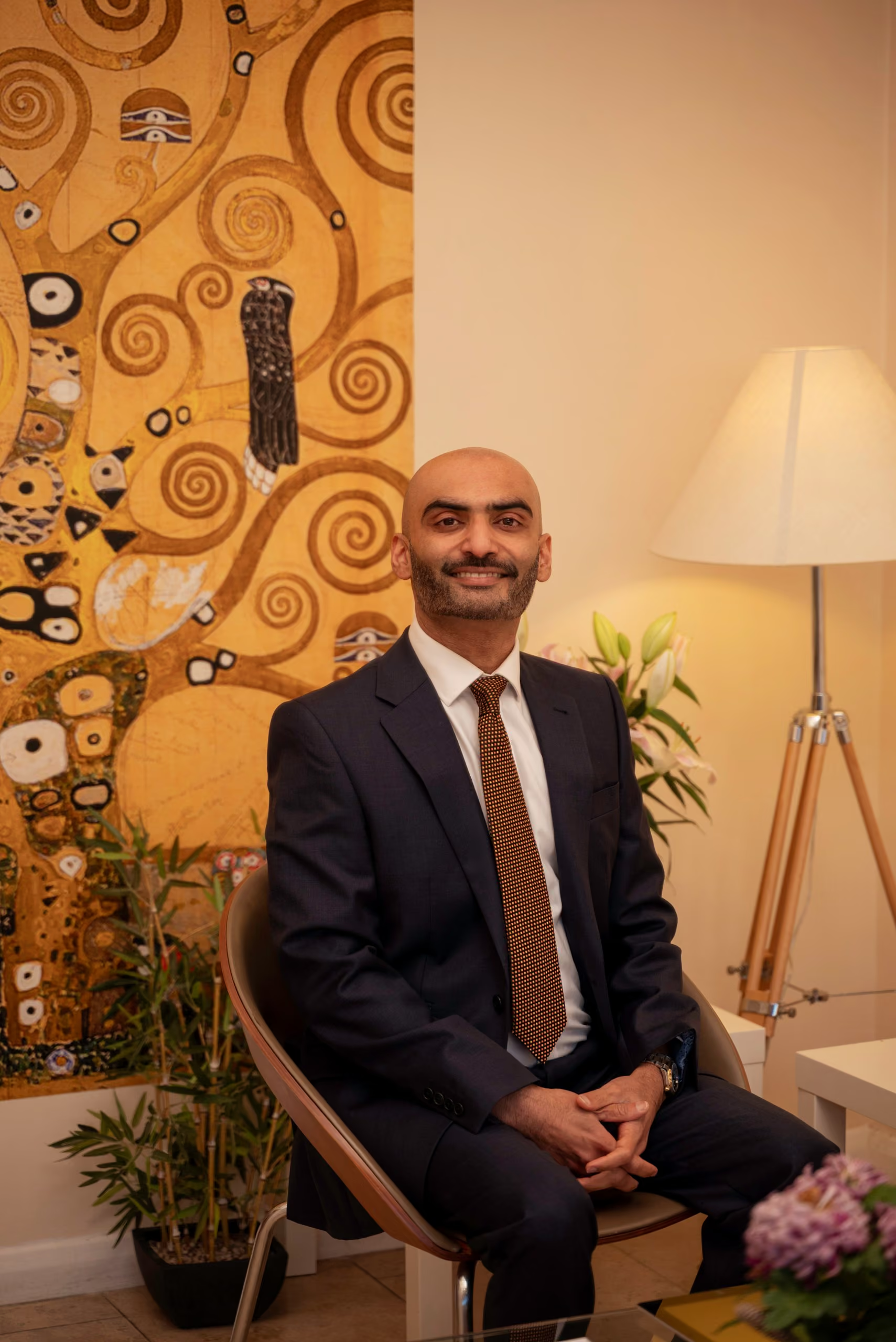
Dr Vishal Patel
Clinical lead · Lynton Lasers trained, including ONDA
BDS Liverpool · MSc Aesthetic & Restorative Dentistry (Manchester) · GDC 103127 · Lynton Lasers trained, including ONDA · International Fellowship in Advanced Aesthetic Science (IFAAS) · 10 years in facial aesthetics
We will tell you when a treatment is not the right answer. That honesty is part of the treatment.
Read Dr Patel’s profile →If you are still weighing up your options, our overview of laser hair removal brings them together in one place.
The right approach, for your skin and hair.
Consultation — £65
A skin assessment with an honest view of what will help. The fee is redeemable in full against treatment.
Free patch test
A test on a small area checks how your skin responds.
Your course
6 to 8 sessions, 4 to 8 weeks apart.
Plan your course
- Small areas £45–£75 per session
- Free patch test
- Settings chosen for your skin
Or call 020 8127 4567 · WhatsApp +44 7974 910222
222 Essex Road, Islington N1 3AP · Mon–Fri, 8am–7pm
Our happy patients,
in their own words
Transparent pricing
Prices are set out below. Your written plan confirms the fee before any treatment begins.
Clear prices, by area.
Upper lip, chin
Underarms, bikini
Full legs, back, arms
Included
- Free patch test
- A written course plan
Quoted separately
- Maintenance top-ups, priced per area
Questions
people ask
If your question isn't answered here, call reception on 020 8127 4567 or email reception.
Is IPL the same as laser?
No. Laser uses a single focused wavelength; IPL uses filtered broad-spectrum light. Both target hair pigment.
Is at-home IPL as good as clinic treatment?
No. Home devices are much lower powered, so results are usually more modest and slower.
Can IPL work on dark skin?
Darker skin needs particular care with any light-based treatment, and a laser is often the safer choice. We have both a Lynton Nd:YAG laser and Lynton IPL, and choose between them according to your skin type, after a free patch test.
Which is better for hair removal, laser or IPL?
Both can work well in trained hands with good equipment. The right choice depends on your skin tone and hair colour, which we assess with a free patch test.
How long does home IPL take to show results?
Usually several months of regular use, and results tend to plateau at a moderate reduction.
Is IPL safer than laser?
Both are safe in trained hands with settings matched to your skin. We have both a Lynton Nd:YAG laser and Lynton IPL and choose by skin type; the risk of burns or pigment change is higher on darker or tanned skin with any light treatment.
Can I combine clinic treatment with home IPL?
Yes, many people use a home device for maintenance after a clinic course. Avoid using them in parallel during your course.
Does IPL hurt less than laser?
Most people describe both as a quick, warm snap. Cooling makes treatment comfortable for most.
Why did my home IPL stop working?
Common reasons include lighter or finer hair, hormonal changes, a tan, or the device reaching its limit for your skin and hair.
Can I have IPL or laser while pregnant?
No. We postpone light-based hair removal during pregnancy.