How many laser hair removal sessions do you need?
Reviewed By
Dr Vishal Patel
BDS Liverpool · MSc Aesthetic & Restorative Dentistry Manchester · GDC 103127 · AACD Member · Invisalign Diamond II Provider · IFAAS (International Fellowship in Advanced Aesthetic Science) · Facial anatomy & cadaver course, Dr Ali Pirayesh, University of Amsterdam · Harley Academy foundation training in injectable aesthetics · IBSA-trained (Profhilo) · NeoStrata-trained (skin peels) · Lynton Lasers trained, incl. ONDA
Last Updated
October 1, 2026
Usually 6 to 8, spaced 4 to 8 weeks apart. Here is what changes that number for you.
Most people need 6 to 8 sessions of laser hair removal, spaced 4 to 8 weeks apart, for a substantial long-term reduction. The face and hormonally driven growth, such as with PCOS, often need more, plus top-ups every 6 to 12 months. At Dental & Wellness London, Islington, sessions start from £45 for small areas.
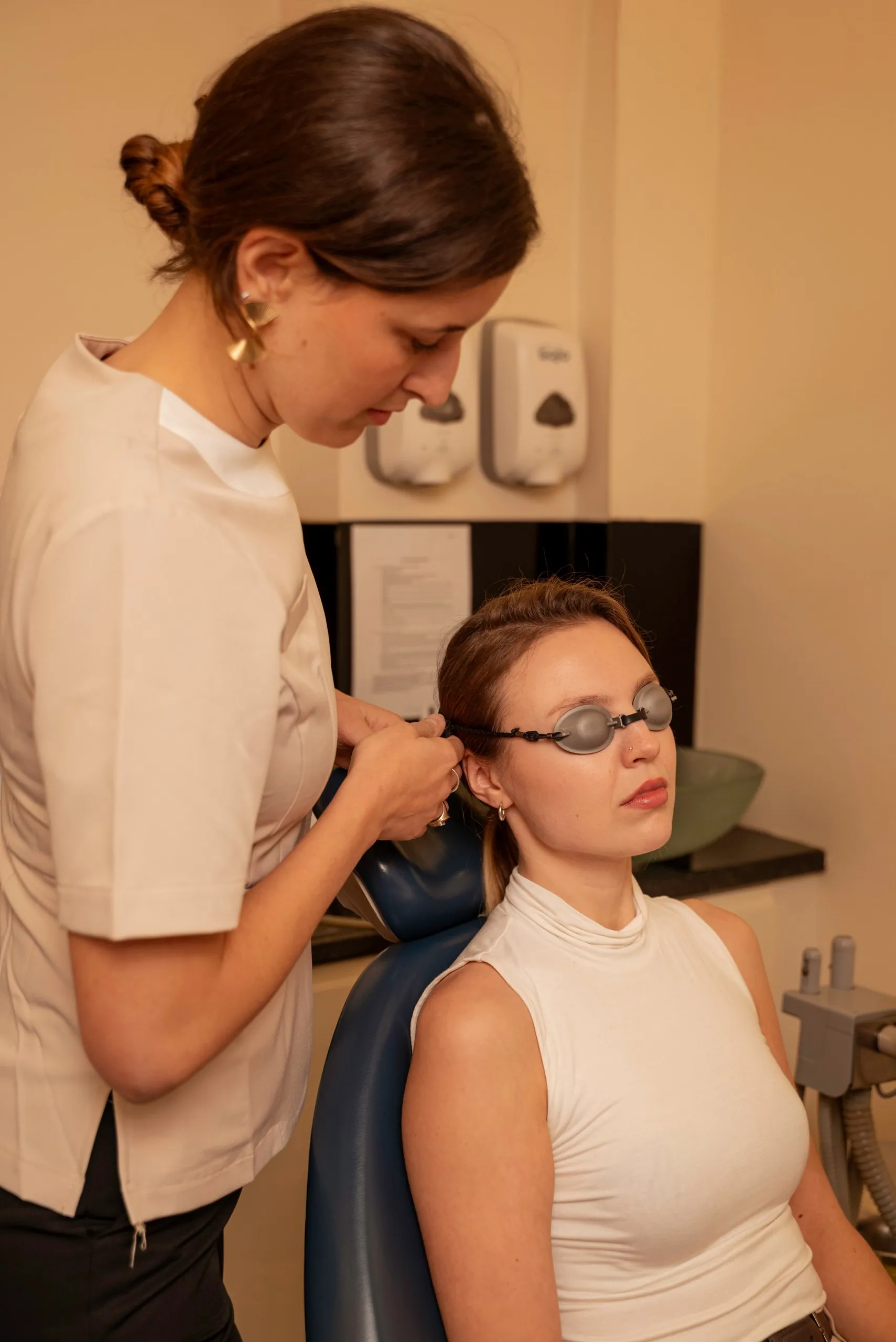
- Most people need 6 to 8 sessions
- Spaced 4 to 8 weeks apart, depending on area
- Face and hormonal growth often need more
- Top-ups every 6 to 12 months
- Shave before, but do not wax or pluck
- From £45 per session for small areas
Laser hair removal sessions, explained
How many laser hair removal sessions do you need?
Most people need 6 to 8 sessions of laser hair removal, spaced 4 to 8 weeks apart, for a substantial, long-term reduction. Hair grows in cycles and light only affects follicles in their active growth phase, so each session catches a different group of hairs. Face and hormonally driven growth usually need more sessions; legs and underarms often need fewer.
That range is a starting point rather than a promise. Your hair colour and thickness, your skin type, the area being treated and your hormones all affect how quickly the hair responds. At your consultation at our Islington clinic we give you a realistic estimate for your own course, and we review it part-way through so that you are never paying for more sessions than you need.
Why one session is never enough
Each hair follicle moves through three broad phases. In the active growth phase the hair is attached to the root and contains the most pigment. In the transition phase growth slows and the hair begins to detach. In the resting phase the old hair sheds and the follicle waits before starting again. At any one time, only some of the hairs in an area are in the active growth phase.
Laser and IPL work by sending light into the skin, where it is absorbed by the pigment in the hair. The light turns to heat and damages the follicle, reducing its ability to grow hair. This works best when the hair is still connected to the root in the growth phase. Hairs that are resting at the time of a session are largely unaffected, and they will enter the growth phase later. That is why treatment is a course: each session treats the group of follicles that happen to be active, and the reduction builds as more of them are caught.
By body area
- Upper lip and chin: 8 or more sessions, 4 to 6 weeks apart, often with top-ups.
- Underarms and bikini: about 6 to 8 sessions, 6 to 8 weeks apart.
- Legs, arms and back: about 6 to 8 sessions, 8 to 10 weeks apart.
The differences come mainly from how fast the hair cycles in each area and how sensitive the follicles are to hormones. Facial hair cycles relatively quickly, so sessions are closer together, and it is often hormonally influenced, so more sessions and later top-ups are common. Hair on the legs and back cycles more slowly, so the gap between sessions is longer.
What you will notice, session by session
After the first session, the treated hairs usually shed over the following one to three weeks. It can look as though the hair is still growing at first, because the damaged hairs are pushed out of the skin before they fall away. This is expected.
Most people start to see patchy areas of reduced growth after two or three sessions. As the course continues, regrowth becomes slower, sparser and often finer and lighter. By the end of a full course, most people with dark hair have a substantial reduction, with a smaller number of finer hairs that may need occasional maintenance.
Will 3 sessions do anything?
Yes, most people notice less and finer regrowth after three sessions. But stopping there usually leaves noticeable regrowth, because many follicles have not yet been treated in their growth phase. If you stop after six, you keep most of the reduction you have gained, and top-ups can maintain it.
If you need to pause a course, for example because of travel, pregnancy or a summer holiday in strong sun, the reduction from the sessions you have already had is not lost. When you return, we assess the area again and pick up from where the hair is, which may mean an extra session to catch up.
What affects how many you need
- Hair colour: dark hair responds best; grey, white, red and very fair hair do not respond to light-based removal
- Skin type: settings are adjusted for darker skin, which can mean more sessions
- Hormones: PCOS and other hormonal conditions often need more sessions and regular top-ups
- Consistency: keeping to the recommended spacing gives the best result
Hair thickness also plays a part. Coarse, dark hair absorbs light well and tends to respond early in the course. Fine, lighter hair absorbs less, so it needs more sessions and may never respond fully. On darker skin we use settings that protect the skin’s own pigment, and the gentler approach can add sessions. This is a trade we make deliberately, because safety comes first.
Why the spacing matters
It can be tempting to book sessions closer together to finish sooner, but that rarely helps. If sessions are too close, few new follicles will have moved into the growth phase, so the session treats less hair and the course does not finish any faster. If sessions are too far apart, hairs can complete a full cycle without being treated, which slows progress.
We set the interval for each area based on how that hair grows, and we adjust it as the course goes on. As the hair thins out, the gaps between sessions often lengthen.
Maintenance after your course
Laser hair removal gives a substantial, long-term reduction in hair rather than removing every hair for ever. Some follicles that were not fully treated may recover, and hormonal changes can prompt new hair growth over time. Occasional top-ups every 6 to 12 months keep the result for most people, and some need them less often. Hormonally driven growth on the face is the area most likely to need regular maintenance.
Before each session
Shave the area the day before, or on the day, but do not wax, pluck or thread for at least four weeks, because the root needs to be there. Avoid sun and fake tan on the area for two weeks. Our guide to laser hair removal and sun exposure explains how to plan around the sun.
Shaving leaves the root in place, which is what the light needs to reach, while removing the hair above the skin so that the energy is not wasted on the surface. Please let us know at each visit if you have started any new medicine, as some can make the skin more sensitive to light, or if the area has had sun exposure since your last session. Arrive with clean skin, without creams, deodorant or make-up on the area.
After each session
Mild redness and slight swelling around the follicles are common and usually settle within a few hours to a day. A cool compress and a gentle, unperfumed moisturiser help. For the following days, avoid hot baths, saunas, intense exercise and perfumed products on the area, and protect it from the sun with a high-factor sunscreen throughout the course. You can shave between sessions, but avoid waxing, plucking and threading so that the next session can work.
How we plan your course
Every course begins with a skin consultation. It costs £65 and is redeemable in full against treatment. We assess your skin type, hair colour and medical history, discuss your goals and explain how many sessions you are likely to need. A free patch test follows, so that we can check how your skin responds before the first full session.
We have both the Lynton Nd:YAG laser and Lynton IPL, and choose between them according to your skin type and hair. Our comparison of laser hair removal vs IPL explains the difference. Treatment is carried out under the oversight of Dr Vishal Patel, who is trained by Lynton Lasers. You can read more on Dr Patel’s profile. We review your progress part-way through the course and adjust the plan if your hair is responding faster or more slowly than expected.
Plan and price your course
Laser hair removal is from £45 per session for small areas; see our laser hair removal cost page. Small areas are £45 to £75 per session, medium areas £95 to £165 and large areas £195 to £295. The clinic is at 222 Essex Road, Islington, London N1 3AP, two minutes from Essex Road station and a short ride from Angel, Highbury, Canonbury, Hackney and Stoke Newington. Many patients cycle or use a Lime or Forest e-bike. Buses 38, 56, 73, 341 and 476 stop on Essex Road.
Clinically reviewed by Dr Vishal Patel · BDS · MSc Aesthetic & Restorative Dentistry · GDC 103127. Last reviewed 1 October 2026.
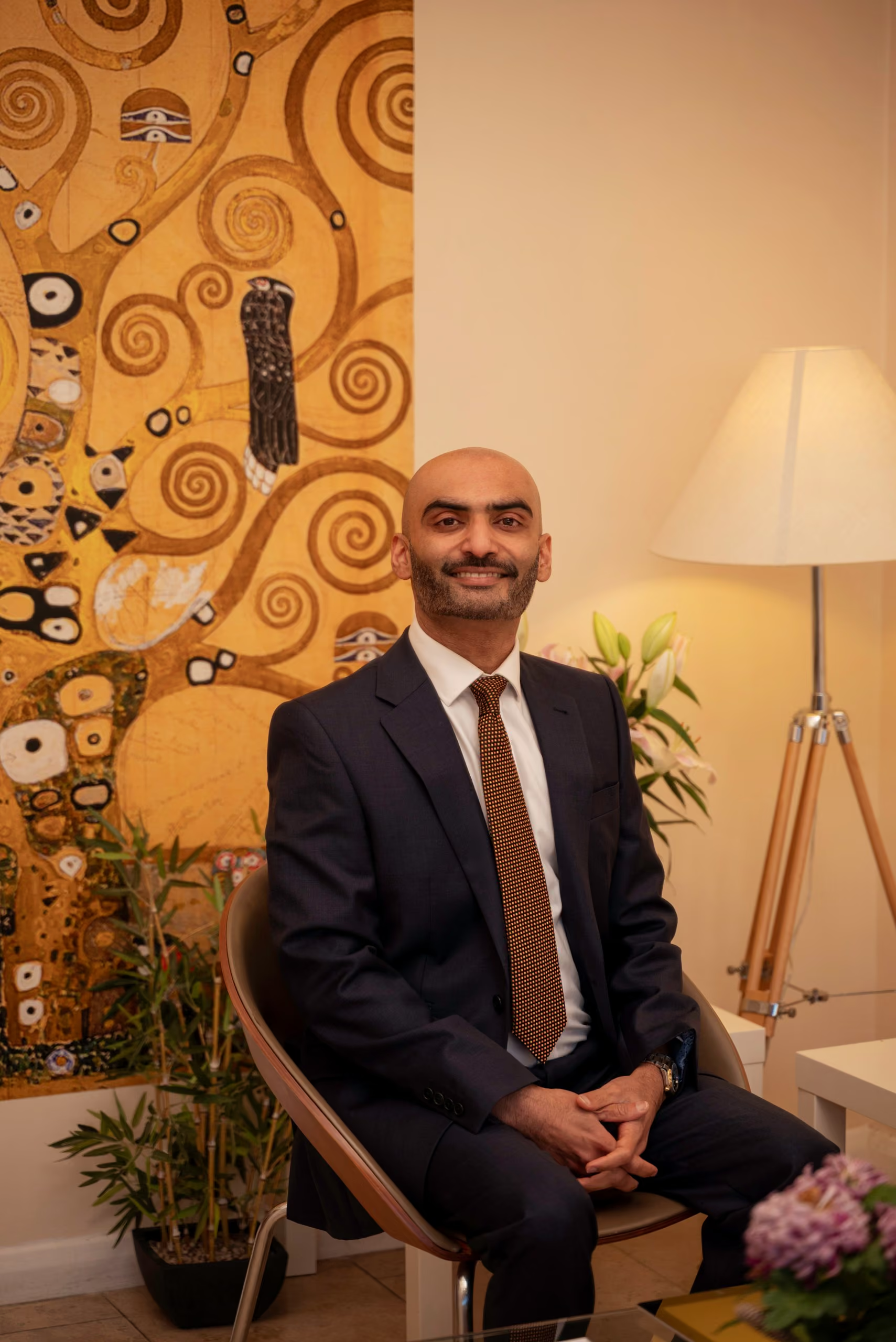
Dr Vishal Patel
Clinical lead · Lynton Lasers trained, including ONDA
BDS Liverpool · MSc Aesthetic & Restorative Dentistry (Manchester) · GDC 103127 · Lynton Lasers trained, including ONDA · International Fellowship in Advanced Aesthetic Science (IFAAS) · 10 years in facial aesthetics
We will tell you when a treatment is not the right answer. That honesty is part of the treatment.
Read Dr Patel’s profile →If you are still weighing up your options, our overview of laser hair removal brings them together in one place.
Further reading
Hair reduces session by session.
Many hairs shed; regrowth is slower and finer.
Most people see a substantial reduction.
Remaining hairs are treated as they enter their growth phase.
Occasional sessions maintain the result.
A realistic course, planned for you.
Consultation — £65
A skin assessment with an honest view of what will help. The fee is redeemable in full against treatment.
Free patch test
A free test on a small area checks how your skin responds.
Your course
Spaced for your body area and hair cycle.
Plan your course
- From £45 per session
- Priced by area, in writing
- Review part-way through
Or call 020 8127 4567 · WhatsApp +44 7974 910222
222 Essex Road, Islington N1 3AP · Mon–Fri, 8am–7pm
Our happy patients,
in their own words
Transparent pricing
Prices are set out below. Your written plan confirms the fee before any treatment begins.
Clear prices, by area.
Upper lip, chin
Underarms, bikini
Full legs, back, arms
Redeemable in full against treatment
Included
- Free patch test
- A written course plan
Quoted separately
- Maintenance top-ups, priced per area
Questions
people ask
If your question isn't answered here, call reception on 020 8127 4567 or email reception.
How many laser sessions does it take to permanently remove hair?
Most people need 6 to 8 sessions for a substantial long-term reduction. It reduces rather than completely removes hair, and occasional top-ups keep the result.
Will 3 sessions of laser hair removal do anything?
Yes, regrowth is usually slower and finer after three sessions, but stopping there often leaves noticeable regrowth. A full course gives a much better result.
What happens if I stop laser after 6 sessions?
You keep most of the reduction you have gained. Some hairs may regrow over time, especially with hormonal changes, and occasional top-ups can manage this.
Can I shave before laser hair removal?
Yes, shave the day before or on the day. Do not wax, pluck or thread for at least four weeks before, because the hair root needs to be in place for the light to work.