Is laser hair removal safe? — evidence-based answer
The clinical evidence accumulated over more than twenty-five years of widespread practice is consistent: laser hair removal is a safe cosmetic procedure when delivered by trained practitioners using appropriate equipment on suitably screened patients. Serious adverse events are uncommon (well under 1% of treatments in published clinical series), and the long-term safety profile is now well established.
The most-cited safety overview — a 2022 systematic review in the British Journal of Dermatology examining 81 clinical studies across 25,000+ treatments — concluded that modern laser hair removal has an excellent safety profile when delivered to clinical protocols by trained operators. Earlier systematic reviews (Cochrane, JAAD) reached the same conclusion.
Mild side effects — temporary redness, mild swelling at the follicle, brief tenderness — are common and expected. The clinical distinction worth making is between common, mild, transient side effects (acceptable and expected) and rare, serious, persistent side effects (the things to actually worry about). Our laser hair removal service follows this screening-first approach.
Common side effects — what's expected
1. Erythema (redness). The treated area looks pink or mildly red for 2-24 hours. Normal vascular response, resolves without treatment.
2. Perifollicular oedema. Small bumps around each treated follicle, similar to mild goosebumps, lasting 1-24 hours — indicates the laser hit its target.
3. Mild tenderness or warmth. The treated area feels warm or slightly tender for 1-12 hours.
4. Minor irritation from shaving. Freshly-shaved skin before treatment is slightly more reactive, usually resolving overnight.
5. Sensitivity to topical products. Temporarily more sensitive to acidic skincare for 24-48 hours.
These are not adverse events — they are the expected response of skin to thermal treatment and resolve without intervention.
Rare risks — what to actually worry about
1. Burns. Caused by inappropriate settings, equipment malfunction, or operator error. Modern integrated-cooling systems with skin-tone-appropriate wavelength selection minimise this. Typically first-degree and heal completely.
2. Post-inflammatory hyperpigmentation (PIH). Darker patches, particularly in Fitzpatrick IV-VI skin. Often resolves over 3-6 months. Risk reduced by appropriate wavelength selection (the Nd:YAG 1064nm laser for darker skin) and conservative settings.
3. Post-inflammatory hypopigmentation. Lighter patches — less common than PIH, harder to treat.
4. Scarring. Very rare with modern systems and trained operators.
5. Paradoxical hypertrichosis. A small subset of patients experience increased hair growth in treated areas, particularly darker-skinned women with dark facial/neck hair. Reduced by appropriate settings.
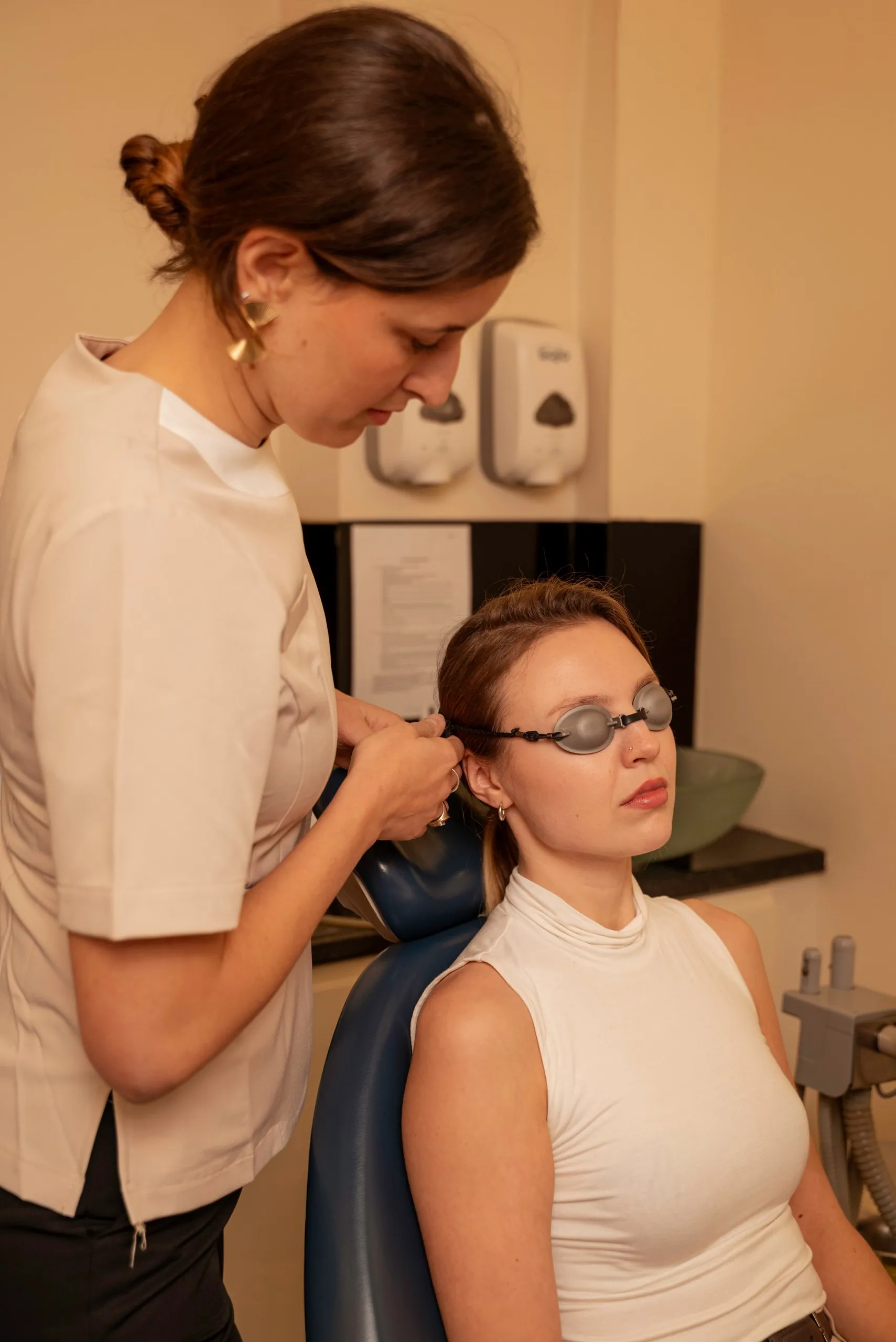
6. Eye injury. Risk from inadequate eye protection — both patient and operator wear wavelength-specific safety eyewear at every session.
The published incidence of all the above combined is well under 1% of treatments with modern equipment and trained operators.
Who shouldn't have laser hair removal — 8 contraindications
1. Pregnancy — not studied in pregnancy; default is to avoid elective treatments without evidence of safety. Resume after.
2. Light-sensitive medications — tetracyclines, isotretinoin (recent or current), some chemotherapy and antipsychotics. Contraindicated during use and for 6 months after isotretinoin.
3. Recent significant sun exposure — tanned or recently UV-exposed skin (last 4 weeks) increases burn risk. See our guide to laser hair removal and sun exposure.
4. Active skin conditions in the area — active eczema, psoriasis, severe acne, infected follicles, open wounds.
5. History of keloid scarring — increased scarring risk; discuss with practitioner.
6. Recent dermal fillers in the area — wait 2 weeks before laser in the same area.
7. Photosensitive medical conditions — lupus, porphyria and some autoimmune conditions may be contraindications.
8. Tattoos in the treatment area — laser will attempt to break down tattoo pigment, risking burns or damage. Must be avoided or removed first.
The pre-treatment consultation at any reputable clinic covers these contraindications. At DWL this is mandatory before the patch test.
Safety by skin tone — why technology matters
Fitzpatrick I-III (fair to medium): Most hair removal technologies are safe, including IPL. At DWL, lighter skin with dark hair is usually treated with Lynton IPL.
Fitzpatrick IV (medium-dark): The Nd:YAG 1064nm laser is the safer choice.
Fitzpatrick V-VI (dark to very dark): The Nd:YAG 1064nm laser is the clinically appropriate wavelength. Alexandrite is contraindicated — risk of pigmentation change is too high. Older Q-switched or IPL systems are also inappropriate for these skin tones. See laser hair treatment by skin type.
At DWL we use the Lynton Nd:YAG laser for darker skin or Lynton IPL for lighter skin with dark hair, selected by skin type — see our laser hair removal page for more on the technology.
Long-term safety — 25+ years of evidence
Laser hair removal has been in clinical practice since the late 1990s. The longitudinal evidence: no identified cumulative tissue damage from repeated treatment over many years; no increased skin cancer risk found in multiple population-level studies (mechanistically distinct — non-ionising light, unlike UV); no identified systemic effects of localised laser treatment; hormonal regrowth after long-term treatment is a recognised pattern (PCOS, perimenopause, post-pill) but reflects the underlying hormonal change, not a treatment safety issue. For hormone-related growth, see our guide to laser hair removal for PCOS.
UK regulation
CQC. Premises offering laser hair removal must be CQC-registered as medical premises, covering practitioner training, equipment maintenance, infection control and clinical governance. DWL is CQC-compliant; many cheaper providers operate outside CQC registration, which should be a red flag.
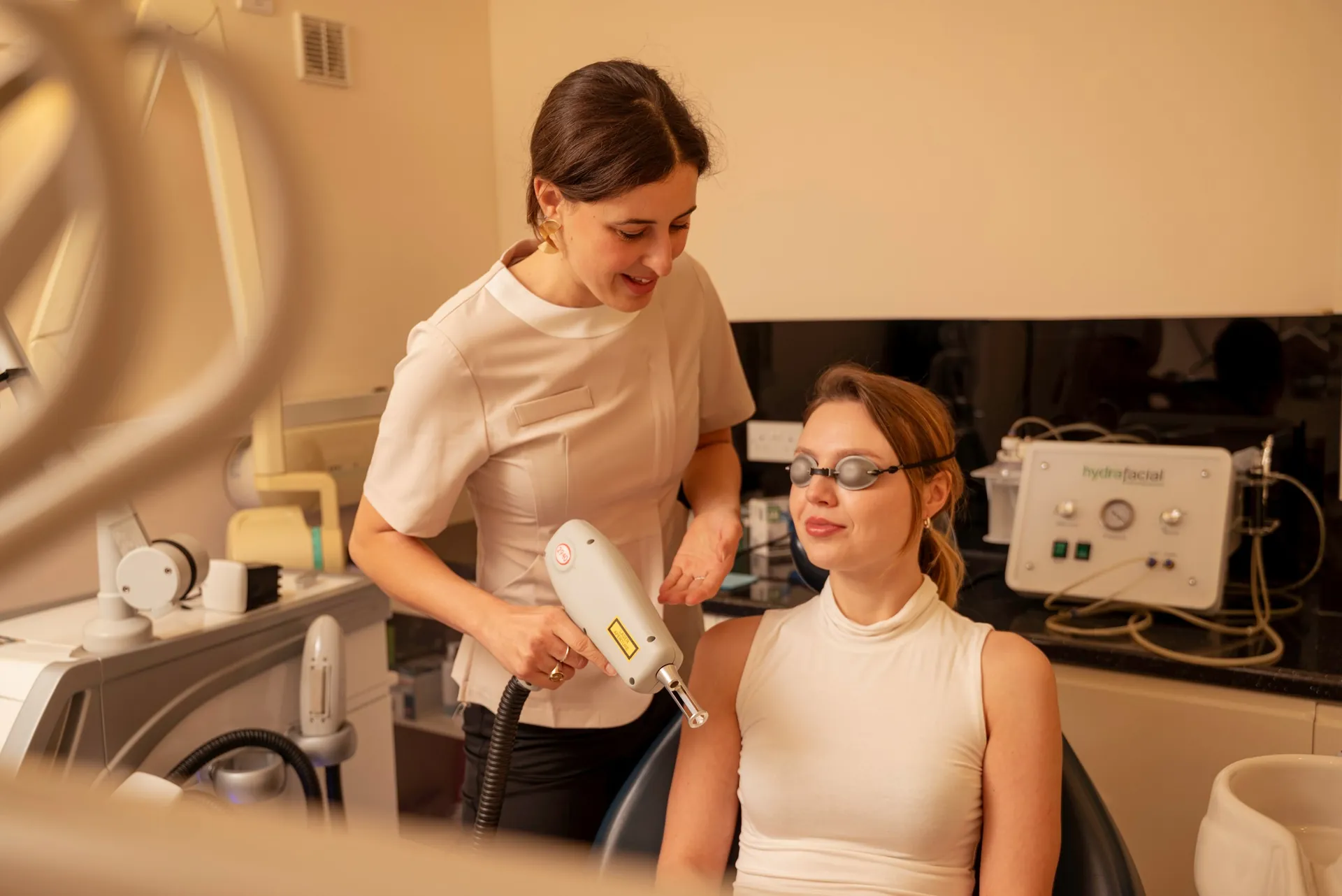
MHRA. Medical lasers are regulated medical devices under MHRA oversight.
ASA / ICTA. Claims of "permanent removal" are prohibited — clinics must use "permanent reduction" or "long-term reduction" per the 2019 ICTA ruling.
JCCP / BACN / NCLP. Voluntary registers and training certification for cosmetic and laser practitioners.
Regulation is patchy across the UK — CQC registration is the most meaningful safety signal a patient can look for.
How to choose a safe clinic — 8-point checklist
1. CQC-registered premises (check the register directly). 2. NCLP-trained operators — ask explicitly. 3. Pre-treatment consultation with contraindication screening, and costs explained upfront. 4. Mandatory patch test before the first session. 5. Skin-tone appropriate wavelength selection explained. 6. Modern equipment with integrated cooling. 7. Wavelength-specific eye protection at every session. 8. A clear adverse event protocol.
If a provider cannot answer these eight questions clearly, choose a different provider.
Our safety standards at DWL
CQC-compliant medical premises at 222 Essex Road, Islington N1 3AP; practitioners trained to NCLP standard with ongoing clinical supervision; Lynton IPL or the Lynton Nd:YAG laser for darker skin, with appropriate selection by skin tone; mandatory consultation and patch test before treatment; wavelength-specific eye protection at every session; free numbing cream on request; considered, conservative, never rushed protocol; adverse event protocol per medical premises standards; clinical lead Dr Vee Patel, BDS, MSc Aesthetic & Restorative Dentistry, GDC 103127, accountable for all aesthetic medicine work.
About the author
Dr Vishal Patel (BDS Liverpool · MSc Aesthetic & Restorative Dentistry Manchester · GDC 103127) leads aesthetic medicine at Dental & Wellness London. AACD member, Invisalign Diamond II Provider, twenty years in clinical practice. Founder of the clinic in 2009.
Book a consultation + patch test
The initial consultation at DWL is the opportunity to assess your candidacy, review contraindications, and have a free patch test in your chosen treatment area — all before committing to a treatment course. Our guide explains how many laser hair removal sessions a course usually involves.
Call 020 8127 4567 · WhatsApp +44 7974 910222 · Visit 222 Essex Road, Islington N1 3AP. Mon-Fri 8am-7pm by appointment.
FAQs
Is laser hair removal completely safe?
Highly safe under qualified supervision with appropriate equipment, but no procedure is 100% safe. Less than 1% of treatments produce serious adverse events; mild, transient side effects are expected.
Can laser hair removal cause cancer?
No. Multiple population-level studies have looked for this association and not found it — laser hair removal uses non-ionising light, mechanistically distinct from UV.
Is it safe for dark skin?
Yes when the appropriate wavelength is used. The Nd:YAG 1064nm laser is safer than Alexandrite or IPL for Fitzpatrick IV-VI; at DWL this is the Lynton Nd:YAG laser.
Is it safe during pregnancy?
Not recommended — not studied in pregnancy. Resume after pregnancy and breastfeeding.
What are the side effects?
Common: temporary redness, mild swelling, brief tenderness. Rare: burns, pigmentation changes, scarring — well under 1% of treatments.
Can it damage my skin long-term?
No documented long-term skin damage from appropriate treatment. The 25+ year evidence base is reassuring.
Is it safe on the face?
Yes for most patients. Some patients with darker skin and very dark facial hair have a slightly increased risk of paradoxical hypertrichosis — discuss with your practitioner.
Can it cause infertility?
No — laser hair removal is a localised superficial treatment with no biological pathway to affect fertility.
Is at-home IPL safer than clinic laser?
Lower-powered and therefore lower-risk, but also less effective — see our laser hair removal vs IPL guide.
What should I do if I get a burn?
Stop treatment immediately, photograph the area, contact the clinic. Most superficial burns resolve completely with cool compresses and gentle aftercare.
Is it safe with tattoos?
Laser must avoid tattoos — tattoos can be removed first by laser tattoo removal if the area needs treatment.