A CoolSculpting alternative in London: ONDA
Reviewed By
Dr Vishal Patel
BDS Liverpool · MSc Aesthetic & Restorative Dentistry Manchester · GDC 103127 · AACD Member · Invisalign Diamond II Provider · IFAAS (International Fellowship in Advanced Aesthetic Science) · Facial anatomy & cadaver course, Dr Ali Pirayesh, University of Amsterdam · Harley Academy foundation training in injectable aesthetics · IBSA-trained (Profhilo) · NeoStrata-trained (skin peels) · Lynton Lasers trained, incl. ONDA
Last Updated
October 1, 2026
We use ONDA microwave fat reduction instead of CoolSculpting at our Islington clinic. Here is why, and how the two compare.
ONDA is a non-surgical alternative to CoolSculpting that reduces stubborn fat by heating it with microwave energy rather than freezing it. Results are broadly comparable for suitable patients, and ONDA does not carry the rare paradoxical adipose hyperplasia risk specific to cryolipolysis. At Dental & Wellness London, Islington, ONDA is £300 per session.
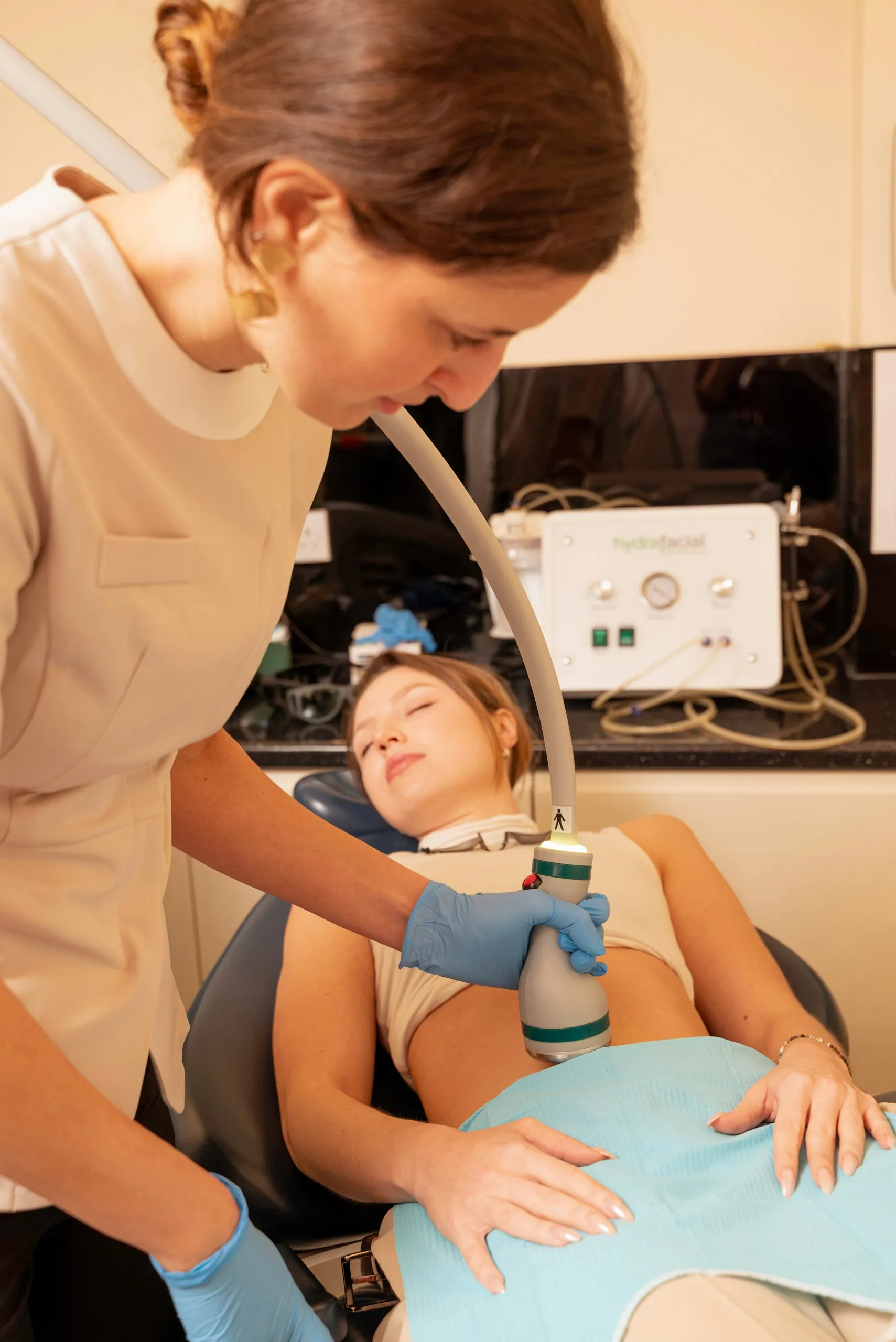
- ONDA: microwave heat instead of freezing
- Comparable results for suitable patients
- No paradoxical adipose hyperplasia risk
- Usually 3 to 6 sessions per area
- For stubborn fat, not weight loss
- £300 per session
A CoolSculpting alternative in Islington
Why we use ONDA rather than CoolSculpting
CoolSculpting reduces fat by freezing it (cryolipolysis). ONDA reduces fat by heating it with microwave energy while the skin surface is cooled. Both are established, non-surgical ways to reduce localised fat, and results are broadly comparable for suitable patients.
We do not offer CoolSculpting at our Islington clinic. Many people find this page because CoolSculpting is the name they know, and that is a perfectly reasonable place to start. What follows is a plain explanation of what we offer instead, how it differs, and how to decide which approach suits you.
We chose ONDA for our Islington clinic partly because it does not carry the rare risk of paradoxical adipose hyperplasia, a complication in which a treated area enlarges rather than shrinks, which is specific to cryolipolysis. That is a clinical judgement about the options, not a claim that CoolSculpting is unsafe. If CoolSculpting is specifically what you want, we will point you to a reputable clinic.
How each treatment works
CoolSculpting: cooling fat cells
Cryolipolysis relies on the fact that fat cells are more sensitive to cold than the skin and tissue around them. An applicator draws the area in and cools it for a set time. Fat cells that are cooled sufficiently are damaged and then cleared by the body over the following weeks.
ONDA: heating fat cells
ONDA works on the same broad principle, that fat cells can be selectively damaged and then cleared, but uses heat rather than cold. Microwave energy is delivered through a handpiece moved over the skin, concentrating warmth in the fat layer while a cooling system protects the surface. There is no suction cup and no fixed applicator, so the handpiece can follow the contour of the area being treated.
In both cases the body clears the treated fat cells gradually through its normal processes. Neither treatment removes fat on the day, and neither is a weight-loss treatment.
ONDA and CoolSculpting compared
- Mechanism: ONDA heats fat with microwaves; CoolSculpting freezes it.
- Sessions: ONDA usually 3 to 6 per area; CoolSculpting often 1 to 3 cycles per area.
- Comfort: ONDA feels warm; CoolSculpting feels intensely cold at first.
- Downtime: little or none with either.
- Results: gradual, over 8 to 12 weeks, with both.
Comparisons like this are useful, but they are generalisations. How many sessions you need, how the treatment feels and what result you see depend on your own anatomy, the area treated and how you respond. Results vary, and no responsible clinic can promise a particular outcome with either approach.
Side effects with each approach
Both treatments are non-invasive and commonly cause temporary effects in the treated area: redness, tenderness, swelling or mild bruising, and sometimes a short period of altered sensation. These usually settle on their own.
The difference that shaped our choice is paradoxical adipose hyperplasia. It is rare, but where it occurs the treated area becomes firmer and larger rather than smaller, and it does not resolve on its own. It is associated with cryolipolysis and not with heat-based treatment. With ONDA, the main specific risk is a heat-related one, and burns are rare. We reduce that risk with careful assessment, appropriate settings, a constantly moving handpiece and continuous surface cooling.
Who ONDA suits
Adults at or near a stable, healthy weight with stubborn pockets of fat on the abdomen, flanks, thighs, arms or back. It is not a weight-loss treatment. Read more on our non-surgical fat removal page and the full ONDA vs CoolSculpting comparison.
ONDA is not suitable in pregnancy, with metal implants in the treatment area, with a pacemaker or other implanted electronic device, or with some medical conditions, which we check at consultation. If your main goal is weight loss, or the fat is deep within the abdomen rather than just beneath the skin, diet, activity and a conversation with your GP are the right starting point.
Areas we treat with ONDA
- Lower abdomen: the soft pocket below the navel that often persists after exercise.
- Flanks: the area above the hips, often described as love handles.
- Inner and outer thighs: defined areas rather than the whole leg.
- Upper arms: the underside of the arm.
- Back: including the area around the bra line.
These are broadly the same areas people consider CoolSculpting for. Because the ONDA handpiece is moved over the skin rather than fixed in place, the size of the area is not limited by an applicator, which can be helpful on flatter or less pinchable areas.
Other alternatives to CoolSculpting
A device is not always the best answer. For small, precise areas, such as fat under the chin or along the jawline, fat dissolving injections with Aqualyx can be more appropriate. Aqualyx is injected into the fat layer, where it breaks down fat cell walls so the body can clear them over the following weeks.
For larger volumes, or where loose skin is a significant part of the concern, surgery may be the more proportionate route. Liposuction removes more fat in one procedure, but it involves anaesthetic, recovery time and surgical risk. If we think surgery would serve you better, we will say so. If loose skin is part of the picture, our comparison of ONDA vs Morpheus8 may also help.
What happens at your consultation
Your consultation is with Dr Vishal Patel. We take a medical history, ask about your weight over time and what you have already tried, and look closely at the area. The key questions are whether the shape you are unhappy with is mostly fat, mostly loose skin or both, and whether that fat is pinchable and localised.
We then explain whether ONDA is likely to help, how many sessions to expect, what it will cost and what result is realistic. With your consent, we take standardised photographs so that progress can be judged fairly. If ONDA is not the right answer, we will tell you. The skin and aesthetic consultation is £65, redeemable in full against treatment.
What an ONDA session involves
Each session takes around 30 to 45 minutes per area. The area is cleaned and marked, a contact medium is applied, and the handpiece is moved steadily over the skin. You feel deep warmth alongside the cooling on the surface, and we check your comfort throughout. Mild redness or tenderness can last a day or two. You can go back to work, exercise and normal activity straight away.
Sessions are spaced a few weeks apart. We review progress with photographs during and after the course, so any decision about further sessions is based on what has actually changed rather than on a fixed package.
Cost of ONDA in Islington
- ONDA: £300 per session
- ONDA course of four: £1,020 for a course of four sessions (15% off), including an online personal training session
- Aqualyx fat dissolving injections: from £350
- Skin and aesthetic consultation: £65, redeemable in full against treatment
The total depends on how many areas are treated and how many sessions each needs. You will receive a written plan with the full cost before you commit. Where it helps, ONDA can be combined with personal training in the same building, so that treatment and training work towards the same goal.
Keeping the result
Fat cells that have been cleared do not come back. The fat cells that remain, however, can still enlarge if weight increases, so a stable weight is what protects the result. That is true whichever fat reduction treatment you choose.
Why have ONDA with us
Dr Vishal Patel is Lynton Lasers trained, including ONDA. He oversees every body plan at the clinic and brings around 20 years in dentistry and ten years in facial aesthetics to the assessment. Our approach is consultation-first and unhurried, and we will tell you when a treatment is not the right answer. Dental & Wellness London has been on Essex Road since 2009 and is rated 4.7 stars from more than 300 Google reviews. Read more about Dr Vishal Patel.
The clinic is at 222 Essex Road, Islington, London N1 3AP, two minutes from Essex Road station and a short ride from Angel, Highbury, Canonbury, Hackney and Stoke Newington. Buses 38, 56, 73, 341 and 476 stop on Essex Road. Many patients cycle or use a Lime or Forest e-bike. We are open Monday to Friday, 8am to 7pm, by appointment.
Clinically reviewed by Dr Vishal Patel · BDS · MSc Aesthetic & Restorative Dentistry · GDC 103127. Last reviewed 1 October 2026.
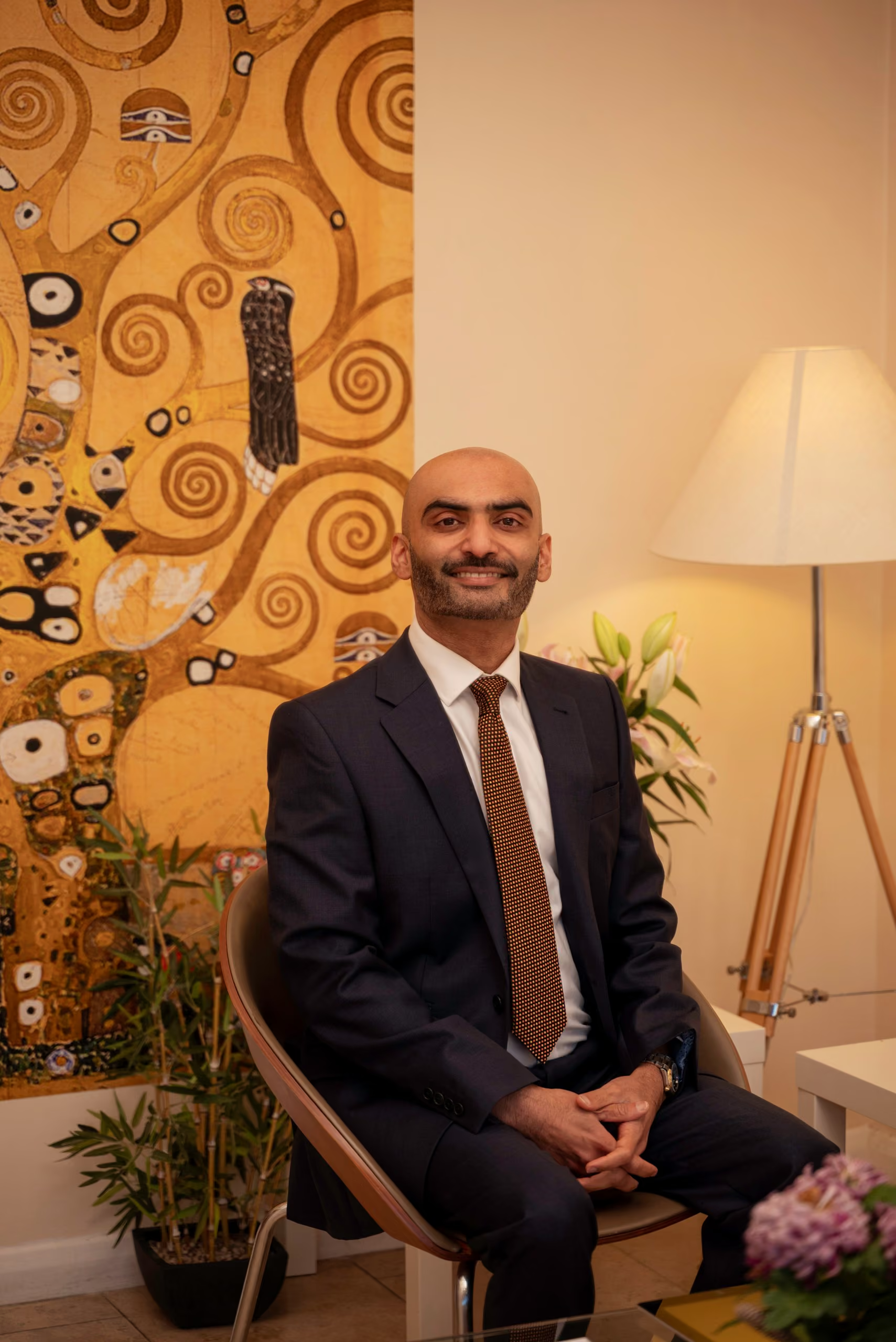
Dr Vishal Patel
Clinical lead · Lynton Lasers trained, including ONDA
BDS Liverpool · MSc Aesthetic & Restorative Dentistry (Manchester) · GDC 103127 · Lynton Lasers trained, including ONDA · International Fellowship in Advanced Aesthetic Science (IFAAS) · 10 years in facial aesthetics
We will tell you when a treatment is not the right answer. That honesty is part of the treatment.
Read Dr Patel’s profile →For the full picture, including how this compares with the alternatives, see our guide to ONDA Coolwaves.
A gradual change, planned honestly.
Consultation — £65
A skin assessment with an honest view of what will help. The fee is redeemable in full against treatment.
Sessions
30 to 45 minutes per area, usually 3 to 6 sessions.
Review
Measurements and photographs 8 to 12 weeks after the course.
Start with a body consultation
- £65, redeemable in full against treatment
- Suitability checked honestly
- Your plan quoted in writing
Or call 020 8127 4567 · WhatsApp +44 7974 910222
222 Essex Road, Islington N1 3AP · Mon–Fri, 8am–7pm
Our happy patients,
in their own words
Transparent pricing
Prices are set out below. Your written plan confirms the fee before any treatment begins.
Clear prices, set out before you start.
Redeemable in full against treatment
Per session
Four sessions, 15% off, with an online personal training session
Included
- Measurements and photographs
- A written plan
Quoted separately
- Additional areas, quoted in your plan
Questions
people ask
If your question isn't answered here, call reception on 020 8127 4567 or email reception.
What is PAH and how common is it with CoolSculpting?
Paradoxical adipose hyperplasia is a rare complication of cryolipolysis in which a treated area enlarges instead of shrinking. It usually needs surgery to correct. It is specific to fat freezing and does not occur with ONDA.
Is ONDA as effective as CoolSculpting?
For suitable patients, results are broadly comparable. Both reduce fat gradually, with the change visible over 8 to 12 weeks.
Why doesn’t DWL offer CoolSculpting?
We chose ONDA for comparable results without the PAH risk. It is a clinical judgement, not a claim that CoolSculpting is unsafe.
What is the best alternative to CoolSculpting?
It depends on the area and your skin. ONDA suits well-defined pockets of stubborn fat. Where loose skin is the main concern, skin tightening may be the better choice.
How does ONDA cost compare to CoolSculpting?
ONDA at our clinic is £300 per session, or £1,020 for a course of four including an online personal training session. We do not offer CoolSculpting, and its price varies between the clinics that do. Choose by suitability and results rather than price alone.
Should I still consider CoolSculpting?
If you are set on cryolipolysis, it is a legitimate treatment at many reputable clinics, and we are happy to suggest one.