The marketing for teen Invisalign quietly sells one idea above all others: that the clear aligner is simply the better version of braces — newer, neater, the obvious choice for any family that can afford it. That framing is the single most expensive misunderstanding we correct in consultation, because it skips the question that actually determines the outcome.
Adolescent orthodontic results track compliance far more than they track product. A motivated teen wearing Invisalign properly gets the result. An unmotivated teen wearing it poorly does not — and progresses slower than they would have in fixed braces, which work whether the wearer is engaged or not. So the honest first question is never "Invisalign or braces?" It's "does your teenager want this, genuinely, and can they carry the discipline?" Answer that, and the system almost chooses itself.
This page is written for the parent weighing the choice. We've planned hundreds of teen orthodontic cases — as a Diamond II Invisalign provider in Islington, top 1% of UK Invisalign providers by case volume. Because the work is carried out by a dentist with a Masters in Aesthetic & Restorative Dentistry, we hold a long-term smile view of an adolescent's face — designing with your teenager's future in mind, not just the day the aligners come out.
When Invisalign genuinely suits a teenager
Invisalign works well for adolescents in specific, recognisable circumstances:
- They want it — actually, not performatively. The aligners need 22 hours of wear every day, through school, sport, sleepovers and the ordinary chaos of teenage life. A teen who has thought about that and committed does well.
- The case is mild to moderate. Most teen cases are crowding, spacing, or early bite issues. Severe skeletal discrepancies or significant rotations can still need fixed braces.
- The diary allows review visits. Check-ins every six to eight weeks across a 12–24 month timeline.
- Dental health is established first. Active decay or untreated gum issues must be settled before treatment.
- They'll accept the responsibility. Out for everything but water, cleaned, and back in promptly.
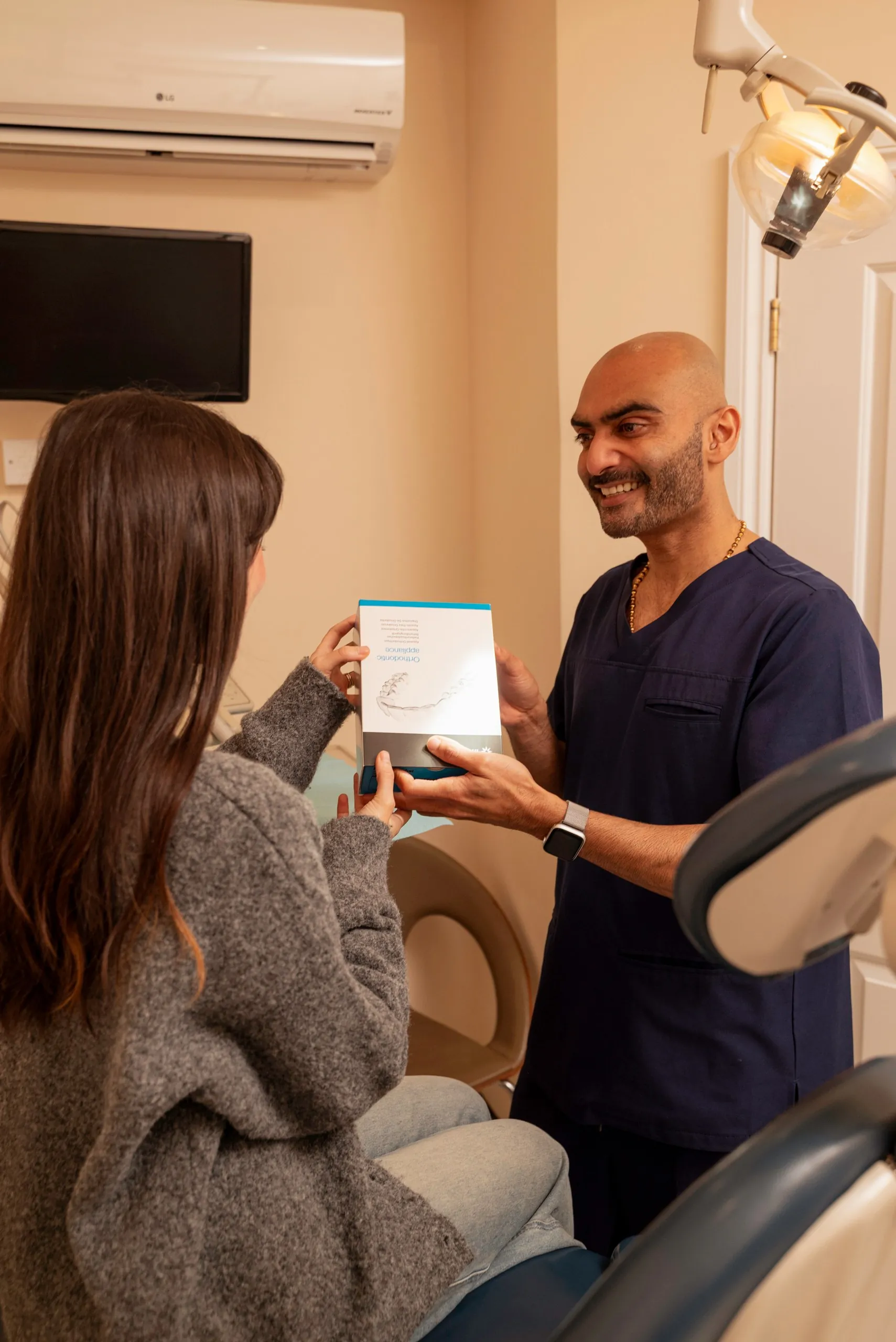
When fixed braces remain the better answer
The cases where we recommend fixed braces over clear aligners for a teen, even when the family prefers the clear option:
- Compliance concerns — the biggest single factor. Fixed braces work without the 22-hour discipline Invisalign needs.
- Severe skeletal cases — significant overbites, underbites or crossbites sometimes need fixed braces combined with growth-modification appliances.
- Active developmental complexity — mixed dentition and anticipated wisdom-tooth issues can favour continuous fixed-appliance control.
- Cost as the deciding constraint — fixed metal braces in London run roughly £2,000–£3,000, modestly less than Invisalign Moderate.
- Younger children — under-thirteens in mixed dentition are usually treated with Invisalign First or interceptive fixed appliances.
We say no often, and we mean it here. The clinical recommendation is never the more profitable option — it's the one most likely to give this teenager a good result. Where a case belongs with a specialist orthodontist, we refer to colleagues rather than stretch the system to fit.
What Invisalign Teen actually includes
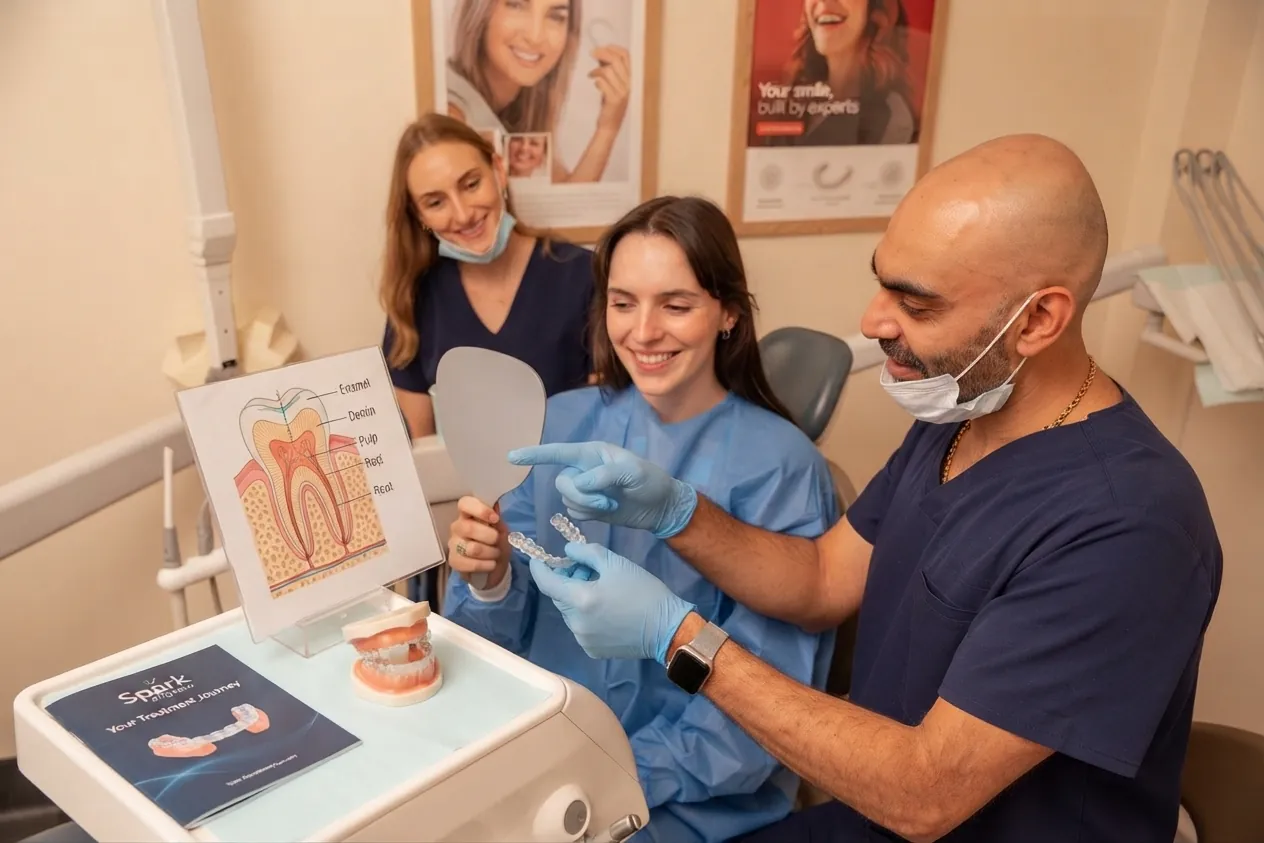
The adolescent product line carries features built for the demographic: compliance indicators — small blue dots on each aligner that fade with wear, so parent and clinician can see at a glance whether wear-time is happening; eruption compensation for adult teeth still coming through; and six replacement aligners included at no extra cost, recognising that teen aligners get lost and damaged more often. Mechanically it's the same ClinCheck planning, attachment system, and refinement options as adult Invisalign.
What it costs in London
TierDWL priceSuitable forInvisalign Express£2,200Mild crowding, simple alignment, 5–10 alignersInvisalign Moderate£3,400Moderate cases, up to 26 alignersInvisalign Unlimited£4,500–£4,900Complex cases, multi-year aligner cover (full terms and conditions apply)
Set against the London fixed-brace market: fixed metal braces run £2,000–£3,000 and are visible throughout, but work without compliance discipline; ceramic fixed braces run £2,500–£3,500. The clear-aligner premium, where there is one, buys discretion and removability — it does not buy a better result if the wear-time isn't there. 0% APR finance over 12 months via Tabeo is available, subject to status. Our Invisalign cost guide sets out what each plan includes.
The reality of teen compliance
The first four to six weeks are critical: teens who build the habit in the first month tend to keep it. Twice-daily phone alarms to reinsert after meals are surprisingly effective, and keeping the case in plain sight on the kitchen counter cuts lost-aligner episodes. Compliance usually improves around month three or four, as visible progress starts motivating the effort. Setbacks — a school trip with all the aligners forgotten, a phase of slipping — don't doom a case; they need the protocol resetting, not catastrophising.
Sports, school and social life
Aligners stay in for most sport; high-contact sport (rugby, hockey, martial arts) means a proper mouthguard goes in and the aligners come out. Wind instruments need a week or two of adjustment. A mild lisp is possible for the first three to seven days as the tongue adapts. School lunches are out-eat-rinse-back-in, manageable within a fortnight. For older teens, anything but water means removing the aligners first.
Frequently asked questions
At what age can my child start Invisalign?
Invisalign Teen is designed for ages 13–18 with most or all permanent teeth erupted. Younger children (7–13) in mixed dentition may suit Invisalign First or interceptive fixed appliances.
Will my teen need braces if Invisalign doesn't work?
If compliance stalls progress, the realistic options are to re-plan and continue, or switch to fixed braces. Honest compliance assessment at the start is how we avoid the situation in the first place.
Can my teen take the aligners out for school photos?
Yes — they're removable, and brief removal for a specific event is fine. Daily removal for cosmetic preference will slow treatment.
Does my teen still need to see an orthodontist?
Invisalign is provided by certified general dentists (like Dr Vee — Diamond II provider) or specialist orthodontists; both routes are valid. We refer complex cases to specialist colleagues where appropriate.
Will my insurance cover it?
Most UK private dental insurance treats Invisalign as cosmetic and doesn't cover it. The common alternative is 0% APR finance over 12 months via Tabeo, subject to status.
Is Invisalign as effective as braces for a teenager?
For a compliant teen with a mild-to-moderate case, yes — comparably effective and far more discreet. For a severe skeletal case, fixed braces are more predictable.
Book a teen Invisalign consultation
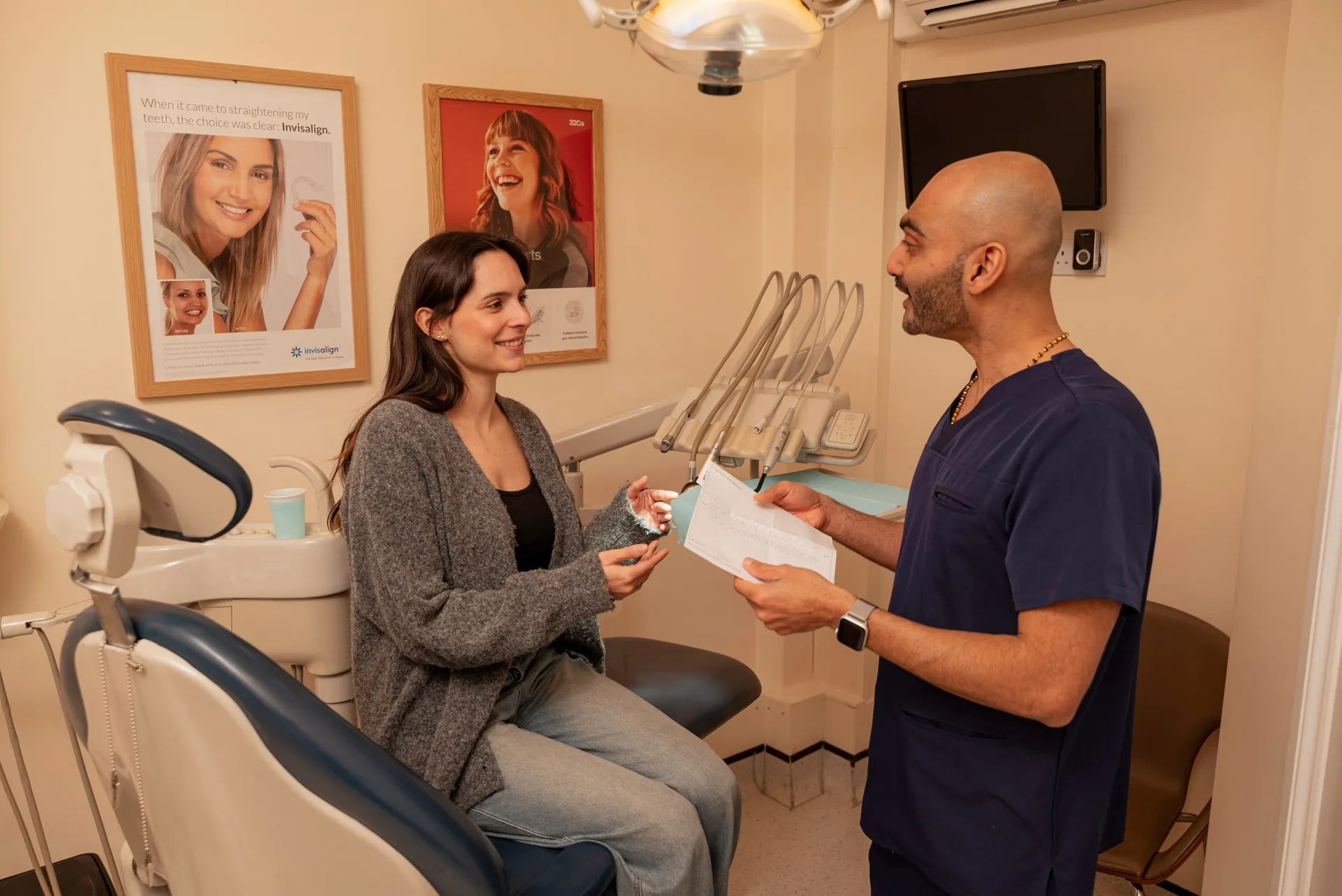
If you're considering Invisalign for your teenager, the right first step is a 45-minute consultation. We meet the teen, take photographs and a 3D scan, walk through the ClinCheck preview together, and put a costed plan in writing before any commitment.
Invisalign consultations are free, including an iTero scan and ClinCheck preview. Call 020 8127 4567 or WhatsApp +44 7974 910222 (8am–7pm, Monday–Friday, by appointment). Dental & Wellness London, 222 Essex Road, Islington, London N1 3AP. Rated 4.7★ across 300+ reviews.