Yes, Invisalign works for mild-to-moderate tooth alignment, with well-documented effectiveness for crowding, spacing, and many bite issues. It has limits — severe skeletal discrepancies and certain rotations may need fixed braces. Success depends heavily on wearing aligners around 22 hours a day. Most adult cases reach a predictable, planned result when worn properly.
The honest version of "does it work"
"Does Invisalign work" sounds like a yes-or-no question, and the marketing answer is always a confident yes. The clinical answer is a yes with conditions attached, and the conditions are the part worth reading. Invisalign works very well inside its range, works less reliably at the edges of that range, and works only if it is actually worn. Most of what looks like Invisalign "failing" is really one of those three truths being ignored — a complex case sold as a simple one, a case that genuinely needed braces, or aligners that spent their evenings in a drawer.
As an Invisalign Diamond II provider — top 1% in the UK, with fifteen thousand cases planned over twenty years in practice — the value we add is not enthusiasm. It is knowing precisely where those edges sit, so you begin treatment confident it will reach your goal rather than hoping it might. This page sets out the documented effectiveness, the genuine limits, and the single factor that decides more outcomes than any other.
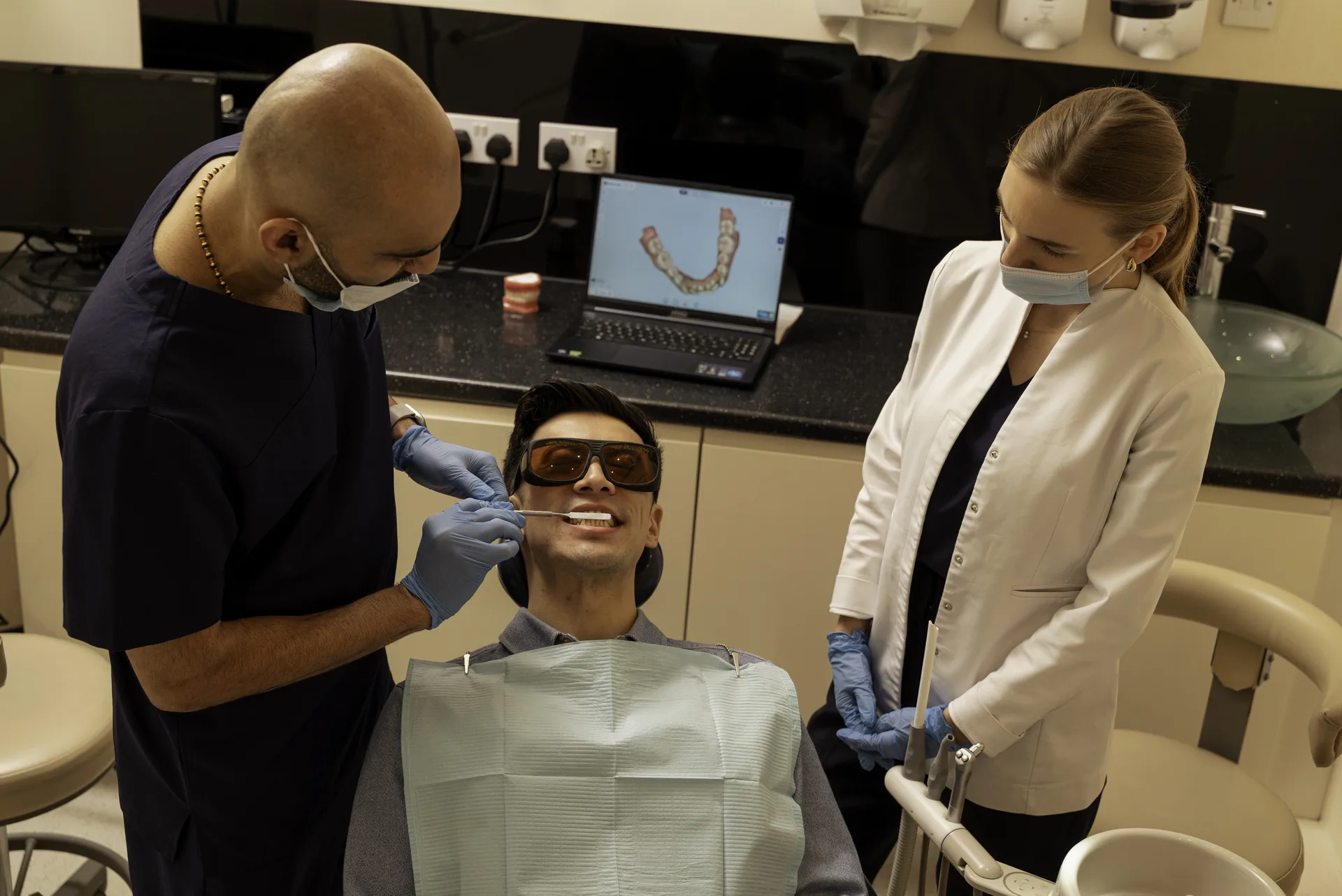
The evidence ladder: where Invisalign is proven
Invisalign has been in clinical use for over two decades, with a substantial research base and millions of completed cases behind it. The picture from that evidence is consistent, and it sorts into three tiers of confidence.
Tier one — mild-to-moderate crowding and spacing. Invisalign's strongest, best-documented territory. Tidying crowded front teeth, closing gaps, aligning mild-to-moderate cases: predictable, well established, reliably good.
Tier two — many common bite issues. Mild-to-moderate overbites, some crossbites, and modest bite correction respond well, especially when planned with attachments and, where suitable, elastics.
Tier three — relapse after childhood braces. A very common adult scenario — teeth that drifted after teenage orthodontics — sits squarely in the reliable range and is often resolved quickly with Express.
The evidence carries one honest caveat: aligners can be slightly less precise than fixed braces for certain difficult movements, which is exactly why planning quality and refinement matter. The treatment works; the provider's skill decides how closely the real result tracks the plan. That is the Diamond II difference — planning depth that reads each case accurately from the start.
Where Invisalign has limits
An evidence-based answer names the limits as clearly as the strengths. There are three places where aligners struggle.
Severe skeletal discrepancies. Where the jaws themselves are significantly misaligned — not just the teeth sitting on them — aligners alone may not give the best result. These cases sometimes need fixed braces, occasionally combined orthodontic-surgical treatment. Invisalign moves teeth; it does not move jaws.
Certain rotations and vertical movements. Severely rotated round teeth (premolars, canines), large vertical movements such as significant intrusion or extrusion, and complex root repositioning are harder for aligners than for fixed braces. A skilled provider plans around many of these with attachments and sequencing — but in a minority of cases a fixed appliance simply works better.
Cases needing other work first. Active gum disease must be controlled before any orthodontics. Significant missing or worn teeth may need restorative work in the right sequence. Aligning teeth that need rebuilding first undermines the result.
Naming these limits is how a disappointing outcome is avoided. Honest case selection is the foundation of effective treatment, and we will tell you plainly at consultation if your case sits outside Invisalign's reliable range — we say no often to the wrong tool.
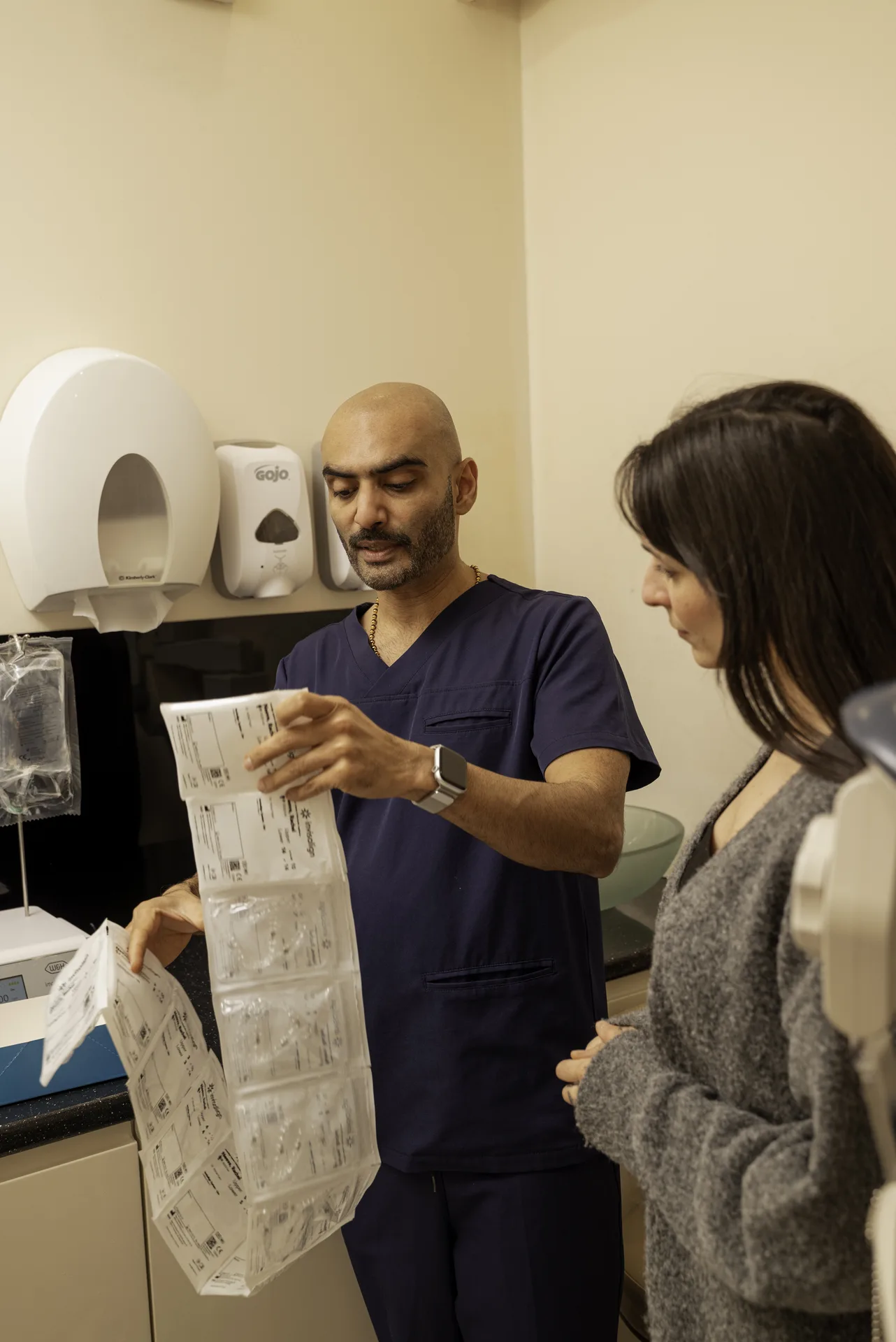
The variable that decides it: compliance
If one factor separates Invisalign that works from Invisalign that disappoints, it is wear time. The aligners apply their planned forces only while they are in your mouth — around 22 hours a day, removed only to eat, to drink anything but water, and to clean.
This is genuinely different from fixed braces, which work whether you cooperate or not because they are bonded on. With Invisalign the responsibility shifts to you. Aligners left out move no teeth. A patient who wears them faithfully arrives at the planned result; a patient who routinely leaves them out for hours arrives somewhere short of it — and no clinician can plan around aligners that are not being worn.
Seen clearly, this is empowering rather than discouraging: the biggest factor in whether Invisalign works is in your hands. And if you know yourself to be inconsistent with daily commitments — retainers, contact lenses, medication schedules — that is honest, useful information to bring to consultation, because for some patients fixed braces are the more reliable choice precisely because they remove the compliance question.
Plan versus reality: how closely they match
A fair follow-up to "does it work" is "does it work the way the preview shows". The ClinCheck simulation maps a projected end-position before you start, and for typical mild-to-moderate cases it is a well-validated guide to the real result. It is a planning tool, not a guarantee — teeth move through living bone, and the final detail is settled by clinical judgement.
This is why refinement exists. Most adult cases need one round of refinement near the end — a short additional set of aligners that brings the result precisely onto the plan. Across cases generally it is needed often enough that it should be assumed, not feared; it is normal finishing work, not a setback. At DWL, how refinements are covered depends on the plan you choose and is set out in writing with your treatment plan. A provider who plans accurately from the start needs less correction along the way — one of the quieter ways Diamond II experience makes treatment work as intended.
When fixed braces are still the better choice
Choosing the tool honestly is part of making treatment work. For some patients fixed braces remain the better answer, and we say so when that is true:
Recommending braces where they serve you better is not a mark against Invisalign — it is how you end up with a result that works and lasts. Where aligners are right, we design with arch expansion where possible and a non-extraction method, keeping the long-term smile view at fifty and seventy in mind rather than the photograph today. A smile is built for optimal function as well as optimal aesthetic: a treatment that "works" for a year but unwinds over a decade has not really worked at all, which is why we design with your future in mind.
For the fuller picture, see our Invisalign cost UK pillar and Invisalign London pages, with related reading on Invisalign results, how long Invisalign takes, is Invisalign worth it, and Invisalign attachments.

Does it work for your case? The only honest test
Because effectiveness depends on your specific teeth, the only reliable way to know whether Invisalign works for you is a scan and a plan. At consultation we take an iTero 5D digital scan, generate a ClinCheck simulation of your projected result, and tell you honestly whether your case sits inside Invisalign's reliable range or would be better served by another approach. You leave with a costed plan in writing and a clear answer — not a sales pitch. Where treatment makes sense, our plans run from Express at £2,200 for the simplest cases up to Unlimited at £4,500–£4,900, with the price tied to the movement your case actually needs.
Frequently asked questions
Does Invisalign actually work as well as braces?
For mild-to-moderate cases, yes — effectiveness is comparable and well documented. For severe skeletal discrepancies and certain difficult rotations or vertical movements, fixed braces, sometimes combined with surgery, may work better. The decisive factor for most adults is wear-time compliance, which is in your hands with Invisalign.
How long until Invisalign starts working?
It begins moving teeth immediately, and most patients notice visible change within the first month or two because the largest movements are usually planned early. The full result builds across your tier timeline, with the final months doing finer detailing.
Why might Invisalign not work for someone?
The commonest reason is wear time below the roughly 22 hours a day the aligners need. Others include placing a complex case in too simple a tier, a case that genuinely needed fixed braces, or skipping retention afterwards. Well-selected cases worn faithfully reach their planned result.
Does Invisalign work for adults of any age?
Yes — there is no upper age limit, provided your gums and supporting bone are healthy. Adult teeth move predictably with aligners, and relapse after childhood braces is one of the most common and straightforward cases we treat.
Does Invisalign work without attachments?
Some simple cases need no attachments, but most benefit from them — small tooth-coloured shapes bonded to specific teeth to grip the aligner and deliver precise forces for harder movements. They are a key part of how Invisalign matches fixed braces in many cases.
Book a consultation to find out if Invisalign works for you
The only honest answer for your case comes from a scan of your own teeth. At consultation we take an iTero 5D digital scan, generate a ClinCheck simulation, tell you plainly whether Invisalign is right for your case, and write a costed plan before any commitment.
Invisalign consultation: free (iTero scan + ClinCheck preview).
Call 020 8127 4567 or WhatsApp +44 7974 910222 (8am–7pm). Appointments Monday–Friday 8am–7pm by appointment at 222 Essex Road, Islington, London N1 3AP. No Saturday or walk-in appointments.
Reviewed by Dr Vishal Patel · BDS Liverpool · MSc Aesthetic & Restorative Dentistry (Manchester) · GDC 103127 · Invisalign Diamond II Provider · AACD Member · 20 years in practice · 15,000+ cases. Last reviewed 2026-06-04.