PDO thread lift in London
Reviewed By
Dr Vishal Patel
BDS Liverpool · MSc Aesthetic & Restorative Dentistry Manchester · GDC 103127 · AACD Member · Invisalign Diamond II Provider · IFAAS (International Fellowship in Advanced Aesthetic Science) · Facial anatomy & cadaver course, Dr Ali Pirayesh, University of Amsterdam · Harley Academy foundation training in injectable aesthetics · IBSA-trained (Profhilo) · NeoStrata-trained (skin peels) · Lynton Lasers trained, incl. ONDA
Last Updated
October 1, 2026
A mechanical lifting option using absorbable sutures — moderate effect, longer downtime, and less often our first recommendation than skin boosters or filler.
A PDO thread lift uses fine, dissolvable threads under the skin to lift mild to moderate sagging in the mid-face, jawline or neck, and to stimulate collagen as they dissolve. Results typically last 12 to 18 months, with one to two weeks of swelling or bruising. At Dental & Wellness London, Islington, it is carried out by Dr Vishal Patel. A PDO thread lift is £600 for a single area, £1,200 for the mid-face and jowl, and £1,800 to £2,400 for the full face. The Korean V Lift, a separate mono-thread lift, is £1,600. Consultation £65, redeemable.
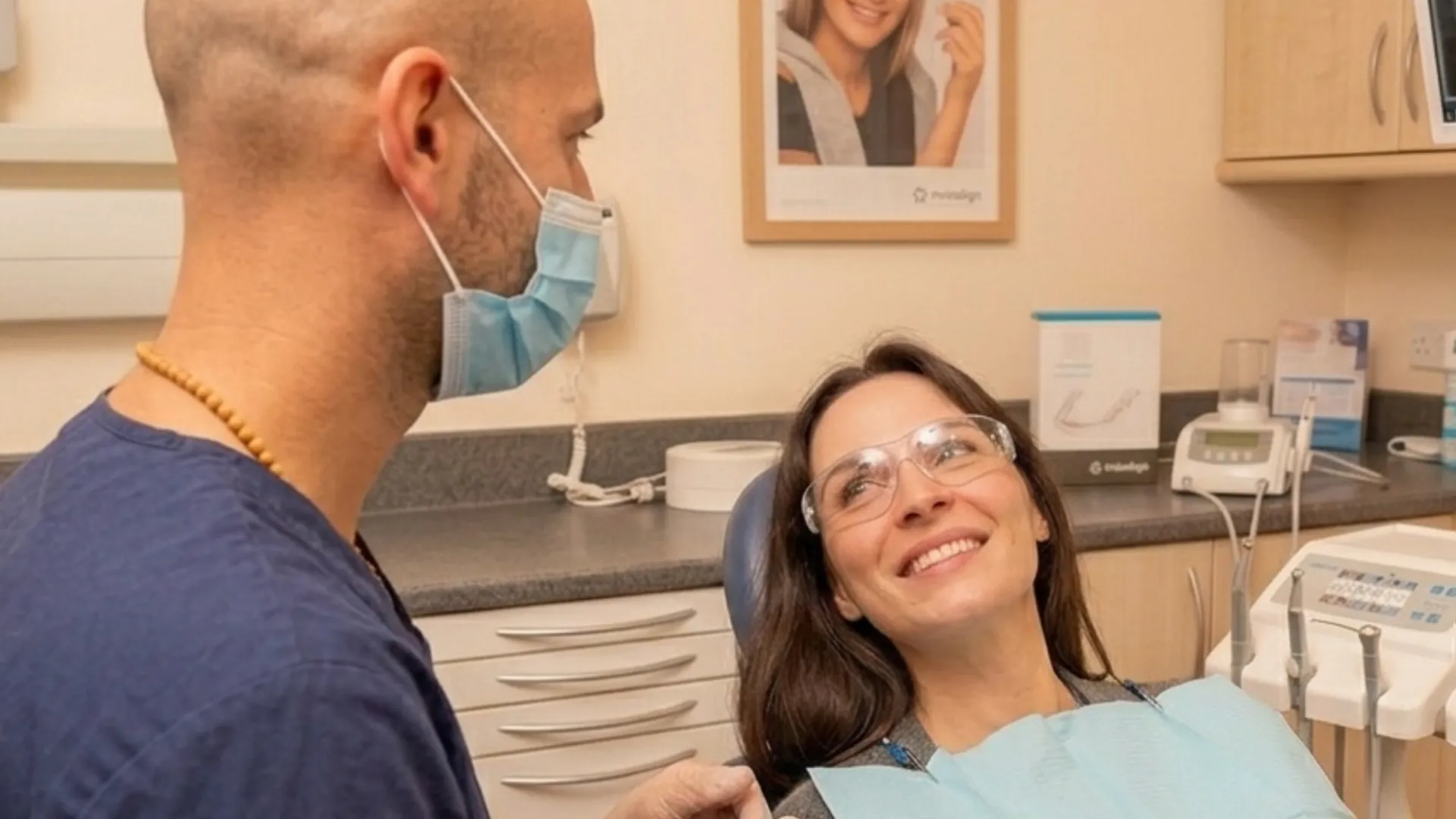
- Dissolvable PDO threads lift and support the skin
- For mild to moderate mid-face, jawline and neck laxity
- Results typically 12 to 18 months
- 1 to 2 weeks of swelling or bruising
- Not a replacement for a surgical face lift
- PDO threads from £600 · Korean V Lift (mono-thread) £1,600 · consultation £65, redeemable
PDO thread lift at our Islington clinic
What a PDO thread lift does
A PDO thread lift uses fine, dissolvable polydioxanone threads placed under the skin to lift and support mild to moderate sagging, most often in the mid-face and along the jawline. The threads give an immediate, subtle lift, then dissolve over several months while stimulating collagen around them.
Polydioxanone is a material that has been used in dissolvable surgical sutures for many years, which is why it is well understood. Once placed, the threads do two jobs. Mechanically, they reposition and support tissue that has started to descend with age, so the change in contour is visible from the day of treatment. Biologically, the body responds to the threads as they slowly dissolve, laying down new collagen along their path. That second effect is quieter but matters, because it continues to support the skin after the threads themselves have gone.
Threads are one option among several for loose skin, alongside Profhilo, dermal filler and laser skin tightening. They suit people who want more lift than injectables alone give but are not ready for surgery. At our clinic, a PDO thread lift starts from £600 for a single area, and the Korean V Lift, a separate mono-thread lift, is £1,600. They do not replace a surgical face lift. Our comparison of skin tightening vs thread lifts sets the two approaches side by side.
The Korean V Lift at our Islington clinic
Alongside PDO threads, we offer the Korean V Lift at Dental & Wellness London. It is a mono-thread lift, a separate option from the PDO thread lift. The name describes the aim: a slimmer, more defined lower face, with the cheeks gently supported and the line of the jaw cleaner, so the face tapers softly towards the chin rather than looking heavy or square at the jowls. It is a lift and contour treatment rather than a volume treatment, and it is planned around your own facial structure rather than a template.
We use the term thread lift and PDO thread lift interchangeably on this page because that is how most people search for it. In practice, the plan for your face is set out at consultation: where the threads go, how many are needed, and whether threads alone are the right answer or one part of a wider plan.
Who it suits, and who it does not
- Mild to moderate laxity of the mid-face, jowls or neck
- Good skin quality, with realistic expectations
- Not suitable for heavy, very loose skin, where surgery gives a far better result
- Not during pregnancy, with active skin infection, or with some bleeding disorders
The people who tend to do best are usually somewhere between their late thirties and their fifties, with early softening of the jawline or a mid-face that has begun to drop, and skin that still has some elasticity. They often say they look tired rather than old, or that the lower face has lost its definition. Threads can also suit people who have had a small amount of filler and want lift without adding further volume. For the neck specifically, see our neck rejuvenation page.
Threads are less suitable when the skin is very thin, very heavy or significantly loose, because the threads need healthy tissue to hold. They are also not the answer for deep lines caused by muscle movement, which respond better to anti-wrinkle treatment, or for hollowing caused mainly by volume loss, where filler or a skin booster may make more sense. If you have an autoimmune condition, a history of poor healing or keloid scarring, or take medicines that affect bleeding, tell us at consultation so we can advise properly, and with your GP where needed. If looseness is your wider concern, our page on sagging skin covers other routes.
Your consultation
Every thread lift begins with a skin and aesthetic consultation with Dr Vishal Patel. The consultation is £65 and is redeemable in full against treatment. We look at your face at rest and in movement, from the front and in profile, and we talk through what bothers you and what you would like to keep. We assess skin thickness and quality, the degree of laxity, fat distribution and the underlying bone structure, because each of these affects how much lift threads can give and how long it will hold.
We also take a full medical history, discuss the realistic range of outcomes, and go through the risks in plain language. If threads are not the right tool, we will say so, and explain what is. Sometimes the most useful advice is that a combination of treatments, or a surgical opinion, will serve you better. There is no pressure to book on the day.
What happens on the day
- Planning and marking. We confirm the plan with you and mark the entry points and the direction of each thread on the skin, with you sitting upright so gravity is accounted for.
- Cleansing and local anaesthetic. The skin is cleaned thoroughly and the entry points are numbed with local anaesthetic, so the treatment is usually described as pressure and tugging rather than pain.
- Placing the threads. Each thread is introduced through a fine, blunt-ended guide placed under the skin along the planned vector. The guide is withdrawn, leaving the thread in place.
- Lifting and settling. The tissue is gently repositioned and the result is checked from both sides before we finish.
- Aftercare. We go through aftercare in detail and give you written guidance to take home.
The appointment usually takes around an hour, including preparation. Most people go back to desk work quickly, although you may prefer a quiet day or two if you would rather any swelling or bruising was not seen.
Recovery and results
Expect some swelling, bruising and tightness for one to two weeks, and avoid strenuous exercise, facial massage and dental treatment for a short period afterwards. The lift is visible straight away; the collagen effect develops over the following months. Results typically last 12 to 18 months.
In the first few days the face can feel tight, particularly when you open wide, chew or yawn, and small dimples or puckering near the entry points are common while the tissue settles. These usually smooth out on their own. We advise sleeping on your back with your head slightly raised for the first nights, avoiding wide mouth opening where you can, and keeping away from saunas, steam rooms and very hot showers for a short time. Make-up can usually go back on after the first day if the skin is intact.
Results vary from person to person. Age, skin quality, lifestyle, sun exposure and smoking all influence how long the lift holds. Some people choose to repeat the treatment as the threads dissolve; others maintain the result with skin quality treatments in between.
Risks, and how we reduce them
A thread lift is a minimally invasive procedure, but it is still a procedure. Bruising, swelling, tenderness and temporary asymmetry are common and usually settle. Less commonly, a thread can become visible or palpable under thin skin, an end can work its way towards the surface, or an area of dimpling can persist and need adjustment. Infection is uncommon but possible, and nerve irritation is rare.
We reduce these risks through careful case selection, a detailed understanding of facial anatomy, strict sterile technique and conservative planning. Dr Vishal Patel’s training includes a facial anatomy and cadaver course with Dr Ali Pirayesh at the University of Amsterdam, which matters for a treatment that works within the layers of the face. You will have a review appointment after treatment and a direct way to contact us if anything concerns you.
How a thread lift compares with the alternatives
- Dermal filler restores lost volume and structure, and is sometimes used at the cheek or jaw to create a lifting effect. Filler adds; threads reposition. They are often complementary. Filler is from £350, and jawline filler is £300 per 1ml.
- Profhilo and skin boosters improve hydration, elasticity and skin quality rather than lifting. They can be a good way to prepare the skin before threads, or to maintain it afterwards. Profhilo is £350, or £625 for two sessions, and skin boosters start from £250.
- Laser lift and tighten uses energy to encourage collagen and gentle firming, with no needles under the skin. The effect is subtler than threads and builds over a course. It starts from £195, and skin tightening starts from £225. For energy-based options compared, see HIFU vs radiofrequency vs microwave.
- Surgery remains the most effective option for significant laxity. A thread lift is not a substitute for a surgical face or neck lift, and we will say so if that is where your assessment points.
Our page on the non-surgical face lift explains how we combine these treatments into a single plan when one approach alone is not enough.
Thread lift cost in Islington
A PDO thread lift is £600 for a single area, £1,200 for the mid-face and jowl, and £1,800 to £2,400 for the full face. The Korean V Lift, a mono-thread lift, is £1,600. The final figure depends on the areas treated and the number of threads your face needs, and we confirm it in writing after your consultation, before any treatment is booked. The £65 consultation fee is redeemable in full against treatment. Where it helps, 0% APR over 12 months is available.
We would encourage you to compare clinics on more than price. Ask who will carry out the treatment, what their training is, how they assess suitability, and what happens if you need a review. A thread lift depends heavily on judgement and technique.
Why have it with us
Every thread lift is assessed and carried out by Dr Vishal Patel, whose training includes the International Fellowship in Advanced Aesthetic Science and a facial anatomy and cadaver course at the University of Amsterdam. We will tell you honestly if threads are not the right tool. Dr Patel has around twenty years in dentistry and ten years in facial aesthetics, and is the clinic’s sole aesthetic prescriber; his background in aesthetic and restorative dentistry means he thinks about the lower face, jaw and smile as one structure. You can read more on Dr Patel’s profile.
Dental & Wellness London has been on Essex Road since 2009 and is rated 4.7 stars from more than 300 Google reviews. We are a private clinic, and every aesthetic treatment is consultation-first.
Getting here
The clinic is at 222 Essex Road, Islington, London N1 3AP, two minutes from Essex Road station and a short ride from Angel, Highbury, Canonbury, Hackney and Stoke Newington. Many patients cycle or use a Lime or Forest e-bike. Buses 38, 56, 73, 341 and 476 stop on Essex Road, and Highbury & Islington and Old Street are each one stop away by train. We are open Monday to Friday, 8am to 7pm, by appointment.
Clinically reviewed by Dr Vishal Patel · BDS · MSc Aesthetic & Restorative Dentistry · GDC 103127. Last reviewed 1 October 2026.
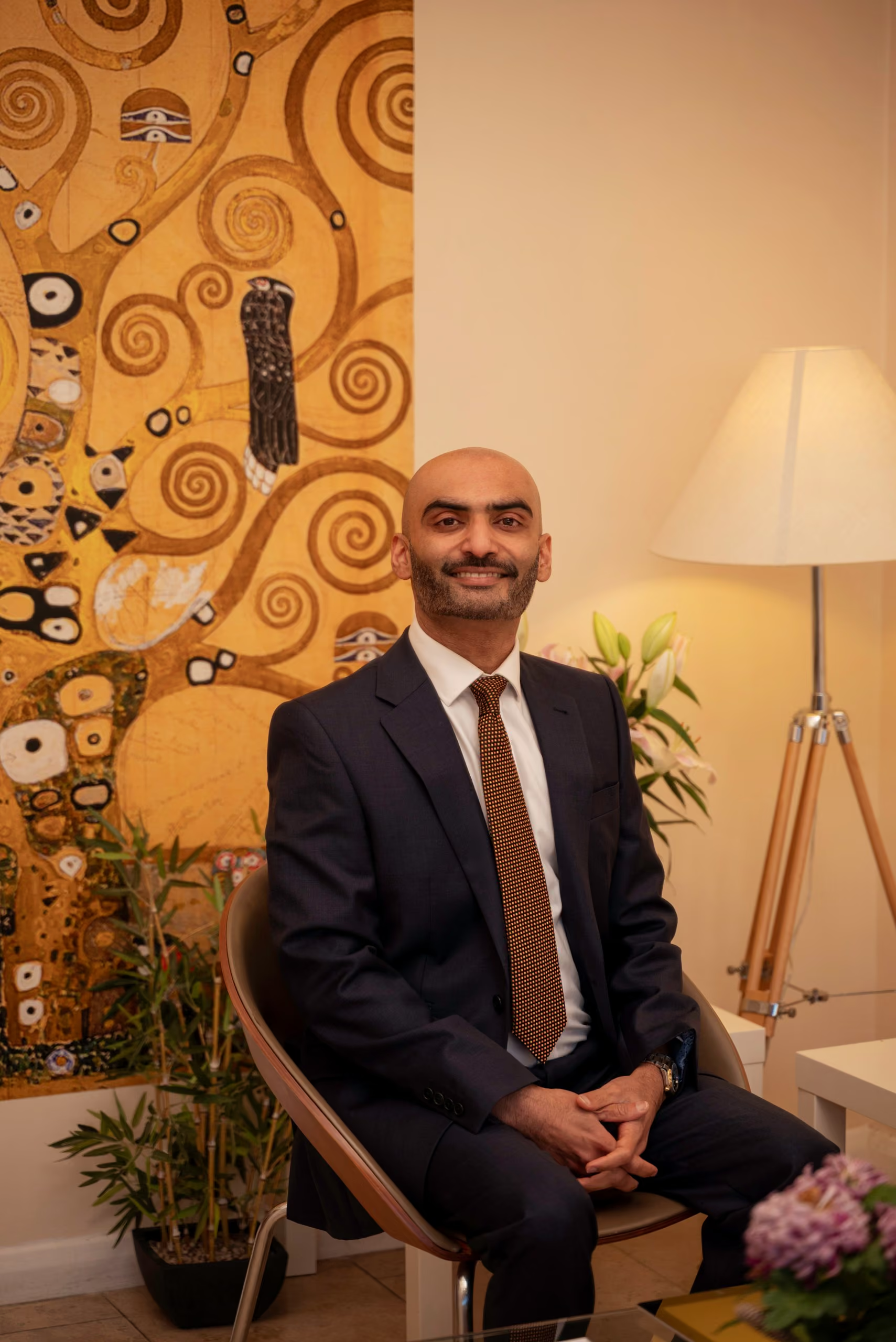
Dr Vishal Patel
Clinical lead · Sole aesthetic prescriber · 10 years in facial aesthetics
BDS Liverpool · MSc Aesthetic & Restorative Dentistry (Manchester) · GDC 103127 · International Fellowship in Advanced Aesthetic Science (IFAAS) · Facial anatomy and cadaver course with Dr Ali Pirayesh, University of Amsterdam · Harley Academy · IBSA and NeoStrata trained
We will tell you when a treatment is not the right answer. That honesty is part of the treatment.
Read Dr Patel’s profile →A measured lift, if it is the right tool.
Consultation — £65
A skin assessment with an honest view of what will help. The fee is redeemable in full against treatment.
Treatment
Local anaesthetic, then threads placed through tiny entry points. About 45 to 60 minutes.
Recovery
Swelling and bruising settle over one to two weeks.
Review
We review the result at around four weeks.
Start with a consultation
- £65, redeemable in full against treatment
- Threads compared honestly with other options
- PDO threads from £600 · Korean V Lift £1,600
Or call 020 8127 4567 · WhatsApp +44 7974 910222
222 Essex Road, Islington N1 3AP · Mon–Fri, 8am–7pm
Our happy patients,
in their own words
Transparent pricing
Prices are set out below. Your written plan confirms the fee before any treatment begins.
Clear prices, set out before you start.
Your exact fee depends on the areas treated and is confirmed in writing at consultation.
Redeemable in full against treatment
One area, such as the jawline or brow
Cheeks and jowl line together
Depends on the number of threads needed
Lower-face contour and jawline definition
Included
- Assessment by Dr Patel
- Review at around four weeks
Quoted separately
- Combined treatments, quoted in your plan
Questions
people ask
If your question isn't answered here, call reception on 020 8127 4567 or email reception.
How long do thread lift results last?
Typically 12 to 18 months. The lift is visible straight away, and the collagen effect develops as the threads dissolve.
Are PDO threads safe?
They are well established when placed by an experienced practitioner. Bruising, swelling and temporary asymmetry are common and settle. Less commonly, a thread can be felt or become visible and need adjusting. A PDO thread lift starts from £600 for a single area; the Korean V Lift, a separate mono-thread lift, is £1,600.
How is a thread lift different from a surgical face lift?
A surgical face lift gives a larger, longer-lasting change by repositioning tissue and removing skin. Threads give a subtler, temporary lift with much less downtime.
Will I have scars?
No visible scars. The threads are placed through tiny entry points that heal quickly.
What is the downtime?
Usually one to two weeks of swelling, bruising or tightness. Most people return to work within a few days.